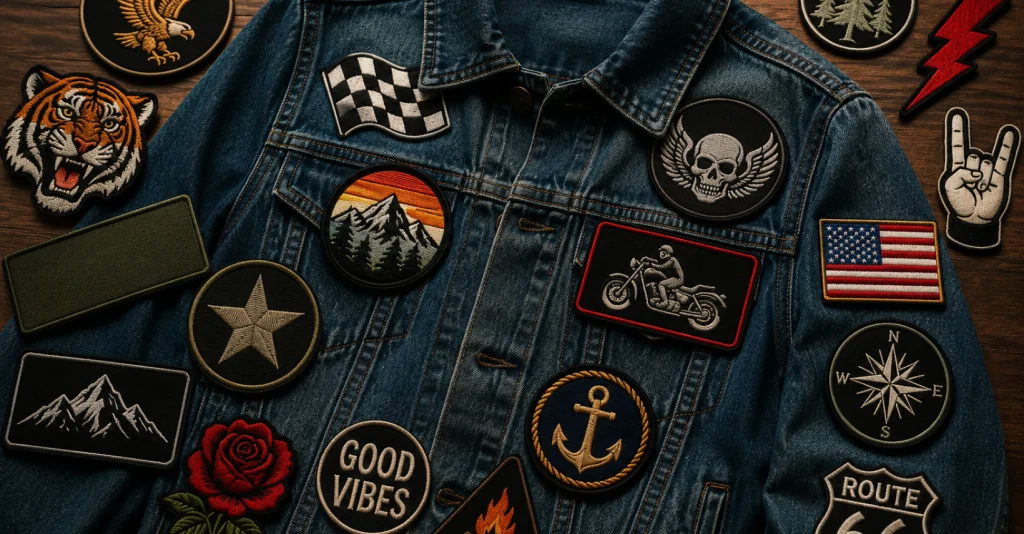
A great jacket can say a lot about your personality, interests, and sense of style. But sometimes, even your favourite jacket needs something extra to make it feel truly personal. That is where jacket patches come in.
Whether you are customising a denim jacket, upgrading a biker jacket, adding personality to a bomber, or creating a unique workwear look, the right patch can completely transform the appearance of your clothing. Patches are more than decorative accessories. They can represent your identity, showcase your creativity, promote a brand, celebrate a club or community, or simply give an old jacket a fresh new look.
However, choosing the perfect patch is not always as simple as picking a design you like. The material, size, shape, backing, colours, stitching style, and placement all influence how the finished jacket will look and how well the patch will perform over time.
At Custom Patch Makers UK, we understand that every jacket and every customer is different. That is why choosing the right patch should begin with understanding your jacket, your design, and the purpose behind your customisation.
In this guide, we will explore everything you need to know about choosing the right patch for your jacket. From patch types and materials to sizing, colours, placement, attachment methods, and design tips, you will learn how to create a jacket that looks professional, stylish, and uniquely yours.
Why Add a Patch to Your Jacket?
Before choosing a patch, it is worth thinking about why you want one in the first place.
Jacket patches have been popular for decades across fashion, music, motorsports, outdoor communities, military-inspired clothing, workwear, and streetwear. Today, they are just as relevant because they offer an easy way to personalise garments without completely changing the jacket itself.
A well-designed patch can:
- Add personality to a plain jacket
- Refresh an old or worn garment
- Display a logo or brand identity
- Represent a club, team, or organisation
- Showcase artwork or creative designs
- Create a vintage or retro aesthetic
- Build a coordinated fashion collection
- Promote an event or campaign
- Celebrate a hobby or interest
- Create personalised gifts
- Strengthen a sense of community or belonging
For businesses and organisations, custom patches can also turn jackets into wearable branding. Employees, teams, event staff, motorcycle clubs, outdoor groups, and promotional campaigns can all use custom patches to create a consistent visual identity.
The key is choosing a patch that works with both the jacket and the purpose behind it.
Step 1: Start With Your Jacket Type
The first step in choosing a patch is understanding the jacket you want to customise.
Different jacket materials have different textures, weights, and appearances. A patch that looks perfect on heavy denim may not have the same effect on a lightweight nylon bomber jacket. Similarly, a large embroidered design might work beautifully on the back of a biker jacket but overwhelm a slim fashion jacket.
Here are some popular jacket styles to consider.
Denim Jackets
Denim jackets are among the most popular garments for custom patches. Their durable fabric provides an excellent surface for patches, while their casual appearance works with everything from vintage designs to colourful artwork.
You can use denim jackets for:
- Large back patches
- Small chest patches
- Sleeve patches
- Multi-patch designs
- Band-inspired artwork
- Vintage badges
- Personal logos
- Decorative motifs
Because denim is relatively sturdy, it can support multiple patches without easily losing its shape.
For a classic look, consider placing one larger patch on the back and adding two or three smaller designs to the front or sleeves. If you prefer a more expressive style, you can build a collection of patches across the jacket over time.
Leather Jackets
Leather jackets create a bold and timeless appearance. They are particularly popular among motorcycle enthusiasts, rock fans, fashion lovers, and people who prefer a rebellious aesthetic.
When choosing patches for leather, consider designs that complement the jacket’s strong visual character. Bold lettering, traditional emblems, symbolic artwork, and high-quality embroidered patches can all work well.
Placement is especially important with leather jackets. Large back patches can create a powerful focal point, while smaller chest and sleeve patches can provide balance.
Before attaching any patch, make sure the attachment method is suitable for the specific leather garment. In some cases, stitching may be preferred over adhesive methods, particularly when durability is important.
Bomber Jackets
Bomber jackets typically have a cleaner and more streamlined appearance. This means patch selection should be more deliberate.
Instead of covering the jacket with numerous large patches, you may want to choose one or two standout designs.
A small embroidered patch on the chest or upper sleeve can create a subtle branded appearance. Alternatively, a larger back patch can turn a simple bomber into a statement piece.
Consider keeping your patch colours aligned with the jacket’s existing colour palette for a sophisticated appearance.
Work Jackets
Workwear jackets are ideal for custom patches because they naturally lend themselves to branding and identification.
Businesses can add:
- Company logos
- Employee names
- Job titles
- Department identifiers
- Safety-related symbols
- Service badges
- Professional certifications
For work jackets, durability is often more important than purely decorative appeal. Choose a patch construction and backing that can withstand regular use and cleaning.
A clean, readable design is usually the best option for professional garments.
Utility and Outdoor Jackets
Outdoor jackets often use technical fabrics such as nylon or polyester. These materials can require more careful consideration when selecting and attaching patches.
If the jacket is regularly exposed to rain, wind, dirt, or outdoor conditions, choose a patch designed for the intended environment.
Think about:
- Weather resistance
- Attachment method
- Patch weight
- Fabric compatibility
- Cleaning requirements
For outdoor clothing, a lightweight patch may sometimes be preferable to a heavy design.
Step 2: Decide What Type of Patch You Want
Once you know what kind of jacket you are customising, the next decision is the type of patch.
There are several popular options, and each creates a different visual effect.
Embroidered Patches
Embroidered patches are one of the most recognisable patch styles. They use stitched thread to create a textured, traditional appearance.
They are an excellent choice for:
- Logos
- Names
- Symbols
- Club designs
- Fashion graphics
- Vintage-inspired artwork
- Bold lettering
The raised thread adds depth and texture, giving the patch a tactile quality that works especially well with denim, leather, and heavy jackets.
Embroidered patches are also highly versatile. Depending on the design, you can create something subtle and minimalist or bold and colourful.
If your artwork has strong shapes and clear details, embroidery can be an excellent option.
Woven Patches
Woven patches are created using thinner threads woven closely together. This allows for a smoother surface and greater detail in many designs.
They are particularly useful when your artwork contains:
- Small text
- Fine lines
- Detailed illustrations
- Intricate patterns
- Small logos
If readability is your priority, a woven patch may be a strong choice.
Woven patches also have a flatter appearance compared with traditional embroidered patches, making them suitable for customers who prefer a cleaner and more contemporary finish.
PVC Patches
PVC patches are made from a flexible synthetic material and are known for their modern, durable appearance.
They are often chosen for:
- Outdoor jackets
- Tactical-inspired clothing
- Sportswear
- Adventure gear
- Workwear
- Modern branding
PVC can create raised or dimensional designs that stand out visually. It is also useful when you want a patch with a strong, contemporary appearance.
For outdoor or demanding applications, PVC may be worth considering because of its durable construction.
Chenille Patches
Chenille patches are recognised for their soft, fuzzy texture and bold appearance. They are often associated with varsity jackets, sports teams, schools, and collegiate fashion.
They work especially well for:
- Large letters
- Team names
- Mascots
- Numbers
- Bold symbols
Chenille is ideal when you want a patch to become a major visual feature of the jacket.
Leather Patches
Leather patches offer a premium, natural appearance. They are particularly effective on denim jackets, outdoor garments, workwear, and casual clothing.
A leather patch can create a sophisticated and understated aesthetic. Instead of bright colours and complex artwork, leather patches often rely on:
- Debossed logos
- Engraved designs
- Simple typography
- Minimalist symbols
They are a strong option for brands and individuals who prefer a refined appearance.
Printed Patches
Printed patches can reproduce detailed artwork, photographs, gradients, and complex colour combinations.
They may be suitable when your design cannot easily be recreated through traditional stitching.
Printed patches are particularly useful for artwork featuring:
- Photographic details
- Smooth gradients
- Highly detailed illustrations
- Complex colour transitions
The best patch style ultimately depends on your design, jacket, and intended use.
Step 3: Choose the Right Patch Size
Size is one of the most important decisions you will make.
A patch that is too small may disappear into the jacket. A patch that is too large may overpower the garment.
Start by identifying where you want to place the patch.
Small Patches
Small patches are ideal for:
- Chest areas
- Sleeves
- Pockets
- Collars
- Cuffs
They are perfect for logos, initials, small symbols, and subtle decorative elements.
If you want your jacket to look understated and stylish, small patches can be an excellent choice.
Medium Patches
Medium patches offer more visual impact while remaining versatile.
They can work well on:
- Front panels
- Upper sleeves
- Lower sleeves
- Large pockets
Medium patches are often suitable for logos, badges, artwork, and text-based designs.
Large Patches
Large patches are typically used as statement pieces.
The back of a jacket is often the ideal location because it provides a broad, uninterrupted surface.
A large back patch can feature:
- Brand artwork
- Club insignia
- Large logos
- Detailed illustrations
- Slogans
- Band-inspired designs
- Custom artwork
Before ordering a large patch, measure the available space on your jacket carefully.
One useful tip is to print your design at the intended size and place it against the jacket. This simple test can help you visualise the final result before production.
Step 4: Think About Patch Shape
The shape of your patch can influence the overall personality of your jacket.
Round Patches
Round patches have a classic badge-like appearance. They are ideal for:
- Logos
- Clubs
- Organisations
- Symbols
- Emblems
They create a balanced and traditional look.
Rectangle and Square Patches
These shapes are useful for:
- Text
- Names
- Brand logos
- Horizontal artwork
- Identification patches
They are especially practical when your design naturally fits within straight edges.
Custom-Shaped Patches
If you want something more creative, consider a custom-shaped patch.
The patch can follow the outline of your artwork, creating a more integrated appearance.
For example, a custom-shaped patch might be designed around:
- Animals
- Objects
- Mascots
- Symbols
- Characters
- Unique logos
Custom shapes can make a jacket feel more distinctive and help your design stand apart from standard badge formats.
Step 5: Select Colours That Complement Your Jacket
Colour selection can make or break a patch design.
Your patch should be visible, but it should also feel like part of the jacket.
There are two main approaches.
Choose Contrasting Colours
A high-contrast patch immediately attracts attention.
For example, a dark jacket can be paired with:
- White
- Red
- Yellow
- Orange
- Bright blue
- Green
This approach works well when you want the patch to become the main feature.
Choose Complementary Colours
If you prefer a more subtle appearance, choose colours that work naturally with the jacket.
A navy jacket might pair well with muted blues, grey, white, or burgundy.
A brown leather jacket might look great with cream, tan, black, or dark red.
The goal is to create visual harmony rather than allowing the patch to look disconnected.
Step 6: Make Sure Your Text Is Readable
Many custom jacket patches contain words, names, or slogans.
If your patch includes text, readability should be a priority.
Avoid:
- Extremely small lettering
- Overly complicated fonts
- Excessive decorative elements
- Too many words
- Low contrast between text and background
Remember that a patch will often be viewed from a distance.
A simple, bold typeface is usually easier to read than an elaborate script.
If your message is long, consider shortening it. A few strong words can often communicate more effectively than a crowded sentence.
At Custom Patch Makers UK, we recommend thinking about the patch as a visual message. Every element should contribute to the overall design rather than competing for attention.
Step 7: Consider the Patch Border
The border is often overlooked, but it can dramatically affect the finished appearance.
A border helps define the patch and separate the design from the jacket fabric.
Popular border options include:
- Merrowed borders
- Laser-cut borders
- Stitched borders
- Contrasting thread borders
A contrasting border can make the patch stand out.
A matching border creates a more integrated appearance.
The right choice depends on your design and the style you want to achieve.
Step 8: Choose the Right Backing
Patch backing determines how the patch will be attached to your jacket.
Different backing options are suitable for different situations.
Sew-On Patches
Sew-on patches are a traditional and reliable option.
They are particularly suitable for garments that will experience frequent use or washing.
Sew-on patches can work well on:
- Denim
- Leather
- Heavy cotton
- Work jackets
- Motorcycle jackets
The stitching provides a secure attachment and can give the jacket an authentic, handcrafted appearance.
Iron-On Patches
Iron-on patches are popular because they are convenient and relatively easy to apply.
They work best when the jacket fabric can safely withstand heat.
However, always check the manufacturer’s application instructions and the garment’s care label before applying heat.
Iron-on patches may also benefit from additional stitching if the garment will be heavily used.
Hook and Loop Patches
Hook and loop backing is useful when you want to remove or change patches.
This makes it popular for:
- Tactical-style jackets
- Workwear
- Outdoor gear
- Clubs
- Teams
- Collectible patch systems
You can swap designs whenever you want, allowing one jacket to serve multiple purposes.
Adhesive Backing
Adhesive backing can be useful for temporary applications or lightweight garments.
However, it may not be the best choice for jackets that experience heavy wear, frequent washing, or outdoor conditions.
Think about how long you want your patch to stay attached before choosing this option.
Step 9: Think About Where the Patch Will Go
Patch placement is just as important as patch design.
The same patch can create completely different impressions depending on where you place it.
Back of the Jacket
The back provides the largest canvas.
It is ideal for:
- Large logos
- Artwork
- Club patches
- Brand designs
- Statement graphics
A large back patch can become the central feature of the entire jacket.
Chest
Chest patches are ideal for smaller logos and designs.
They create a more professional and understated appearance.
For businesses, placing a logo on the chest can create a uniform look for employees.
Sleeves
Sleeve patches add visual interest without overwhelming the jacket.
You can use them for:
- Small logos
- Flags
- Symbols
- Names
- Decorative badges
You can also combine sleeve patches with a larger back design.
Front Pocket
Patches positioned near pockets can create a casual and creative look.
This works particularly well for denim and streetwear jackets.
Collar Area
Small patches can sometimes work near the collar, especially on jackets with a strong fashion focus.
However, keep the design relatively compact to avoid making the area feel crowded.
Step 10: Plan Your Patch Layout
If you are using more than one patch, planning is essential.
Instead of immediately attaching every patch, arrange them on the jacket first.
Try placing your patches on a flat surface or using removable tape to test different layouts.
Consider:
- Patch size
- Colour balance
- Spacing
- Symmetry
- Visual hierarchy
- Overall theme
You do not necessarily need perfect symmetry.
In fact, an intentionally uneven layout can create a relaxed, vintage, or rebellious aesthetic.
The most important thing is that the placement feels deliberate.
How Many Patches Should You Put on a Jacket?
There is no universal answer.
Some people prefer a single statement patch. Others enjoy covering their jacket with dozens of designs.
Your choice depends on the style you want.
Minimalist Style
Use one or two patches.
Choose simple designs and leave plenty of empty space.
This approach is ideal for:
- Corporate branding
- Fashion jackets
- Premium garments
- Subtle personalisation
Balanced Style
Use several patches across different areas.
For example:
- One medium back patch
- One chest patch
- Two sleeve patches
This creates a personalised look without making the jacket feel overcrowded.
Maximum Customisation
If you love expressive fashion, you can use many patches.
Mix different:
- Shapes
- Sizes
- Textures
- Colours
- Themes
The key is maintaining some visual connection between the designs.
How to Match Your Patch to Your Personal Style
Your jacket should feel like an extension of your personality.
If you love vintage fashion, consider retro typography, traditional embroidery, and muted colours.
If you prefer streetwear, try bold graphics, contemporary symbols, and strong colour combinations.
For a biker-inspired appearance, consider larger back patches, bold lettering, and traditional emblem-style artwork.
If your style is minimalist, choose a single high-quality patch with a clean design.
For outdoor enthusiasts, practical materials and durable patch construction may be more important.
There is no single correct way to customise a jacket.
The best patch is the one that reflects your style and works with the garment you already own.
How Businesses Can Use Jacket Patches
Custom jacket patches are not only for personal fashion.
They can also be an effective branding tool.
Businesses can use patches to create branded workwear that employees actually want to wear.
A well-designed patch can display:
- Company logos
- Brand names
- Employee names
- Service categories
- Team identities
Compared with traditional printed branding, patches offer a tactile and premium appearance.
They can be particularly effective for:
- Construction companies
- Security teams
- Hospitality businesses
- Outdoor companies
- Motorcycle businesses
- Automotive brands
- Retail teams
- Creative businesses
- Event staff
The design should remain simple enough to be recognised quickly.
A clean logo with strong contrast is often more effective than a complicated design filled with unnecessary details.
Custom Patches for Clubs and Communities
Patches can also represent belonging.
Motorcycle clubs, sports teams, outdoor groups, music communities, hobby groups, and social organisations often use patches to create a shared identity.
A group patch can include:
- Organisation name
- Established date
- Symbol
- Location
- Motto
- Mascot
When creating patches for a group, consistency is important.
Make sure every patch follows the same design language so members feel part of the same community.
Choosing the Right Patch for a Biker Jacket
Biker jackets have a strong tradition of custom patches.
If you are creating a biker-inspired jacket, think about the overall story you want the garment to tell.
Large back patches can act as the centrepiece, while smaller patches can be arranged across the front and sleeves.
Popular design themes include:
- Motorcycles
- Roads
- Engines
- Wings
- Skulls
- Eagles
- Flames
- Vintage typography
- Club-style emblems
However, the best design is one that genuinely represents your identity rather than simply copying a trend.
Pay close attention to durability and attachment. Biker jackets are often exposed to movement and outdoor conditions, so the patch needs to be securely attached.
Choosing the Right Patch for a Denim Jacket
Denim is one of the easiest materials to customise.
It works with almost every patch style, from colourful embroidery to vintage leather.
If your denim jacket is light blue, bold colours can create a fun contrast.
Dark denim can support brighter patches or more subdued designs.
For a vintage appearance, consider using several patches with slightly different styles, as though the jacket has been collected and customised over time.
For a cleaner fashion look, choose one large patch or a small group of coordinated designs.
Choosing the Right Patch for a Leather Jacket
Leather jackets benefit from carefully selected patches.
Because leather already has a strong visual identity, too many patches can sometimes make the jacket feel cluttered.
Consider choosing:
- One large back patch
- Two or three smaller front patches
- A consistent colour palette
Traditional embroidered patches can add texture, while leather patches can create a more sophisticated tone.
Always consider the jacket’s construction before deciding how to attach your patch.
Common Mistakes to Avoid
Choosing the right patch is easier when you know what mistakes to avoid.
Choosing the Wrong Size
A patch that is too large may overwhelm the jacket.
A patch that is too small may not be noticeable.
Always measure your available space first.
Using Too Many Colours
A patch with too many competing colours can look visually confusing.
Try limiting your palette to a few complementary shades.
Making Text Too Small
Small lettering can become unreadable.
If your message is important, make sure it can be clearly seen at the intended viewing distance.
Ignoring the Jacket Material
Not every backing or attachment method works equally well with every fabric.
Always consider compatibility.
Overcrowding the Jacket
If every available space is covered, individual patches may lose their impact.
Leave some breathing room between designs.
Forgetting the Overall Theme
Individual patches may look great on their own but clash when placed together.
Before ordering multiple designs, think about how they will work as a collection.
How to Create a Cohesive Patch Collection
If you want multiple patches on your jacket, choose a theme.
Your theme could be based on:
- A colour palette
- A hobby
- A musical genre
- A travel experience
- A brand
- A sports team
- A personal story
For example, a travel-inspired jacket might include patches representing different cities and countries.
A music jacket could feature band-inspired designs, musical symbols, and retro graphics.
A business jacket could combine the company logo with employee roles and department identifiers.
A consistent theme helps your jacket feel intentionally designed rather than randomly decorated.
Why Quality Matters When Choosing Custom Jacket Patches
A jacket patch is often exposed to movement, friction, cleaning, and regular wear.
That is why quality matters.
A high-quality patch should have:
- Clean stitching
- Strong edges
- Clear artwork
- Appropriate backing
- Good colour definition
- A professional finish
Poor-quality patches can quickly make an otherwise excellent jacket look cheap.
If you are creating a patch for your brand, club, team, or organisation, quality is even more important because the patch represents you.
At Custom Patch Makers UK, we believe your custom patch should look professional from the first glance and continue to represent your design with confidence.
Custom Jacket Patches From Custom Patch Makers UK
Choosing the right patch is about more than selecting a picture and attaching it to your jacket.
It is about creating something that fits your garment, reflects your personality, and achieves the purpose behind the design.
Whether you need a single custom patch for your favourite denim jacket or a large batch of branded patches for your business, the right combination of design, material, size, shape, backing, and placement can make a significant difference.
At Custom Patch Makers UK, we help customers turn creative ideas into custom patches designed for their specific needs. From embroidered and woven styles to other custom patch options, our goal is to help you create a design that looks distinctive and professional.
You can start with a simple idea, logo, sketch, or concept and develop it into a patch that feels genuinely unique to you.
The best jacket patches are not always the biggest or most colourful. They are the ones that feel right for the jacket and meaningful to the person wearing it.
Final Thoughts: Find the Patch That Fits Your Story
Choosing the right patch for your jacket should be an enjoyable creative process.
Start by looking at your jacket’s material, colour, and style. Then think about what you want your patch to communicate. From there, consider the patch type, size, shape, colours, backing, and placement.
If you are customising a denim jacket, you have plenty of freedom to experiment. If you are working with leather, focus on bold designs and careful placement. For workwear, prioritise clarity and durability. For outdoor jackets, consider the environment and attachment method.
Most importantly, do not be afraid to make your jacket personal.
A custom patch can represent a business, a passion, a community, a memory, or simply your own creativity. It can transform a basic garment into something that feels completely individual.
Whether you want a single embroidered logo, a detailed woven design, a bold PVC patch, or a collection of custom patches for an entire team, the right design can give your jacket a new identity.
At Custom Patch Makers UK, we are here to help you bring that identity to life.
Your jacket is already part of your story. The right custom patch simply gives you another way to tell it.