Building a recognisable brand is one of the biggest challenges for a small business. Whether you run a clothing company, a café, a local service business, an outdoor brand or an online shop, you need practical ways to help customers remember your name. However, professional branding does not always have to involve expensive advertising campaigns or large promotional budgets.
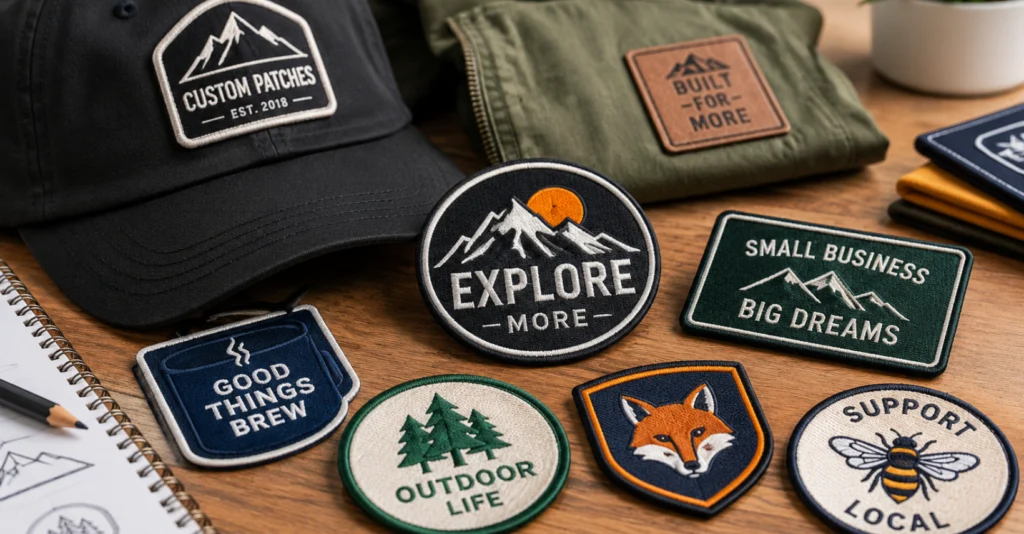
Custom patches for small businesses offer a creative way to display your logo, strengthen your visual identity and make everyday products more memorable. From embroidered badges on staff uniforms to branded patches on jackets, caps, backpacks and promotional merchandise, these small accessories can make a meaningful contribution to how customers recognise your business.
Unlike many disposable promotional items, a well-made patch can remain in use for a long time. Customers may keep it on a favourite jacket, attach it to a bag or display it on a piece of branded merchandise. Every time someone sees your logo, it creates another opportunity for them to become familiar with your business.
At Custom Patch Makers UK, we understand that small businesses need branding solutions that combine appearance, versatility and practical value. Custom patches can be designed around your existing logo, preferred colours and intended application, helping you create a consistent identity across different products.
In this guide, we explore how custom patches can support small-business branding, which patch styles are worth considering, how to manage costs and how to create designs that help your business stand out.
What Are Custom Patches for Small Businesses?
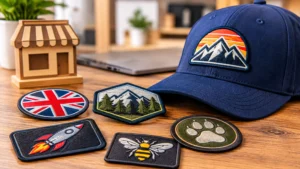
Custom patches are personalised badges manufactured using a specific design, logo, shape, colour combination or message. They can be created using embroidery, weaving, printing, PVC or other suitable materials, depending on the desired appearance and application.
For small businesses, these patches can serve several purposes. They can identify employees, add branding to products, support promotional campaigns or become merchandise that customers purchase and wear.
For example, a local coffee shop might use embroidered patches on staff aprons and caps. An independent clothing label could incorporate woven patches into its jackets and hoodies. An outdoor equipment company might choose PVC patches for bags or accessories that need a rugged appearance.
The advantage is flexibility. Instead of creating an entirely new logo for every product, you can adapt your existing visual identity into a patch that suits different applications.
Custom patches can be used on:
- Staff uniforms and workwear
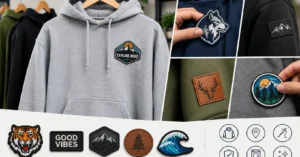
- Hoodies, jackets and sweatshirts
- Baseball caps and beanies
- Backpacks, tote bags and travel accessories
- Branded merchandise and customer gifts
- Sportswear and team clothing
- Work jackets and service uniforms
- Limited-edition clothing collections
- Promotional products for events and exhibitions
The most suitable option depends on your brand identity, artwork, budget and how the finished patch will be used.
Why Brand Recognition Matters for Small Businesses
Brand recognition refers to how easily people identify your business when they encounter its name, logo, colours or other distinctive visual elements.
For smaller companies, recognition is especially important because they may be competing with established businesses that have larger advertising budgets and more extensive marketing resources.
A consistent visual identity helps customers connect different experiences with the same company. When your logo appears on your website, packaging, uniforms, merchandise and social media, it becomes easier for people to associate those touchpoints with your brand.
Custom patches provide another way to reinforce this identity in the physical world.
Imagine a local landscaping company whose employees wear jackets with matching logo patches. Customers can identify the team more easily, while people who see the employees working in public may become familiar with the company name.
Similarly, a small clothing brand can create a distinctive patch that appears across several products. Over time, the repeated design can become part of the brand’s recognisable style.
Patches do not guarantee increased sales or instant recognition. Their value comes from thoughtful design, consistent use and visibility among the right audience.
1. Use Custom Logo Patches to Create a Professional Identity
Your logo is one of the most important elements of your brand identity. It communicates who you are and helps customers distinguish your business from competitors.
Custom logo patches turn that visual identity into a physical product that can be attached to clothing, accessories and merchandise.
For a small business, this can be particularly useful when several employees need to wear branded clothing or when products are manufactured using different fabrics.
Rather than embroidering the logo directly onto every garment, you can order patches separately and apply them to suitable items. This gives you flexibility when choosing garments and managing future replacements.
How to make your logo patch effective
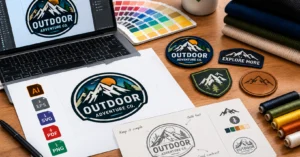
Start with your existing logo and consider how it will look at the finished size. A design that appears clear on a computer screen may become difficult to reproduce when reduced to a small patch.
Focus on:
- Keeping important text readable
- Using colours that contrast clearly
- Removing unnecessary decorative details
- Choosing a shape that complements the logo
- Selecting a suitable border and backing
- Maintaining consistency with your brand guidelines
If your original logo contains complicated gradients, very fine lines or small lettering, a simplified version may produce a cleaner result.
The objective is not to change your brand identity but to adapt it for the manufacturing process.
2. Add Custom Patches to Staff Uniforms
Staff uniforms are one of the most practical applications for business patches. A consistent uniform helps employees look coordinated and can make it easier for customers to identify team members.
This can be valuable for businesses such as cafés, restaurants, cleaning companies, retail shops, tradespeople, delivery services and maintenance providers.
A logo patch on a polo shirt, apron, jacket or workwear garment creates a visible connection between the employee and the business.
For example, a small plumbing company could use matching embroidered patches on work jackets. A beauty salon might add subtle logo patches to staff uniforms, while a food business could incorporate branded patches into aprons or caps.
Why patches can work well for uniforms
Consistent branding: The same logo design can be used across multiple garments.
Flexible application: A suitable patch can be attached to different compatible clothing items.
Replacement options: If a garment becomes damaged, a reusable or replacement patch may help preserve the branding, depending on how it was attached.
Professional presentation: A clean, well-positioned patch can make basic workwear feel more coordinated.
When selecting patches for uniforms, consider the working environment. Clothing that experiences frequent washing or heavy use may benefit from a durable attachment method, such as sewing. Always check that the selected patch and backing are suitable for the garment and its care requirements.
3. Choose the Right Type of Custom Patch for Your Brand
Not every patch material produces the same result. Some offer a traditional stitched appearance, while others are better suited to detailed artwork or modern designs.
Choosing the right type helps ensure that the finished patch matches your business identity and intended use.
Custom embroidered patches
Embroidered patches feature coloured threads stitched onto a fabric base. Their raised texture creates a classic, tactile appearance that works well for bold logos, badges, uniforms and clothing brands.
They are a strong option for businesses that want a traditional embroidered finish on jackets, caps, workwear or promotional apparel.
Embroidered patches are particularly effective when the design uses clear shapes, strong lettering and a manageable number of colours.
Custom woven patches
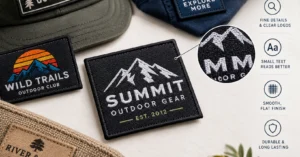
Woven patches use fine threads woven together to create the design. Because the design is formed differently from embroidery, woven patches can reproduce small lettering and fine details more clearly in many applications.
They are worth considering for fashion labels, clothing tags, detailed logos and designs where a flatter finish is preferred.
For a small business with a detailed brand mark, woven patches may help preserve important elements without relying on thick, raised stitching.
Custom PVC patches
PVC patches are made from a flexible, rubber-like material and can create bold shapes, defined outlines and dimensional details.
They are often suitable for outdoor brands, sports accessories, backpacks, equipment and products that benefit from a modern, rugged appearance.
If your business sells outdoor clothing or accessories, PVC patches may complement the product style. Suitability for water exposure, heat and repeated use depends on the specific material and construction, so confirm the requirements before ordering.
Custom leather patches
Leather patches provide a distinctive finish that can complement premium or heritage-inspired branding.
They are popular for applications such as denim jackets, caps, beanies, bags and handmade products. Depending on the material, a design can be embossed, debossed or laser-engraved.
Businesses that emphasise craftsmanship, traditional production or understated design may find leather patches particularly suitable.
Custom chenille patches
Chenille patches have a soft, textured appearance and are often associated with varsity jackets, sportswear and bold lettering.
They can help clothing brands create a retro or collegiate look, especially when used for initials, large letters or simple graphic designs.
Custom printed patches
Printed patches can reproduce detailed illustrations, multiple colours and artwork that may be difficult to translate into traditional embroidery.
They may suit brands with complex graphics or designs that depend on colour transitions and fine visual details.
4. Turn Everyday Products into Branded Merchandise
Small businesses do not have to restrict custom patches to employee uniforms. They can also incorporate them into products that customers use regularly.
Branded merchandise can help extend your visual identity beyond your business premises or website. A patch attached to a jacket, cap or bag may be seen by people who have never interacted directly with your company.
For example, an independent fashion label could sell caps featuring a distinctive embroidered badge. A craft business might offer branded tote bags, while a fitness studio could create patches for gym bags or club clothing.
The best merchandise ideas connect naturally with your audience and products.
Merchandise ideas for different industries
Clothing brands: Add patches to hoodies, jackets, denim garments and caps.
Coffee shops: Create branded aprons, staff caps or merchandise for loyal customers.
Outdoor businesses: Consider patches for backpacks, equipment bags and suitable outerwear.
Fitness businesses: Use patches on team apparel, gym bags or event merchandise.
Creative studios: Incorporate patches into limited-edition apparel or gifts for customers.
Local retailers: Offer branded accessories that complement the products already sold.
Before adding a patch to a product for resale, test the finished design and attachment method. The patch should look intentional, suit the garment and remain appropriate for the expected use.
5. Use Custom Patches for Affordable Promotional Campaigns
Promotional products can support brand awareness when they are relevant to the audience receiving them. Custom patches offer a compact option that can be distributed at events, included with orders or used in customer appreciation campaigns.
For a small business, this creates an opportunity to make promotional spending more purposeful.
Instead of producing generic merchandise that has little connection to your brand, create a patch that reflects your visual identity or communicates a specific message.
For example, an independent retailer might include a small branded patch with selected purchases. A local event organiser could create commemorative patches, while a clothing business might release a limited design to celebrate a collection launch.
Where can businesses distribute promotional patches?
- Trade shows and exhibitions
- Local markets and pop-up shops
- Product launches
- Community events
- Customer loyalty campaigns
- Business partnerships
- Online order packages
- Brand collaborations
The key is to choose the right audience. A promotional patch is more likely to be used when its design appeals to the recipient and its intended application is clear.
It is also useful to track campaign results. You might include a QR code on the accompanying packaging, use a dedicated landing page or ask customers how they discovered your business. These methods can help you understand whether a campaign contributes to engagement or sales.
6. Create a Memorable Identity for Your Clothing Brand
For independent clothing labels, the details of a garment can be just as important as the main design. A distinctive patch can provide a recognisable finishing touch without requiring a large printed graphic.
Custom patches can be positioned on the chest, sleeve, pocket, hem or back of a garment, depending on the design and product.
For example, a minimalist clothing brand might use a small woven patch with a simple logo. A streetwear label could choose a bold embroidered badge, while a heritage-inspired brand might prefer a leather patch.
Design ideas for clothing businesses
Minimal logo patches: Suitable for understated garments and simple brand identities.
Statement patches: Larger designs that become a prominent part of the garment.
Collection-specific patches: Designs created for a particular seasonal release or collaboration.
Limited-edition badges: Patches that distinguish a special product range.
Text-based patches: Short phrases, initials or brand names designed for readability.
A consistent patch design can help connect products across a collection. However, not every garment needs an identical placement or size. The important thing is to establish a visual system that makes sense for your brand.
7. Select the Best Patch Backing for Your Application
The backing affects how a patch is attached and how it performs during everyday use. Choosing the wrong option can lead to poor adhesion, movement or detachment.
Before placing an order, consider the fabric, the intended use, the required level of permanence and whether the patch needs to be removed later.
Sew-on backing
Sew-on patches are attached to a garment using stitching. This is often a suitable choice for workwear, jackets, bags and products that require a secure attachment.
It may also be appropriate for garments that will be washed regularly, provided the patch and stitching are properly suited to the fabric and care instructions.
Iron-on backing
Iron-on patches use a heat-activated adhesive. They can be convenient for suitable fabrics and applications where a relatively straightforward attachment method is preferred.
However, they are not compatible with every material. Some fabrics cannot tolerate the required heat, and the adhesive may not perform equally well on all surfaces.
Follow the manufacturer’s application instructions and test the method on the intended material when possible.
Hook-and-loop backing
Hook-and-loop, often called Velcro-style backing, allows a patch to be attached and removed from a compatible surface.
It can be useful for uniforms, bags, equipment and products where patches need to be changed or updated.
This option usually requires a compatible hook-and-loop surface or an appropriate matching piece attached to the garment.
Adhesive backing
Adhesive backing may be suitable for certain temporary or display applications. It should not automatically be treated as a substitute for a permanent clothing attachment.
For products that experience movement, friction or washing, check whether the adhesive is appropriate for the intended conditions.
Practical tip: Tell your patch supplier where the patch will be used and how it will be cared for. That information makes it easier to choose a suitable backing.
8. Keep Custom Patch Costs Under Control
Small businesses often need to balance branding quality with a limited budget. The good news is that cost planning can begin before the design enters production.
The price of a custom patch can depend on several factors, including material, size, complexity, quantity, backing and finishing requirements.
A detailed design may require more production work than a simple logo. Likewise, a large patch will generally use more material than a small one. Actual pricing varies by supplier and specification, so request a quotation for your particular project.
Choose the right size
Bigger is not always better. A small, well-designed patch may be more suitable for a uniform or cap than an oversized badge.
Consider the available space, viewing distance and amount of detail in your artwork before deciding on dimensions.
Simplify unnecessary details
Tiny text, very fine lines and excessive design elements can increase complexity and reduce legibility.
A simplified design may be easier to reproduce clearly while still preserving your brand identity.
Compare materials according to purpose
Do not automatically choose the most elaborate patch type. Select the material that suits the product, brand aesthetic and expected use.
For example, an embroidered patch may be suitable for a bold uniform logo, while a woven patch may be preferable for a detailed clothing label.
Plan quantities carefully
Ordering a larger quantity may reduce the cost per patch, depending on the supplier’s pricing structure. However, bulk ordering is not automatically the cheapest decision if many patches remain unused.
Estimate your actual requirements, consider likely future demand and ask about quantity-based pricing before committing.
Use one design across multiple applications
A versatile logo patch may work across jackets, bags, caps and merchandise. Using the same core design can help maintain brand consistency and may simplify future ordering.
Check the dimensions and attachment requirements for each product, as one patch size or backing may not be appropriate for every application.
9. Design Custom Patches That Customers Remember
A patch can only reinforce your brand effectively if people can recognise and understand the design.
You do not need a complicated graphic to create a memorable patch. In many cases, a clear logo, a distinctive shape and a consistent colour combination will work better than an overloaded design.
Start with your brand identity
Use your existing logo, brand colours and typography as the starting point. This helps the patch feel like a natural part of your business rather than an unrelated promotional accessory.
If you have several versions of your logo, identify the one that is easiest to reproduce at the intended size.
Prioritise readability
Small patches have limited space. Keep essential words clear and avoid including unnecessary text.
If your business name is long, a recognisable symbol or simplified logo may work better than trying to fit every detail into a tiny badge.
Choose colours carefully
Contrast helps the main elements stand out. Consider how the thread or material colours will appear against the patch background and the garment.
If colour consistency is important, share your brand references with the supplier and ask what matching options are available.
Think about the finished shape
A circular patch can provide a traditional badge appearance, while a shield, rectangle or custom-cut outline may better complement a particular logo.
Choose a border that frames the artwork neatly without competing with it.
Request and review a proof
Before production, review the design proof carefully. Check spelling, proportions, colours, dimensions and placement.
Pay particular attention to small text and intricate details. If anything looks unclear, discuss possible adjustments before approving the design.
A clear proofing process helps reduce avoidable errors and gives you greater confidence in the finished result.
10. How Custom Patches Can Support Customer Loyalty
Brand recognition is not limited to attracting new customers. Small businesses also benefit from maintaining relationships with existing customers.
Custom patches can become part of a thoughtful loyalty or community-building strategy when they offer genuine appeal.
For example, a clothing brand might release a patch exclusive to returning customers. A café could offer a branded badge as part of a seasonal promotion, while a local sports business might create patches for a team or community event.
These ideas work best when the patch has a purpose beyond simply displaying a logo.
Make the patch worth keeping
A well-designed patch may appeal to customers because it represents a shared interest, a memorable event or a particular style.
Consider designs connected to your business story, location, product range or customer community.
Offer variety without losing consistency
You can experiment with seasonal designs or limited releases while retaining a recognisable logo or colour palette.
This approach allows creativity without making your brand identity inconsistent.
Encourage customers to share their products
If customers choose to wear or display your merchandise, you can invite them to share photographs or feedback on social media.
Always obtain permission before reposting customer content, and avoid suggesting that every recipient will automatically promote your business.
11. Common Mistakes to Avoid When Ordering Business Patches
A successful patch project depends on more than selecting an attractive design. The material, dimensions, backing and production details all influence the result.
Here are several common mistakes to avoid.
Choosing a design that is too complicated
Fine details and tiny lettering can become difficult to reproduce, particularly with some embroidery techniques.
Solution: Ask whether the artwork needs simplifying or whether another patch type would be more appropriate.
Ignoring the intended fabric
A backing that works on one garment may not suit another. Heat-sensitive fabrics, textured surfaces and heavy-use products require particular attention.
Solution: Explain the intended application and confirm compatibility before ordering.
Ordering without checking dimensions
A patch may look larger or smaller than expected when viewed on a screen.
Solution: Review the actual measurements and, if necessary, use a physical template to visualise the patch on the garment.
Selecting a backing without considering use
A temporary adhesive, iron-on backing and sew-on construction serve different purposes.
Solution: Choose according to the garment, washing requirements and whether the patch needs to be removable.
Focusing only on the lowest price
Price matters, but it should be considered alongside material, design clarity, finishing, quantity and suitability.
Solution: Compare quotations using the same specifications so you can evaluate the options fairly.
Skipping the proofing stage
Incorrect spelling, colour choices or dimensions can be costly to correct after production.
Solution: Check every detail before approving the final proof.
12. How to Order Custom Patches for Your Small Business
If you have never ordered personalised patches before, the process can be straightforward when you prepare the necessary information.
Step 1: Define your goal
Decide whether you need patches for uniforms, merchandise, retail products, promotional campaigns or another purpose.
Your goal will influence the material, size and backing.
Step 2: Prepare your artwork
Provide your logo or design in the best-quality format available. Vector artwork is often useful because it can be scaled without losing sharpness, but a supplier may be able to work with other suitable files.
If you only have a PNG or another image format, ask whether it can be prepared for production.
Step 3: Select the patch type
Choose between embroidered, woven, PVC, leather, chenille, printed or another suitable option based on your design and intended application.
If you are unsure, ask for advice before finalising the specification.
Step 4: Confirm size, shape and backing
Provide the approximate dimensions and explain where the patch will be attached. Specify whether you prefer a traditional border or a custom-cut shape, if available.
Step 5: Request a quotation
Share the design, quantity, dimensions, patch type and backing requirements. Providing these details helps the supplier prepare a more relevant quote.
Check what is included in the quoted price, including production, delivery and any setup or design charges that may apply.
Step 6: Review the proof
Confirm that the logo, spelling, colours, dimensions and shape match your requirements.
Raise any concerns before giving production approval.
Step 7: Inspect the finished patches
When your order arrives, inspect a sample for design clarity, finishing and overall suitability. If the patches are intended for garments that will be washed frequently, follow the recommended care instructions and check the attachment method.
Keeping your approved design and order specifications can also make future reorders easier.
13. Measuring the Value of Custom Patches for Brand Recognition
Custom patches can contribute to branding, but small businesses should avoid assuming that every patch automatically generates sales.
Instead, consider how the patches fit into your wider marketing plan and measure the outcomes that matter to your business.
Track promotional distribution
Record how many patches are given away, sold or applied to products. This helps you understand how the available stock is being used.
Monitor customer response
Ask customers whether they find the merchandise useful or appealing. Feedback can help you improve future designs.
Use campaign-specific tracking
If you distribute patches at an event, include a dedicated QR code on the packaging or a trackable offer where appropriate.
This can help connect campaign engagement with website visits or enquiries.
Compare costs with useful outcomes
Consider the total cost of producing and distributing patches, then compare it with relevant results such as merchandise revenue, customer engagement or qualified enquiries.
Brand recognition can be difficult to measure precisely, so use several indicators rather than relying on a single number.
Maintain a consistent brand identity
Repeated use of the same visual elements can help people connect your products and communications with your business.
A patch is most useful when it supports a broader, consistent branding strategy rather than being treated as a standalone solution.
14. Why Choose Custom Patch Makers UK for Your Branding Project?
When selecting custom patches, businesses need to consider more than the artwork alone. They also need to choose a design, material and finish that suit the intended product.
At Custom Patch Makers UK, our focus is on helping customers explore personalised patch options for different applications. Whether you are planning branded merchandise, clothing accessories or patches for your business team, starting with a clear brief makes it easier to identify an appropriate solution.
Before requesting a quotation, consider preparing:
- Your logo or design file
- The approximate patch dimensions
- Your preferred patch type
- The quantity you need
- The intended garment or product
- Your preferred backing and finish
- Any important delivery requirements
If you are uncertain which material is right for your artwork, explain your goals and ask for guidance. A design intended for a detailed clothing label may require a different approach from a bold logo intended for a work jacket.
Taking time to establish these requirements can help you make a more informed decision and create patches that fit your brand.
Conclusion
Custom patches for small businesses offer a flexible way to bring branding into everyday products, staff uniforms and promotional merchandise. They can help businesses present a more consistent identity, add character to clothing and create physical products that customers may choose to keep and use.
The most effective approach begins with a clear purpose. Choose a patch type that suits your artwork, select an appropriate backing, keep the design readable and confirm the finished dimensions before production.
It is also important to consider value rather than focusing exclusively on price. A suitable patch that works well on your intended product is more useful than a cheaper option that does not meet your requirements.
Whether you run an independent clothing label, a local service company, a café or a growing online business, personalised patches can become a practical part of your branding strategy.
Frequently Asked Questions
1. Are custom patches good for small businesses?
Yes. Custom patches can help small businesses display their logos on uniforms, clothing, bags and merchandise. They offer a flexible branding option, particularly when a design can be used across several products.
2. What type of custom patch is best for business logos?
Embroidered patches are suitable for many bold logos and traditional branding applications. Woven patches may be better for fine details and smaller lettering, while PVC, leather and printed patches offer different finishes for specific products and brand styles.
3. Are custom patches an affordable branding option?
They can be, depending on the material, size, complexity and order quantity. Request a quotation based on your exact requirements and compare the total cost with the intended use.
4. Can small businesses use custom patches on uniforms?
Yes. Patches can be attached to suitable shirts, jackets, aprons, caps and workwear. The best attachment method depends on the fabric, washing requirements and expected use.
5. Which backing should I choose for business patches?
Sew-on backing is often suitable for permanent attachment, iron-on backing may work on compatible fabrics, and hook-and-loop backing is useful when patches need to be removable. Confirm compatibility before ordering.
6. Can I use my existing company logo on a custom patch?
In many cases, yes. Your logo can often be adapted for patch production. Very fine details or small lettering may need adjustments to remain clear at the finished size.
7. How can custom patches help build brand recognition?
Patches display your brand on products and clothing that people may see repeatedly. Consistent design and relevant placement can reinforce familiarity, although results depend on how the patches are used and who sees them.
8. Can I order patches for promotional events?
Yes. Custom patches can be used as event merchandise, customer gifts, product-launch accessories and promotional items. Choose a design that suits your audience and campaign objectives.
9. What information do I need to order custom patches?
Prepare your artwork, preferred patch type, size, quantity, backing and intended application. These details help the supplier understand your requirements and provide a more accurate quotation.
10. Can custom patches be used on different products?
Yes. Depending on the patch construction and backing, they may be suitable for jackets, hoodies, caps, bags, uniforms and other products. Confirm the material and attachment method for each application.