Winter fashion is all about combining comfort, warmth, and personal style. From cosy beanies and classic denim jackets to heavyweight hoodies and everyday bags, the colder months offer plenty of opportunities to experiment with different textures and accessories. However, finding a way to make ordinary winter clothing look distinctive can sometimes be challenging. This is where custom leather patches make a difference.
Leather patches bring together timeless appeal, practical design, and personalised branding. Their textured appearance creates an attractive contrast against knitted fabrics, denim, cotton, and canvas. Whether you want to refresh your winter wardrobe, develop a clothing collection, promote a business, or create personalised accessories, leather patches offer a versatile way to make everyday products look more distinctive.
At Custom Patch Makers UK, custom patches are a useful way to explore creative branding and garment decoration. A carefully designed leather patch can turn a simple beanie into a fashionable accessory, give a jacket a premium finish, or help a clothing brand develop a recognisable identity.
In this guide, we will explore how to upgrade your winter style with custom leather patches, where to use them, how to choose suitable materials and designs, and how to care for patched clothing throughout the colder season.
What Are Custom Leather Patches?
Custom leather patches are personalised decorative or branding pieces made from genuine leather or leather alternatives. They can feature a company logo, brand name, initials, illustration, slogan, or other artwork. Depending on the material and design, the artwork can be embossed, debossed, laser engraved, or reproduced using another suitable finishing method.
Unlike conventional printed labels, leather patches introduce a tactile element to clothing and accessories. Their surface texture and defined edges make them noticeable without requiring bright colours or complicated graphics.
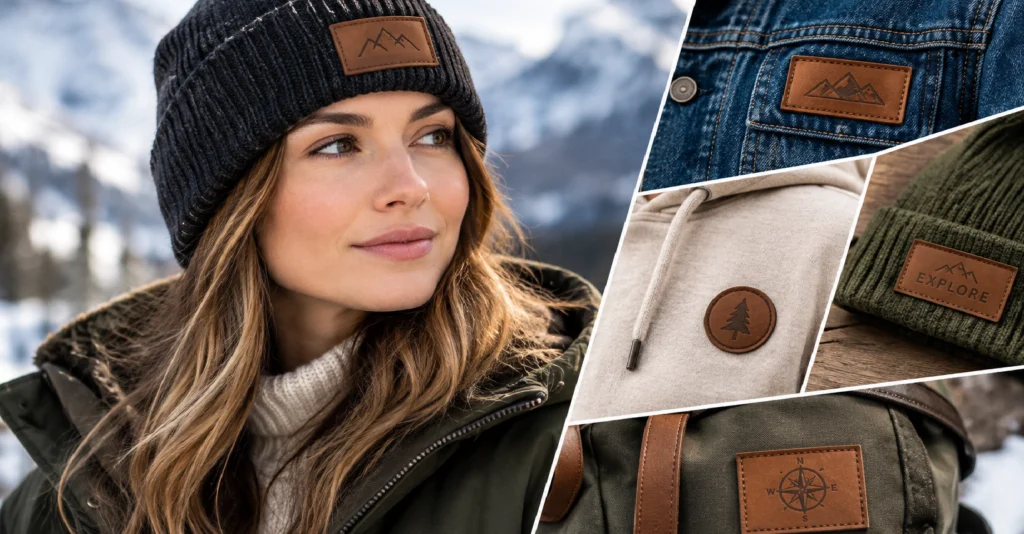
For example, a plain black beanie can become more interesting with a small brown leather patch featuring an engraved logo. Similarly, a denim jacket with a simple leather badge can develop a rugged, heritage-inspired appearance.
Custom leather patches are suitable for a variety of products, including:
- Winter beanies and knitted hats
- Baseball caps and bucket hats
- Denim and bomber jackets
- Hoodies and sweatshirts
- Jeans and workwear
- Backpacks, tote bags, and travel accessories
- Outdoor clothing and lifestyle merchandise
- Branded promotional products
Their versatility makes them appealing to individuals, fashion designers, independent clothing labels, retailers, and businesses looking for a distinctive way to personalise their products.
Why Custom Leather Patches Are Perfect for Winter Fashion
Winter clothing often features heavier materials, layered outfits, and darker colour palettes. Although these elements are practical for colder weather, they can sometimes make outfits look similar. Custom leather patches offer an easy way to introduce character without changing an entire garment.
1. They Create a Premium Appearance
Leather has a long-standing association with craftsmanship, durability, and timeless fashion. Adding a well-designed leather patch to a garment can create a more considered appearance, particularly when the patch complements the fabric and colour scheme.
A dark brown patch on a cream beanie, for instance, creates a classic contrast. A black engraved patch on a charcoal hoodie offers a more understated finish.
This makes leather patches particularly suitable for fashion brands that want their products to look refined without relying on oversized logos or excessive decoration.
2. They Add Texture to Winter Outfits
Winter styling naturally involves different textures, from wool and knitted yarn to denim, fleece, and quilted outerwear. Leather introduces another surface that works well alongside these materials.
A smooth leather patch on a chunky knit beanie creates a noticeable contrast. On a canvas jacket, a textured patch can reinforce a practical, outdoor-inspired aesthetic.
The key is to choose a finish that complements the garment rather than competing with it.
3. They Help Express Individual Style
Personalised fashion allows people to wear items that reflect their interests, values, or creative identity. Custom leather patches can feature initials, meaningful symbols, original illustrations, or a personal logo.
For example, someone who enjoys hiking might choose a mountain-inspired design for a winter hat. A motorcycle enthusiast may prefer a bold emblem for a jacket, while a minimalist fashion lover might select a small geometric logo.
These small details make clothing feel more personal and can help turn an ordinary accessory into a favourite wardrobe item.
4. They Support Long-Term Wardrobe Choices
A simple leather patch design can remain visually appealing beyond a single winter season. Unlike a highly seasonal graphic, a classic logo or understated emblem can work across different collections and changing fashion trends.
When the patch material, attachment method, and garment are appropriate for their intended use, the finished item can remain attractive through regular wear. Durability still depends on the leather or alternative material, exposure to moisture, garment care, and the quality of application.
For people who prefer versatile clothing, this makes custom leather patches an appealing option.
Stylish Ways to Wear Custom Leather Patches This Winter
One of the biggest advantages of custom leather patches is their adaptability. You can use them on different winter garments and accessories, creating looks that range from casual streetwear to classic outdoor fashion.
1. Upgrade Your Winter Beanies
Beanies are among the most practical accessories for cold weather. They keep your head warm while complementing coats, jackets, and layered outfits. However, a plain knitted beanie can sometimes lack a distinctive design feature.
A custom leather patch adds that missing detail.
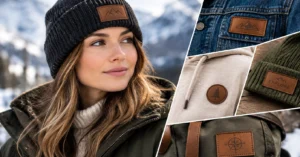
Consider a charcoal beanie with a tan rectangular patch, a navy knitted hat with a dark brown emblem, or a cream beanie with a black minimalist logo. These combinations create visual interest while keeping the overall design simple.
For personal use, you can add initials, a small mountain graphic, or a favourite symbol. For clothing brands, a branded leather patch can help create a consistent look across different colours and styles.
Style tip: Match the patch colour to your boots, belt, gloves, or bag for a coordinated winter outfit.
When applying leather patches to knitted beanies, sew-on attachment is often a suitable choice because it accommodates the flexible knitted surface. A backing or stabilising layer may also help protect the knit from distortion.
2. Give Denim Jackets a Rugged Finish
Denim remains a versatile material throughout the year, and it works particularly well with leather. During winter, a denim jacket can be layered over a hoodie or worn beneath a heavier coat.
A custom leather patch adds a rugged, vintage-inspired detail that suits this combination.
You could place a small patch on the chest, create a branded label near the lower hem, or use a larger decorative patch on the back. For a heritage look, consider warm brown leather with embossed lettering. For contemporary streetwear, black leather with a clean engraved logo can provide a more modern result.
If you are developing a clothing collection, consistency is important. Using the same patch shape, colour, and logo treatment across several jacket styles can help establish a recognisable brand identity.
3. Personalise Hoodies and Sweatshirts
Hoodies and sweatshirts are winter essentials because they are comfortable, easy to layer, and suitable for casual occasions. Custom leather patches offer a way to give these familiar garments a more distinctive appearance.
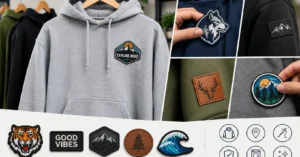
A small patch on the chest creates subtle branding. A patch near the hem or sleeve provides a less conventional placement, while a larger back design can make a stronger statement.
For a premium casualwear collection, consider neutral-coloured hoodies with understated leather labels. For streetwear, a bold emblem or distinctive geometric patch may suit the overall design better.
Before selecting a placement, consider the garment’s thickness, stretch, and construction. The attachment method should be appropriate for the fabric and should not restrict movement or create uncomfortable stiffness.
4. Add Character to Winter Jackets
Winter jackets are often among the most frequently worn items in a cold-weather wardrobe. Their larger surfaces provide several opportunities for personalised decoration.
A leather patch on the chest can create a clean branded appearance. A sleeve patch may work well for outdoor clothing, club merchandise, or team apparel. A back patch can serve as the main visual feature of a statement jacket.
The design should complement the jacket’s purpose. A small engraved logo may suit a minimalist puffer jacket, while a larger embossed badge could work better on a rugged canvas coat.
For weather-exposed outerwear, consider how the patch material and attachment will respond to rain, snow, friction, and repeated cleaning. Not every leather finish is suitable for prolonged exposure to moisture, so material selection matters.
5. Personalise Backpacks and Winter Bags
Winter style is not limited to clothing. Backpacks, travel bags, gym bags, and everyday carry accessories can also benefit from custom leather patches.
A leather logo patch on a canvas backpack can create a classic outdoor look. A small personalised patch on a travel bag can make the accessory easier to recognise, while a branded patch on a promotional bag can improve its presentation.
For businesses, leather patches are particularly useful when creating coordinated accessories to accompany winter clothing collections.
Choose a placement that remains visible without interfering with pockets, straps, zips, or the bag’s normal use.
Choosing the Right Leather Patch Material
Selecting the right material is an important part of creating a successful design. Genuine leather and synthetic leather alternatives can both produce attractive results, but their characteristics differ.
Genuine Leather Patches
Genuine leather is made from animal hide and naturally varies in grain, texture, and appearance. This variation can give each patch an individual character.
Genuine leather is often chosen for premium fashion items, heritage-inspired clothing, denim labels, and accessories where natural materials are part of the desired aesthetic.
Over time, some genuine leather develops a patina, which can add character to the surface. However, its performance depends on the type of leather, tanning process, finish, and care routine. It may require protection from excessive moisture and unsuitable cleaning products.
Faux Leather Patches
Faux leather patches are made from synthetic materials designed to resemble leather. They can offer a consistent surface, a wide selection of colours, and an alternative for brands that do not want to use animal-derived leather.
These patches may be suitable for beanies, jackets, caps, bags, and promotional products, depending on the quality of the material.
Faux leather is not automatically more sustainable than genuine leather. Its environmental impact depends on the materials used, manufacturing process, durability, and end-of-life options. If environmental credentials matter to your brand, check the specific material composition rather than relying on broad labels.
How to Choose Between Them
Consider your budget, design, target audience, and intended application before choosing a material.
Genuine leather may suit a premium heritage collection, while faux leather may be more appropriate for a vegan product range or a project requiring consistent colours across multiple products.
In either case, request or review material samples when possible, particularly if colour matching and surface texture are important to your final design.
Popular Custom Leather Patch Shapes and Designs
The shape of a leather patch influences how it looks on a garment. The best option depends on your artwork, available space, and the overall style you want to achieve.
Rectangular Leather Patches
Rectangular patches are a classic choice for brand names, short text, and horizontal logos. They work particularly well on beanies, caps, jeans, and jacket hems.
Their simple outline makes them easy to incorporate into different clothing collections.
Round Leather Patches
Round patches are suitable for badges, emblems, outdoor graphics, and circular brand marks. They can give winter accessories a traditional club-inspired or adventure-themed appearance.
Mountain graphics, compass symbols, and simple initials often work well within a circular layout.
Oval Leather Patches
Oval patches provide a softer alternative to rectangular shapes. They can suit vintage-inspired logos, decorative lettering, and lifestyle brands looking for a classic badge design.
Custom-Shaped Leather Patches
Custom-shaped patches follow the outline of a particular logo, symbol, or illustration. They can create a more distinctive result, although complicated outlines may require careful consideration during production.
When choosing a custom shape, ensure the design has enough space around its important elements and that narrow sections are practical to manufacture and attach.
Minimalist Logo Patches
Minimalist designs remain a strong option for premium-looking winter accessories. A simple emblem, monogram, or brand name can be more versatile than a design containing too many small elements.
For laser engraving, embossing, or debossing, artwork should be checked to ensure that fine lines and small lettering will remain clear at the final patch size.
Understanding Leather Patch Finishing Techniques
The finishing method affects the appearance and feel of a custom leather patch. Three commonly used options are embossing, debossing, and laser engraving.
Embossed Leather Patches
Embossing creates a raised design on the material’s surface. It can make lettering, symbols, and logos stand out through texture and depth.
Embossed patches are a good option for bold, relatively simple designs that need a prominent appearance.
Debossed Leather Patches
Debossing presses a design into the material, creating a recessed impression. The result is often subtle and refined, making it suitable for understated branding and classic leather labels.
A debossed logo on a brown leather patch can create a sophisticated finish without relying on contrasting colours.
Laser-Engraved Leather Patches
Laser engraving uses a laser to mark the surface of suitable material. It can reproduce many fine lines, lettering styles, and intricate shapes with good precision.
The final appearance depends on the material, colour, coating, and laser settings. Not every material marketed as leather is suitable for laser processing, so compatibility should be confirmed before production.
Which Finish Should You Choose?
Choose embossing when you want a raised appearance, debossing for a recessed and understated look, and laser engraving when your design contains details that benefit from precise marking.
The most appropriate method depends on your artwork and the material selected. A production-ready mockup can help you assess whether the logo remains clear and balanced at its intended size.
How Custom Leather Patches Help Clothing Brands Stand Out
Custom leather patches are not just for individual fashion enthusiasts. They can also help clothing businesses develop a consistent visual identity and create products that feel more carefully designed.
Building a Recognisable Brand Identity
A recognisable logo and consistent placement help customers identify products across a collection. When a brand uses the same leather patch style on beanies, jackets, caps, and bags, it creates a visual connection between otherwise different products.
For example, a small rectangular patch with a distinctive monogram can become a signature detail that customers associate with the brand.
Creating Premium-Looking Merchandise
Retailers and clothing businesses often look for ways to distinguish their merchandise from standard products. A thoughtfully designed leather patch can add texture and a considered finishing detail without requiring an elaborate garment design.
This can be useful for independent fashion labels, outdoor brands, lifestyle businesses, and limited-edition merchandise.
However, a patch alone does not guarantee a premium product. Fabric quality, construction, fit, finishing, and overall design remain equally important.
Supporting Seasonal Collections
Winter collections often include beanies, hoodies, jackets, scarves, and bags. A shared leather patch design can tie these products together while allowing each item to retain its own style.
A brand could use one patch design across several beanie colours, for example, or adapt the patch size for different jacket styles while keeping the same logo treatment.
Offering Personalised Products
Personalisation can make merchandise more appealing to customers who want something distinctive. Initials, names, club emblems, and special graphics can be incorporated into suitable leather patch designs.
Before producing personalised items in quantity, confirm that the artwork, text, patch size, and finishing method will reproduce clearly and consistently.
How to Design Custom Leather Patches for Winter Clothing
Good patch design begins with a clear purpose. Instead of adding decoration simply to fill an empty space, consider what the patch should communicate and how it should complement the garment.
Step 1: Define Your Purpose
Decide whether the patch is intended for personal expression, brand identification, team merchandise, promotional use, or decorative styling.
A fashion label may prioritise a distinctive logo, while an outdoor club may prefer an emblem that reflects its activities.
Step 2: Select the Garment
Choose the product that will carry the patch. A beanie has limited space and a flexible surface, whereas a jacket or backpack may accommodate a larger design.
The garment’s material and construction will influence the suitable patch dimensions and attachment method.
Step 3: Choose a Shape and Size
Select a patch size that complements the garment rather than overpowering it. Small accessories often benefit from a simple, compact logo, while larger jackets may support a more prominent design.
Measure the intended placement before finalising the artwork.
Step 4: Prepare Your Artwork
Use high-quality artwork and ensure that the logo, text, and essential details are easy to distinguish. Vector artwork is often helpful for production because it can be scaled without losing sharpness.
If your logo includes very small lettering or intricate linework, ask whether the chosen finishing process can reproduce it clearly.
Step 5: Select the Material and Finish
Choose genuine or faux leather according to your product requirements. Then select a suitable finish, such as embossing, debossing, or laser engraving.
Think about the patch colour in relation to the garment. Contrast can make a logo more noticeable, while similar tones can create a subtle, minimalist appearance.
Step 6: Decide on Attachment
Sew-on patches are commonly used for knitted beanies and many garments because stitching can provide a secure attachment when correctly applied.
Other attachment options may be appropriate for suitable surfaces, but iron-on backing should not be assumed to work with every leather material or garment. Heat, adhesive compatibility, fabric sensitivity, and product construction all matter.
Step 7: Review the Final Mockup
Before production, review the proposed design for size, colour, placement, readability, and overall balance. A mockup allows you to identify potential problems before committing to a larger quantity.
For business orders, confirm the approved artwork and specifications in writing so the finished products match the agreed design.
How to Care for Clothing with Leather Patches
Proper care can help preserve the appearance of leather patches and the garments to which they are attached.
Check the garment’s care label first. The safest cleaning method depends on both the clothing material and the patch. If the garment requires specialist cleaning, ask the cleaner how to handle its leather decoration.
Avoid unnecessary moisture. Some leather finishes can stain, stiffen, or change appearance when exposed to excessive water. Allow wet items to dry naturally away from direct heat.
Use suitable cleaning products. Do not automatically apply ordinary detergent, bleach, solvents, or leather conditioners to every patch. Test any recommended product on an inconspicuous area where appropriate, and follow the material supplier’s instructions.
Store items properly. Keep winter garments in a clean, dry, ventilated place. Avoid leaving damp beanies, jackets, or bags packed away for extended periods.
Inspect the attachment. Check occasionally for loose stitching, lifted edges, or signs of material deterioration. Addressing small issues early may help prevent further damage.
Be careful with heat. High-temperature ironing or tumble drying may damage some leather finishes, synthetic materials, or adhesives. Use only care methods approved for the particular garment and patch.
These simple precautions help maintain the finished appearance of your customised winter clothing.
Why Choose Custom Patch Makers UK for Your Patch Ideas?
Finding the right custom patch solution involves more than selecting an attractive design. Material suitability, artwork preparation, finishing, dimensions, and attachment all contribute to the result.
At Custom Patch Makers UK, you can explore different types of custom patches to help identify an option that fits your product and branding goals. Leather patches are especially worth considering when you want an understated, textured finish for fashion accessories, headwear, jackets, bags, or branded merchandise.
Before placing an order, prepare your logo or artwork, identify the products that will carry the patches, and consider your preferred size, shape, colour, and finish. If you are unsure which production technique will work best, discuss your design requirements with your chosen supplier.
For businesses, approving a clear mockup and confirming the specifications before production can make the ordering process more straightforward.
Frequently Asked Questions About Custom Leather Patches
1. Are custom leather patches suitable for winter clothing?
Yes. Custom leather patches can complement winter beanies, jackets, hoodies, denim, coats, and bags. Their textured appearance works particularly well with knitted fabrics, canvas, and other heavier materials. The patch and attachment method should be selected for the specific garment and its intended use.
2. Can I add leather patches to knitted beanies?
Yes. Leather patches can be attached to many knitted beanies. Sew-on application is often a suitable option because it works with the flexible surface of knitwear. A stabilising layer may help prevent the knit from stretching or distorting during attachment.
3. What is the difference between genuine leather and faux leather patches?
Genuine leather is made from animal hide and has natural variations in texture and grain. Faux leather is made from synthetic materials and can offer a more consistent finish. The right option depends on your budget, product requirements, preferred appearance, and material preferences.
4. Which leather patch finish looks best on winter accessories?
There is no single best finish for every design. Embossing creates a raised effect, debossing creates a recessed impression, and laser engraving is useful for many detailed designs. The best choice depends on the artwork, patch material, size, and style of the finished product.
5. Can leather patches feature my business logo?
Yes. Custom leather patches can feature brand names, logos, monograms, symbols, and other suitable artwork. For a clean result, ensure the logo is legible at the final patch size and that the chosen finishing method can reproduce its details.
6. Are custom leather patches durable?
They can be durable when the material, finish, attachment, and garment are appropriate for the intended use. However, longevity varies according to material quality, exposure to moisture, friction, cleaning methods, and everyday wear. Follow the supplier’s care instructions to help maintain the patch.
7. Can leather patches be used on jackets and backpacks?
Yes. Leather patches are commonly used on jackets, backpacks, canvas bags, and other accessories. Placement should be selected carefully so the patch complements the product without interfering with seams, pockets, straps, or normal use.
8. How do I choose the right size for a custom leather patch?
Measure the available area on the garment and consider the size of the logo. A small patch often suits a beanie or cap, while a jacket or backpack may accommodate a larger design. A mockup can help you judge proportions before production.
9. Are leather patches suitable for vegan clothing brands?
Faux leather patches may be suitable for brands seeking alternatives to animal-derived leather. However, the precise material composition should be verified, and any vegan or environmental claims should be supported by the relevant supplier information.
10. How can I make my leather patch design look professional?
Start with clear artwork, suitable lettering, balanced proportions, and a patch colour that complements the garment. Choose an appropriate finishing method and attachment, then review a mockup to check the design’s readability and placement.
Conclusion: Refresh Your Winter Style with Custom Leather Patches
Winter fashion does not have to rely on expensive wardrobe replacements or complicated designs to feel fresh. Sometimes, a small and carefully chosen detail can make an ordinary item look more distinctive.
Custom leather patches offer a versatile way to personalise winter beanies, jackets, hoodies, denim, backpacks, and other everyday accessories. Their combination of texture, adaptable design, and understated appeal makes them suitable for personal fashion projects as well as clothing brands developing their own collections.
From minimalist engraved logos to bold embossed emblems, the possibilities depend on your artwork, material choice, and intended application. By considering the garment, patch size, finishing technique, and attachment method, you can create a design that complements your winter wardrobe or strengthens your brand identity.
Whether you are refreshing a favourite accessory or planning a new clothing range, custom leather patches provide an opportunity to add a personal finishing touch.