Custom embroidered patches are one of the easiest ways to give clothing, uniforms, bags, jackets, hats, and merchandise a distinctive identity. They can turn a simple garment into branded apparel, help a sports team look more professional, or give a club and organisation a recognisable symbol members are proud to wear.
However, many people assume that creating high-quality embroidered patches has to be expensive. The good news is that it does not. With the right design decisions, patch size, colours, backing, quantity, and production approach, you can create attractive custom embroidered patches without putting unnecessary pressure on your budget.
At Custom Patch Makers UK, we help businesses, clubs, sports teams, schools, organisations, fashion brands, and individuals turn their ideas into custom patches. Our range includes embroidered, woven, chenille, leather, PVC, sublimated, Velcro, iron-on, and other custom patch options, allowing customers to choose a solution that fits both their design and budget.
If you are planning your first patch order or looking for ways to reduce the cost of an existing design, this guide will explain exactly where you can save money without sacrificing the professional appearance of your patches.
What Are Custom Embroidered Patches?
Custom embroidered patches are decorative or branded pieces of fabric featuring artwork, text, logos, symbols, or other designs created using embroidery. Thread is stitched into a base material to produce a textured appearance that gives the patch its classic, premium look.
Unlike simply printing an image onto fabric, embroidery adds physical texture and dimension. You can see and feel the stitching, which is one of the reasons embroidered patches remain popular for uniforms, jackets, hats, bags, sportswear, workwear, clubs, and fashion products.
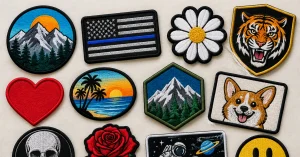
A patch can be designed in almost any shape or size. You can create a traditional circular patch, a rectangular name patch, a shield, an emblem, a logo-shaped design, or a completely custom outline.
The backing can also be selected according to how you plan to use the patch. Common options include sew-on, iron-on, Velcro, adhesive, and hook-and-loop styles.
The key is understanding that every design choice can influence the final cost.
Why Are Embroidered Patches So Popular?
Embroidered patches have remained popular because they combine visual appeal, durability, and versatility.
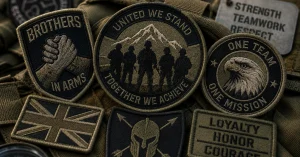
A company can place its logo on employee uniforms. A football club can create team badges. A motorcycle club can develop a recognisable emblem. A clothing brand can use patches as part of a collection. A school can create achievement badges, while an event organiser can produce commemorative patches for attendees.
They are also useful because the same basic patch concept can be applied to many different products.
For example, one logo patch could potentially be used on:
- Baseball caps
- Beanies
- Jackets
- Hoodies
- Shirts
- Work uniforms
- Backpacks
- Sports bags
- Trousers
- Vests
- Promotional merchandise
- Fashion accessories
This versatility makes patches particularly useful when you are working with a limited marketing or merchandise budget.
Instead of producing an entirely different branded product for every purpose, you can create a well-designed patch that works across multiple applications.
Can You Really Design Embroidered Patches on a Budget?
Yes.
The biggest mistake people make is assuming that saving money means choosing the cheapest materials or reducing quality. In reality, budget-friendly patch production is more about making intelligent design decisions.
You can control costs by considering:
- The size of the patch
- The number of colours
- The complexity of the artwork
- The amount of embroidery coverage
- The patch shape
- The backing type
- The quantity ordered
- The intended application
- The amount of text
- Whether embroidery is actually the best patch style for your artwork
The goal should not be to make the patch as cheap as possible.
The goal should be to remove unnecessary costs while keeping the design attractive, readable, and durable.
1. Start With a Simple Design
One of the easiest ways to control your embroidered patch budget is to start with a simple design.
A complicated design containing numerous tiny elements, gradients, fine lines, multiple text sections, and extremely detailed artwork may require more production work than a clean logo.
This does not mean your patch needs to look boring.
A simple design can actually look more professional.
Think about some of the most recognisable logos in branding. Many of them rely on strong shapes, limited colours, clear typography, and a memorable symbol.
When designing a patch, ask yourself:
Does every element need to be there?
If removing a tiny detail does not change the meaning of the design, consider removing it.
For example, instead of embroidering a highly detailed illustration containing dozens of tiny lines, you could simplify the illustration into its most recognisable shapes.
The result can be:
- Easier to manufacture
- Easier to read
- More visually striking
- More suitable for smaller patches
- Potentially more cost-effective
At Custom Patch Makers UK, you can submit a logo, sketch, artwork file, inspiration image, or design concept, and the design can be prepared for production.
2. Choose the Right Patch Size
Patch size is another important factor when you’re trying to stay within a budget.
Larger patches generally require more materials, thread, and production time than smaller patches. If your design does not need to be large, reducing the dimensions can be an effective way to manage costs.
However, there is an important balance.
Do not make the patch so small that the artwork becomes difficult to reproduce.
The ideal size depends on:
- Your artwork
- Amount of text
- Placement
- Garment type
- Desired visual impact
- Level of detail
A logo designed for a chest area may need a different size from a patch intended for the back of a jacket.
Similarly, a small hat patch needs to be designed differently from a large motorcycle back patch.
Before production begins, consider where the patch will be placed and how far away people will typically view it.
3. Limit the Number of Colours
Colour can make an embroidered patch more attractive, but using too many colours can make the artwork unnecessarily complicated.
If your brand already has specific colours, start with those.
For example, a logo using black, white, and one accent colour may have a stronger visual identity than a design using ten unrelated colours.
A limited colour palette can also make your patch look more consistent across different products.
For businesses, this is particularly useful because you want your patch to match your existing branding.
A practical approach is to choose:
- One primary background colour
- One main logo colour
- One secondary colour
- One accent colour if necessary
You do not need to eliminate colour completely to save money.
Instead, use colour intentionally.
4. Avoid Tiny Text
Tiny text is one of the biggest problems with embroidered patches.
What looks perfectly readable on a computer screen may become difficult to reproduce when converted into thread.
Embroidery is not the same as digital printing. Thread has physical thickness, meaning extremely small lettering and narrow lines have limitations.
If you need text on your patch, consider:
- Using a simple font
- Increasing letter spacing
- Removing unnecessary words
- Making important text larger
- Using fewer words
- Increasing the overall patch size if necessary
For example, a company may be tempted to include:
“Established 2020 – Quality Products – London – United Kingdom”
That may contain useful information, but it could be excessive for a small embroidered patch.
A shorter version such as:
“CUSTOM PATCH MAKERS”
may create a much cleaner result.
The goal is not to put everything on the patch.
The goal is to communicate the most important message clearly.
5. Use Bold Shapes and Strong Outlines
Bold outlines are particularly useful for embroidered designs.
A strong border can help separate the artwork from the patch background and make the design easier to recognise.
Thin outlines can sometimes disappear visually when reproduced in thread, particularly at smaller sizes.
When designing a budget-friendly patch, consider using:
- Bold borders
- Strong lettering
- Clear shapes
- High contrast
- Simple icons
- Distinctive silhouettes
These choices can make a relatively simple patch look much more premium.
A good patch does not need hundreds of individual design elements.
It needs a strong visual hierarchy.
6. Think Carefully About Patch Shape
The shape of your patch can influence its appearance and production requirements.
Traditional shapes such as circles, rectangles, squares, shields, and rounded rectangles are popular because they work well with many applications.
However, custom-shaped patches can also create a powerful visual effect.
For example, if your logo has a distinctive outline, creating a patch around that shape can make the finished product feel more personalised.
Custom Patch Makers UK produces patches in virtually any shape or size, giving you flexibility when developing your design.
If your budget is tight, discuss the shape with your patch manufacturer before finalising the artwork. Sometimes a small adjustment to the border or outline can simplify production while preserving the overall appearance.
7. Choose the Right Backing
Backing is often overlooked when people think about patch costs.
Different applications require different backing solutions.
Sew-On Backing
Sew-on patches are a traditional choice and work well when you want a permanent attachment.
They are commonly used for:
- Jackets
- Uniforms
- Bags
- Workwear
- Motorcycle apparel
- Heavy garments
Iron-On Backing
Iron-on patches are convenient because they can be attached using heat.
They are useful for clothing customisation, DIY projects, fashion applications, and many casual garments.
Velcro Backing
Velcro is particularly useful when you need to remove or replace the patch.
It is popular for:
- Tactical gear
- Outdoor equipment
- Team uniforms
- Airsoft clothing
- Organisational apparel
Custom Patch Makers UK offers Velcro and hook-and-loop backing options for customers who need removable patches.
The cheapest backing is not necessarily the best choice.
Instead, choose the backing that matches how you intend to use the patch.
8. Order the Right Quantity
Quantity can have a significant impact on your overall patch budget.
If you only need a handful of patches, you should not automatically order hundreds simply because a larger order may reduce the per-piece cost.
Calculate what you actually need.
For example, you might need patches for:
- 12 employees
- 20 sports team members
- 30 event participants
- 50 jackets
- 100 pieces of merchandise
If your initial requirement is small, start with a manageable quantity.
On the other hand, if you know you will need more patches later, ordering a larger batch may make financial sense.
Custom Patch Makers UK accommodates both smaller and larger orders, allowing customers to discuss their requirements before production.
9. Avoid Unnecessary Design Changes
Repeatedly changing your design can make the process more complicated.
Before submitting your artwork, make sure you have agreed on:
- Logo
- Colours
- Text
- Size
- Shape
- Border
- Backing
- Intended placement
A clear brief helps the production process move smoothly.
It is also useful to provide a high-quality logo file if one is available.
If you only have a low-resolution image, do not worry. A patch manufacturer can often help prepare artwork for production.
10. Compare Embroidery With Other Patch Styles
Although embroidered patches are one of the most popular choices, they are not always the ideal solution for every design.
Your artwork may be better suited to another patch type.
For example, woven patches are particularly useful when you need intricate details or small text. Chenille patches are known for their soft, raised texture and are commonly associated with varsity jackets and sports apparel. Leather patches provide a premium appearance for hats, bags, jackets, and fashion branding. PVC patches are popular for outdoor and tactical applications because of their durability and weather resistance.
Sublimated patches can also reproduce full-colour artwork, gradients, photographs, and highly detailed images.
This is why choosing the cheapest-looking option is not always the smartest financial decision.
If your design is difficult to reproduce through embroidery, forcing it into an embroidered format could produce a result that does not meet your expectations.
Choosing the appropriate patch style from the beginning can help you avoid unnecessary redesigns.
Embroidered vs Woven Patches on a Budget
One of the most common questions is whether embroidered or woven patches are better for a limited budget.
The answer depends on your design.
Embroidered Patches
Embroidered patches are ideal when you want:
- A traditional appearance
- Visible stitching
- Texture
- Bold logos
- Strong visual depth
- A classic uniform aesthetic
Woven Patches
Woven patches can be better when your artwork contains:
- Fine details
- Small lettering
- Intricate linework
- Detailed logos
- Complex symbols
If your logo is simple and bold, embroidery can be an excellent choice.
If the artwork is highly detailed, woven construction may provide better clarity.
11. Design for the Intended Garment
Where the patch will be used should influence your design.
A patch for a baseball cap is not necessarily designed in the same way as a patch for a large jacket.
Caps
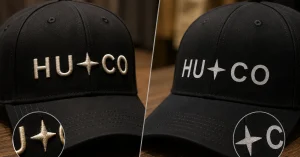
For caps, smaller designs generally work better.
Consider:
- Short text
- Bold logos
- Simple shapes
- Strong contrast
- Compact artwork
Jackets
Jackets offer more space.
You can consider:
- Larger logos
- Back patches
- Team names
- Club insignia
- Decorative designs
Uniforms
Uniform patches should prioritise:
- Legibility
- Professional branding
- Clear colours
- Consistent sizing
- Durable attachment
Bags
Bags provide another excellent application for embroidered patches.
You can use patches to create:
- Brand identity
- Travel designs
- Club logos
- Event merchandise
- Personal artwork
Designing specifically for the application ensures that you are not paying for unnecessary details.
12. Use Your Existing Brand Identity
Businesses do not need to create an entirely new design for every patch.
If you already have a logo, use it as the foundation.
Your existing logo can potentially become:
- A uniform patch
- A hat patch
- A jacket patch
- A promotional patch
- A merchandise badge
- A customer loyalty item
This saves time because you are not starting from scratch.
It also creates consistency across your branding.
When customers see the same colours, symbols, and typography across your website, packaging, uniforms, merchandise, and patches, your business becomes easier to recognise.
13. Ask for a Digital Proof
A digital proof is an important part of the patch design process.
It allows you to see how your artwork is expected to look before production begins.
Custom Patch Makers UK provides digital proofs for customers to review before production.
This gives you an opportunity to check:
- Spelling
- Colours
- Logo proportions
- Shape
- Text
- Border
- Overall appearance
Take your time during this stage.
It is much easier to correct a design before production than after the patches have already been manufactured.
14. Do Not Sacrifice Quality Just to Save Money
Budget-conscious does not mean low-quality.
In fact, poor-quality patches can end up costing more in the long run.
Imagine ordering 100 inexpensive patches that have:
- Poor stitching
- Incorrect colours
- Weak backing
- Unreadable text
- Uneven borders
- Incorrect dimensions
You may then need to reorder the entire batch.
The original saving disappears.
Instead, focus on value.
A quality patch should provide:
- Good visual clarity
- Appropriate materials
- Clean stitching
- Suitable backing
- Accurate artwork
- Reliable construction
The objective is to spend your budget where it actually matters.
15. Prioritise the Elements Customers Notice
Not every part of a patch has equal importance.
If your budget is limited, prioritise the elements that people will actually notice.
These may include:
Logo clarity
Your main symbol should be easy to recognise.
Text readability
Important wording should not disappear into the design.
Colour contrast
Foreground and background colours should work together.
Border quality
A clean border can make the entire patch appear more finished.
Overall shape
A balanced shape gives the design a professional appearance.
Small decorative details are less important if they make the patch unnecessarily complicated.
16. Avoid Overloading the Patch
One common beginner mistake is trying to fit everything into one design.
You might have a logo, slogan, website, phone number, social media handle, establishment year, location, mascot, decorative border, and several icons.
The result can become visually crowded.
Instead, decide what the patch is supposed to accomplish.
If it is a brand patch, focus on the brand.
If it is a team patch, focus on the team identity.
If it is an achievement patch, focus on the achievement.
If it is merchandise, focus on making the artwork visually appealing.
A focused patch usually looks more premium.
17. Consider Multiple Designs Carefully
If you are ordering patches for an event or organisation, you may be tempted to create a different design for every person.
Sometimes this makes sense.
But if your budget is limited, one strong design can be more economical.
For example, a sports club might create one primary club patch and use it across different garments.
A business might create one logo patch for all employees.
A clothing brand might create one signature patch that appears across a collection.
A consistent design can strengthen your identity while keeping production simpler.
18. Use Patches as Affordable Branding
Custom patches can be an economical branding tool because one design can be applied across multiple products.
Imagine a small clothing business.
Instead of manufacturing custom-branded jackets, bags, hats, and shirts separately, the company could create a branded patch and apply it to several product categories.
This gives the brand a consistent visual identity without requiring every item to have completely different branding.
For small businesses, startups, independent designers, and growing brands, this can be particularly useful.
19. Budget-Friendly Patch Ideas for Businesses
Businesses can use embroidered patches in many ways.
Employee Uniforms
Add a company logo to uniforms to create a consistent appearance.
Promotional Merchandise
Give branded patches to customers as promotional items.
Clothing Collections
Use patches as a design element across hats, jackets, shirts, or bags.
Events
Create commemorative patches for launches, exhibitions, conferences, and special events.
Customer Loyalty
Limited-edition patches can be used as rewards for loyal customers.
Brand Collaborations
A custom patch can represent a collaboration between two brands, teams, artists, or communities.
20. Budget-Friendly Ideas for Sports Teams
Sports teams can use patches to build team identity.
Popular ideas include:
- Team logos
- Player achievement badges
- Championship patches
- Tournament patches
- Club anniversary patches
- Supporter patches
- Coach patches
- Training squad patches
Rather than creating an overly complicated design, focus on your team’s primary identity.
A strong team logo can remain useful for years.
21. Budget-Friendly Ideas for Clubs and Organisations
Clubs can use embroidered patches as membership symbols.
For example:
- Motorcycle clubs
- Outdoor groups
- Hobby clubs
- Community organisations
- School clubs
- University societies
- Volunteer organisations
- Creative communities
Members can wear the same patch on jackets, bags, or uniforms.
This creates a sense of belonging without requiring expensive custom apparel for every member.
22. Budget-Friendly Fashion Patch Ideas
Fashion brands have embraced patches because they can transform ordinary garments into distinctive products.
You can use embroidered patches on:
- Denim jackets
- Overshirts
- Hoodies
- Baseball caps
- Beanies
- Tote bags
- Workwear
- Streetwear
- Vintage-inspired clothing
Instead of printing an oversized graphic, a small embroidered patch can create a subtle premium detail.
For fashion brands, this can be particularly useful when developing limited collections.
23. How to Prepare Artwork for Your Patch
Before sending artwork to a manufacturer, check the following.
Keep the main logo clear
Your primary symbol should be easy to identify.
Remove unnecessary details
Tiny elements may not translate well into embroidery.
Check spelling
Double-check all text before approval.
Choose suitable colours
Make sure the colour combinations provide enough contrast.
Consider the final size
A design that looks good at 10 inches may not work at 2 inches.
Provide the best file available
If you have a vector file or high-resolution artwork, provide it.
If not, send what you have and ask about artwork preparation.
24. What Makes a Budget Patch Look Expensive?
Interestingly, premium appearance does not always come from complexity.
A patch can look expensive because it is:
- Clean
- Balanced
- Well proportioned
- Easy to recognise
- Professionally stitched
- Made with suitable materials
- Designed with strong contrast
A simple black-and-white embroidered patch with a powerful logo can look more premium than a complicated multicolour design.
Design quality matters more than the number of elements.
25. Think About Longevity
If you are spending money on patches, think beyond the initial order.
Will the patch still look appropriate next year?
Will the logo remain relevant?
Can you use the design on future merchandise?
Can the patch be applied to multiple garments?
A timeless design can provide much more value than a trend-based patch that quickly becomes outdated.
For businesses and organisations, this is particularly important.
Your patch may become part of your identity.
26. Why Professional Patch Manufacturing Matters
Creating the artwork is only one part of the process.
The manufacturing stage determines how that artwork becomes a physical patch.
Professional production can help ensure:
- Consistent stitching
- Accurate colours
- Clean edges
- Proper backing
- Reliable construction
- Repeatable results
At Custom Patch Makers UK, the process begins with artwork submission, followed by a digital proof, production, and quality control before delivery.
This structured process helps customers understand what they are approving before manufacturing starts.
27. How Custom Patch Makers UK Can Help
If you already have artwork, you can submit it for review.
If you only have an idea, sketch, logo, or inspiration image, you can still discuss the concept with the team.
Custom Patch Makers UK works with customers across a range of applications, including businesses, sports teams, schools, organisations, fashion brands, military communities, public safety organisations, clubs, and other groups.
The goal is to help you select the right combination of:
- Patch type
- Size
- Shape
- Colours
- Backing
- Artwork
- Quantity
That is especially valuable when you have a specific budget.
Rather than simply asking for the cheapest patch available, explain what you need the patch to achieve.
28. Questions to Ask Before Ordering
Before placing your order, ask yourself:
What will the patch be used for?
A patch for a uniform may require different specifications from one designed for fashion merchandise.
Where will it be attached?
Consider caps, jackets, bags, shirts, uniforms, or other products.
How large should it be?
Think about both appearance and readability.
Does the artwork contain tiny details?
If yes, another patch style may be worth considering.
Do I need removable patches?
If yes, Velcro may be appropriate.
Do I need permanent attachment?
Sew-on or iron-on options may be suitable depending on the garment.
How many patches do I actually need?
Order according to your realistic requirement.
Do I have a final artwork file?
If not, ask about artwork assistance.
These questions can prevent expensive mistakes.
29. A Simple Budget-Friendly Patch Design Formula
If you want a straightforward formula for creating an affordable embroidered patch, start here:
Simple logo + limited colours + readable text + appropriate size + suitable backing = effective budget-friendly patch.
You do not need an enormous patch.
You do not need dozens of colours.
You do not need complicated artwork.
You need a design that communicates your identity effectively.
For many customers, this approach provides the best balance between cost and appearance.
30. Final Checklist Before Production
Before approving your embroidered patch, check:
- Logo is correct
- Text is spelled correctly
- Text is readable
- Colours are correct
- Patch dimensions are confirmed
- Shape is approved
- Border is correct
- Backing is appropriate
- Artwork is suitable for embroidery
- Quantity is correct
- Placement has been considered
- Digital proof has been reviewed
Taking a few extra minutes to check these details can prevent unnecessary problems later.
Final Thoughts: Quality Custom Patches Without Overspending
Designing custom embroidered patches on a budget does not mean settling for an unattractive or low-quality product.
The smartest way to save money is to make better decisions during the design stage.
Start with a clear concept. Keep unnecessary details out of the artwork. Choose an appropriate size. Use colours strategically. Make text readable. Select the right backing. Order a sensible quantity. Most importantly, choose the patch construction that actually suits your design.
If embroidery is the right choice, a clean and well-planned embroidered patch can provide an excellent combination of texture, personality, durability, and professional appearance.
If your artwork requires finer detail, another option such as woven or sublimated patches may provide a better result. If you need a soft, raised design, chenille could be worth considering. For premium branding, leather may be appropriate, while PVC and Velcro can be useful for demanding outdoor applications. Custom Patch Makers UK offers a broad range of patch styles to help customers find the right solution for their individual requirements.
The most important thing is to think about value rather than simply price.
A cheap patch that does not represent your brand properly is not really a saving. A well-designed patch that looks professional, performs its intended function, and can be used across different garments and products can provide much greater value over time.
Whether you need a small batch for a new clothing project, branded patches for your employees, team badges for a sports club, membership patches for an organisation, or custom merchandise for your customers, the right design approach can help you stay within budget without compromising the finished result.
At Custom Patch Makers UK, you can submit your artwork or design idea and work through the process from digital proof to production. The company offers low minimum orders, multiple backing options, custom shapes and sizes, and a wide selection of patch styles, making it possible to develop a patch solution around your specific requirements.
So before you assume that high-quality custom embroidered patches are too expensive, look at the design itself.
Simplify where possible.
Choose materials intelligently.
Prioritise the details that matter.
And work with a manufacturer that understands how to turn your artwork into a finished patch.
With the right approach, you can create custom embroidered patches that look professional, represent your identity, and deliver excellent value for your budget.