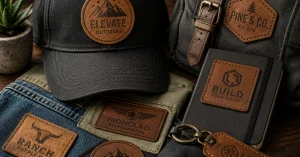
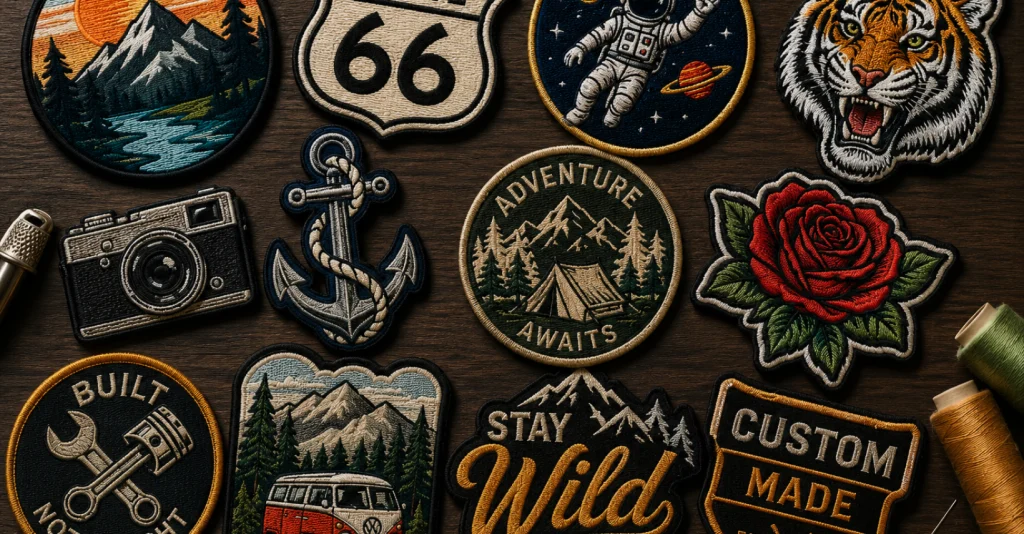
Custom embroidered patches have become one of the most exciting ways to turn an ordinary idea, logo, illustration, or message into something people can wear, collect, display, and remember. From fashion brands and sports teams to businesses, motorcycle clubs, schools, events, and personal projects, patches offer almost unlimited creative possibilities.
The best part is that you do not have to limit yourself to a traditional circular badge with a simple logo in the middle. Modern custom embroidered patches can be created in unique shapes, vibrant colour combinations, layered compositions, creative borders, and a wide variety of attachment options. A patch can be bold and colourful, subtle and sophisticated, humorous and playful, or highly detailed and professional.
At Custom Patch Makers UK, we believe that a great patch begins with a creative idea but becomes truly memorable through the right combination of design, embroidery, materials, finishing, and application. Whether you are creating patches for your clothing brand, company uniforms, sports club, charity event, or personal collection, thinking creatively can help you produce something that stands out.
This guide explores how to get creative with custom embroidered patches, from developing an original concept to experimenting with shapes, colours, textures, borders, placement, and more.
Why Creativity Matters in Custom Embroidered Patches
A patch may be relatively small, but it can communicate a great deal.
It can represent:
- A business or brand
- A club or organisation
- A sports team
- A school or university
- A military or tactical-inspired design
- A motorcycle group
- A charity or fundraising campaign
- A special event
- A personal achievement
- A fashion collection
- A community
- A memorable message or inside joke
Because patches are visual objects, creativity plays a major role in how people respond to them. A generic patch may communicate information, but a creatively designed patch can create an emotional connection.
Think about the patches that catch your attention. They often have something distinctive about them. Perhaps they use an unusual shape, an unexpected colour palette, a bold embroidered texture, or a clever combination of imagery and typography.
Creativity does not always mean making a design more complicated. In many cases, the most creative patches are simple but well thought out. A clean symbol, strong colour contrast, or unusual border can sometimes make a greater impact than an overcrowded design.
The goal is to create a patch that people recognise and remember.
Start with a Strong Creative Concept
Before choosing thread colours or patch dimensions, start with the main idea behind your patch.
Ask yourself:
What is this patch supposed to represent?
The answer can guide every design decision that follows.
For example, a clothing brand might want a patch that represents its personality. An outdoor company could use mountains, trees, wildlife, or topographic-inspired details. A vintage clothing label may choose retro typography and classic colours. A sports club may focus on a mascot, emblem, or bold initials.
Instead of immediately designing the patch, spend time developing the concept.
You can begin by creating a small mood board featuring:
- Colours you like
- Typography styles
- Symbols
- Illustrations
- Existing brand elements
- Fashion references
- Historical imagery
- Nature or architectural inspiration
- Patterns and textures
This process can help you discover connections between different ideas.
For example, a coffee brand does not necessarily need to use a basic coffee cup as its patch design. It could creatively combine a coffee bean with a mountain, a sunrise, a vintage badge, or a hand-drawn mascot.
The more thought you put into the concept, the easier it becomes to create a patch that feels unique rather than generic.
Experiment with Custom Patch Shapes
One of the easiest ways to get creative is to move beyond the standard circle or rectangle.
Custom embroidered patches can be designed in many shapes, including:
- Shields
- Ovals
- Hexagons
- Triangles
- Stars
- Arches
- Banners
- Crests
- Animals
- Objects
- Letters
- Logos
- Completely irregular silhouettes
The shape of your patch should support the design rather than simply act as a background.
For example, an automotive brand could create a patch shaped like a tyre, steering wheel, or vehicle silhouette. A surf-inspired clothing company could use a wave-shaped patch. A pet brand could create a patch following the outline of a paw print.
Custom shapes immediately add personality.
However, it is important to make sure the shape works well with embroidery. Extremely thin sections, sharp corners, or tiny details may need to be adjusted so that the finished patch maintains a clean and professional appearance.
At Custom Patch Makers UK, the design can be reviewed and refined before production so that the creative concept works effectively as an embroidered product.
Use Colour to Create Emotion and Personality
Colour is one of the most powerful creative tools available when designing a custom embroidered patch.
Different combinations can completely change the personality of the same design.
For example:
- Black and gold can feel premium and sophisticated.
- Red and white can appear bold and energetic.
- Earth tones can create a natural or outdoor-inspired look.
- Pastel colours can feel playful and modern.
- Navy and cream can produce a classic vintage appearance.
- Neon colours can create a futuristic or streetwear-inspired design.
Instead of selecting colours randomly, think about the mood you want your patch to create.
You can also experiment with contrast.
A bright thread colour against a dark background can make a design highly visible. On the other hand, using similar shades can create a subtle, refined appearance.
Monochrome patches are another creative option. A patch made entirely from different shades of one colour can look stylish and distinctive. Black-on-black, grey-on-black, or tonal embroidery can create a premium effect, particularly for fashion brands.
For designs with several colours, avoid adding colours simply for the sake of making the patch more colourful. Every colour should contribute to the overall composition.
Combine Different Embroidery Textures
Embroidery is not flat ink printed onto a surface. Thread creates texture, depth, and dimension.
This gives embroidered patches a creative advantage.
Different areas of a design can use different stitch directions and embroidery densities to create visual interest. A carefully designed patch can use thread to make certain elements feel raised, structured, soft, or detailed.
For example, a nature-inspired patch could use textured stitching to represent:
- Leaves
- Fur
- Water
- Clouds
- Mountain surfaces
A logo patch could use dense embroidery in one section and more open details in another.
The interaction between thread and fabric can become part of the design itself.
This is particularly important for brands looking for a premium appearance. A well-designed embroidered patch can have a tactile quality that makes people want to touch it and examine the details.
Try Creative Borders and Edge Finishes
The border is often overlooked, but it can dramatically influence the final appearance of a patch.
Popular options include:
Merrowed Borders
A merrowed edge creates the classic stitched outline commonly seen on traditional embroidered patches.
It can work well for:
- Uniform patches
- Club badges
- Sports emblems
- Traditional designs
- Circular and rectangular patches
Embroidered Borders
An embroidered border can provide greater flexibility, especially for patches with more unusual shapes.
This allows the edge to follow the contours of the design more closely.
No Ordinary Border
Sometimes the most creative approach is to integrate the border into the artwork.
For example, a mountain range could form the top edge of a patch, while the lower part follows the outline of trees. A flame design could have a border that follows the shape of the fire.
Thinking about the edge as part of the design can help transform a standard patch into something more distinctive.
Turn Your Logo into Something More Interesting
Many businesses order custom patches using their existing logo. While this is an effective branding strategy, you can often get more creative without losing brand recognition.
Instead of placing the logo in the centre of a standard rectangular patch, consider:
- Turning the logo into the patch shape
- Creating a badge-style version of the logo
- Adding a decorative border
- Using a simplified version for smaller patches
- Combining the logo with an illustration
- Creating a vintage-inspired variation
- Adding a slogan or founding year
- Designing a limited-edition version
A patch does not always need to reproduce every element of a company logo exactly as it appears on a website.
For merchandise and fashion applications, a creative interpretation can sometimes be more visually appealing.
The key is to maintain the brand identity while giving the artwork a new purpose.
Create Patches Around a Story
The most memorable designs often tell a story.
Rather than asking, “What should we put on the patch?” ask, “What story should this patch tell?”
A patch for a hiking club might represent a memorable route, mountain, or expedition. A company anniversary patch could include the year the business was founded and symbols connected to its history.
A clothing brand could create an entire collection of patches based on a theme.
For example:
- A city-inspired collection
- A space exploration collection
- A retro racing collection
- A wildlife collection
- A travel collection
- A music-inspired collection
- A seasonal collection
Each patch can tell part of a larger story.
This approach is particularly effective for merchandise because it encourages people to collect multiple designs rather than purchasing only one.
Get Creative with Typography
Words can be just as visually powerful as illustrations when they are used correctly.
Custom embroidered patches can include:
- Brand names
- Slogans
- Team names
- Dates
- Locations
- Motivational phrases
- Nicknames
- Event names
- Short messages
Typography should always be chosen carefully because embroidery has practical limitations when text becomes extremely small.
For the best results, keep text clear and readable.
You can experiment with:
- Bold block lettering
- Vintage lettering
- Script-inspired text
- Curved text
- Text around the edge of a badge
- Large initials with smaller supporting words
- Numbers combined with symbols
A simple phrase can become a strong design element when combined with the right typography and layout.
Use Negative Space
Creativity does not always mean filling every part of the patch with embroidery.
Negative space can be extremely effective.
Leaving certain areas open can help important design elements stand out. It can also make the patch easier to read from a distance.
For example, instead of embroidering an entire background, you could use the base fabric as part of the visual composition.
A dark patch background with a clean, minimal embroidered symbol may look far more striking than a design filled with unnecessary details.
Minimalist patches are especially popular for fashion, lifestyle brands, premium merchandise, and modern uniforms.
The challenge is finding the right balance between simplicity and identity.
Design a Patch Series Instead of Just One Patch
If you have several ideas, why limit yourself to a single patch?
A creative patch series can be built around a common theme while allowing every design to have its own personality.
For example, a streetwear brand could create five patches based on different neighbourhoods or cities.
A sports club could create:
- Team logo patches
- Mascot patches
- Championship patches
- Player number patches
- Special event patches
A business could create collectible patches representing:
- Company milestones
- Product launches
- Staff achievements
- Anniversaries
- Special campaigns
The designs can share similar colours, borders, or typography to create a consistent collection.
Patch series are excellent for merchandise, promotional campaigns, membership programmes, and events.
Think Beyond Clothing
Custom embroidered patches are often associated with jackets, uniforms, and hats, but they can be used in many other creative ways.
Consider applying patches to:
- Backpacks
- Tote bags
- Caps
- Beanies
- Denim jackets
- Workwear
- Hoodies
- Sports bags
- Travel bags
- Event merchandise
- Accessories
The location of the patch can also change the entire look.
Instead of placing a patch only on the chest, you might use:
- A sleeve
- The back of a jacket
- A pocket
- A cap front
- A cap side
- A bag strap
- A backpack panel
Fashion brands can even combine multiple patches on one garment to create a collage or customised appearance.
Mix Classic and Modern Design Styles
A creative patch does not have to follow one specific design trend.
You can combine different styles to create something unexpected.
For example:
- Vintage typography with modern colours
- Traditional crest layouts with minimalist artwork
- Retro mascots with futuristic lettering
- Classic embroidery with bold streetwear graphics
- Heritage-inspired designs with contemporary slogans
The contrast between old and new can produce a distinctive visual identity.
A retro-inspired patch can feel nostalgic, while clean geometric designs can feel modern and technical. Combining the two carefully can help a brand stand out from competitors.
Make the Patch Interactive with the Right Backing
Creativity is not limited to the front of the patch. The backing can also influence how people use and experience it.
Different attachment methods allow patches to serve different purposes.
Sew-On Patches
Sew-on patches provide a durable and traditional attachment method.
They are ideal for permanent applications on garments, uniforms, jackets, bags, and other fabric products.
Iron-On or Heat-Applied Options
These can make patches easier to apply to suitable garments and products without traditional sewing.
They are useful for promotional merchandise and projects where convenience is important.
Hook-and-Loop Backing
A removable backing system allows users to change patches whenever they want.
This is ideal for:
- Tactical gear
- Backpacks
- Team uniforms
- Collectible patch systems
- Clubs and communities
A brand could create interchangeable patches and encourage customers to customise their own clothing or accessories.
Other Attachment Options
Depending on the application, patches can also be designed with alternative backing and attachment solutions.
The best choice depends on where the patch will be used and whether it needs to be permanent, temporary, or interchangeable. Custom Patch Makers UK offers multiple attachment possibilities, including sew-on, adhesive, magnetic, heat-transfer, safety-pin and hook-and-loop options across relevant patch projects.
Use Patches to Build Brand Identity
For businesses, embroidered patches can become more than a decorative product. They can become a recognisable part of the brand experience.
Imagine a café giving staff members unique patches based on their role or years of service. A creative agency could develop a collection of patches representing different departments. An outdoor brand could create collectible patches for different adventures.
Patches can help people feel connected to a group.
They create a physical symbol of membership and identity.
This is why patches are so effective for:
- Businesses
- Sports teams
- Schools
- Clubs
- Charities
- Events
- Communities
- Creative brands
A well-designed patch can become something people are proud to wear.
Create Limited-Edition Patch Designs
Exclusivity can make a patch more desirable.
Instead of producing the same design continuously, consider creating limited-edition collections.
Examples include:
- Seasonal patches
- Anniversary patches
- Event-exclusive patches
- Holiday designs
- Collaboration patches
- Numbered collections
- Special colour variations
A standard logo patch could be redesigned in different colourways for each season.
For example, a fashion brand might create a winter edition using darker colours and a summer edition using brighter tones.
Limited designs can encourage collecting and give customers a reason to return for future releases.
Add Mascots and Characters
A mascot can bring personality to a brand or organisation.
Instead of relying entirely on text, create a character that represents your identity.
A mascot could be:
- An animal
- A fictional character
- A stylised object
- A cartoon version of a product
- A mythical creature
- A playful symbol
Once created, the mascot can appear in multiple poses and patch designs.
For example, a brand mascot could be sitting, running, celebrating, travelling, or wearing different outfits.
This allows you to create an entire patch collection around one recognisable character.
Mascot patches are especially effective for sports teams, schools, food brands, lifestyle companies, and youth-oriented merchandise.
Combine Illustration and Text
A strong patch often uses both imagery and text.
However, balance is essential.
A useful structure might include:
Top: Brand name or location
Centre: Main illustration or logo
Bottom: Date, slogan, or secondary message
This badge-style composition works well because it creates a clear visual hierarchy.
The eye is naturally drawn to the central image, while the surrounding text provides additional information.
You can also break traditional layouts by placing text diagonally, vertically, or in unexpected areas.
Just remember that embroidery should remain readable.
Design for the Size of the Patch
One of the most important parts of creative patch design is understanding the relationship between size and detail.
A large back patch can include significantly more detail than a small chest or cap patch.
Trying to force a complex illustration into a small area can make the finished design look crowded.
Before finalising your artwork, think about:
- Where the patch will be placed
- How large it will be
- How close people will view it
- Which details are essential
- Which details can be simplified
A creative designer knows that simplification is not a compromise. It is often what makes the final product stronger.
A small patch with a bold, recognisable symbol can be more effective than a detailed illustration that loses clarity during embroidery.
Use Creative Colour Variations
You do not need to create completely new artwork every time you want a new patch.
A single design can be transformed through colour.
Consider producing the same patch in:
- Classic colours
- Monochrome
- Neon
- Earth tones
- Pastel colours
- Black and gold
- Seasonal colours
- Limited-edition combinations
Colour variations can create a collectable series while keeping production focused around a consistent visual identity.
This strategy works particularly well for retail merchandise and fashion collections.
Turn Artwork into a Wearable Badge
Artists, illustrators, designers, and creators can use custom embroidered patches as an alternative way to share their work.
A detailed illustration may need to be simplified, but the embroidered version can gain an entirely new personality through thread texture.
Artwork featuring:
- Animals
- Flowers
- Landscapes
- Food
- Vehicles
- Characters
- Symbols
- Abstract designs
can all be adapted into patch concepts.
The key is to identify the most recognisable elements of the artwork.
A patch does not need to reproduce every detail. It needs to capture the essence of the design.
Consider a Vintage or Heritage-Inspired Look
Vintage patches remain popular because they create a sense of history and authenticity.
To create a heritage-inspired patch, experiment with:
- Classic badge shapes
- Muted colours
- Traditional typography
- Founding dates
- Geographic references
- Simple illustrations
- Decorative banners
A new brand can even use a vintage-inspired design to create a strong visual personality.
For example, instead of simply adding “Established 2026,” you could create an entire badge composition around the brand story and identity.
Use Embroidery to Add a Premium Feel
One reason embroidered patches remain popular is their physical quality.
Thread gives a design a dimensional appearance that flat graphics cannot always replicate.
For premium products, consider using:
- Clean colour palettes
- High-contrast thread combinations
- Detailed borders
- Balanced compositions
- Strong typography
- Purposeful texture
A premium patch does not necessarily need more colours or more details. It needs thoughtful design.
Often, a simple emblem with excellent embroidery and finishing can feel more luxurious than an overly complicated design.
Collaborate and Create Custom Patch Collections
Collaboration is another excellent way to generate creative patch ideas.
A clothing brand could collaborate with:
- Artists
- Musicians
- Sports teams
- Local businesses
- Charities
- Content creators
- Event organisers
Each collaboration can produce a unique patch that combines two identities.
For example, an artist’s illustration could be combined with a brand’s typography and colour palette.
Collaboration patches can also be effective as limited-edition merchandise because they provide something that cannot easily be replicated elsewhere.
Avoid Overcomplicating the Design
Creativity should improve the design, not make it confusing.
One common mistake is trying to include too many ideas in one patch.
A patch might contain:
- A logo
- A mascot
- A slogan
- A date
- Multiple symbols
- Several colours
- Too much small text
The result can become difficult to understand.
Before finalising the artwork, identify the main focal point.
Ask yourself:
What should people notice first?
Then organise the remaining elements around that focal point.
A clear visual hierarchy makes a patch easier to recognise and more effective as a branding tool.
Choose the Right Patch Style for Your Idea
Embroidery is an excellent option for many designs, particularly when you want texture and a traditional, high-quality appearance.
However, the best patch style depends on the artwork and intended use.
Some concepts may be better suited to:
- Embroidered patches
- Woven patches
- Printed patches
- PVC patches
- Chenille patches
- Leather patches
For example, highly detailed artwork with extremely small text may benefit from a different construction than a bold embroidered emblem.
PVC patches, for instance, can offer durability, weather resistance, bold colours, and moulded shapes for applications where a traditional embroidered finish is not the best fit.
Choosing the right patch type should be part of the creative process rather than an afterthought.
Work with a Team That Can Help Develop the Design
You do not need to arrive with a perfectly finished design.
Sometimes an idea begins as:
- A rough sketch
- A photograph
- A logo
- A written description
- A hand-drawn concept
- An inspiration image
The important part is communicating the vision.
A professional patch design process can help refine the concept, simplify unsuitable details, select appropriate colours, determine the best dimensions, and prepare the artwork for production.
Custom Patch Makers UK also highlights design assistance and digital proofing as part of its custom patch process, helping customers review the direction before production.
This gives you the opportunity to be creative without needing to understand every technical detail of embroidery from the beginning.
A Simple Process for Creating a Creative Custom Embroidered Patch
If you are unsure where to begin, follow these steps.
Step 1: Define Your Purpose
Decide why you are creating the patch.
Is it for branding, fashion, a team, an event, a uniform, or a personal project?
Step 2: Develop the Main Idea
Choose the central symbol, illustration, logo, or message.
Step 3: Select a Style
Decide whether the design should feel:
- Modern
- Vintage
- Minimal
- Bold
- Playful
- Professional
- Rugged
- Luxurious
Step 4: Choose the Shape
Consider whether a standard shape or a fully custom outline best supports the concept.
Step 5: Select Colours
Use colours that reflect your brand, theme, or desired emotional impact.
Step 6: Simplify Where Necessary
Remove details that may not work effectively at the intended patch size.
Step 7: Choose the Backing
Think about how the patch will be attached and whether it should be permanent or removable.
Step 8: Review the Design Proof
Check the artwork carefully before production.
Make sure:
- Text is correct
- Colours are appropriate
- Important details are visible
- Dimensions are suitable
- The overall composition looks balanced
Step 9: Bring the Idea to Life
Once the design is approved, the creative concept can move from artwork to a finished patch ready to be worn, displayed, sold, or shared.
Final Thoughts: There Are No Limits to Creative Patch Design
Custom embroidered patches offer an incredible opportunity to transform ideas into physical products with personality, texture, and meaning.
The most creative patch does not necessarily have the most colours, the most complicated artwork, or the largest number of details. It is the patch where every element works together.
A distinctive shape can make a simple logo more memorable. The right colour palette can change the mood of an entire design. A creative border can transform a standard badge. A carefully chosen backing can make the patch interactive and reusable.
Whether you are building a fashion collection, promoting a business, representing a sports team, creating event merchandise, or simply bringing a personal idea to life, there are countless ways to make your patch unique.
At Custom Patch Makers UK, creativity can begin with something as simple as a sketch, logo, idea, or inspiration. From there, the design can be developed into a patch that reflects your identity and purpose.
Do not be afraid to experiment with shapes, colours, typography, textures, collections, characters, and unexpected combinations. The best custom embroidered patches are often the ones that feel personal, recognisable, and impossible to confuse with anything else.
Your patch is a small canvas.
Use it to tell a bigger story.
Ready to turn your creative idea into a custom patch? Custom Patch Makers UK can help you explore the right design, style, and finishing options for a patch that is made to stand out.