When it comes to creating custom clothing, branded merchandise, promotional apparel, uniforms, and personalised accessories, choosing the right decoration method can make a significant difference. Two of the most popular options are embroidery and screen printing. Although both can transform plain garments into eye-catching branded products, they create very different results.
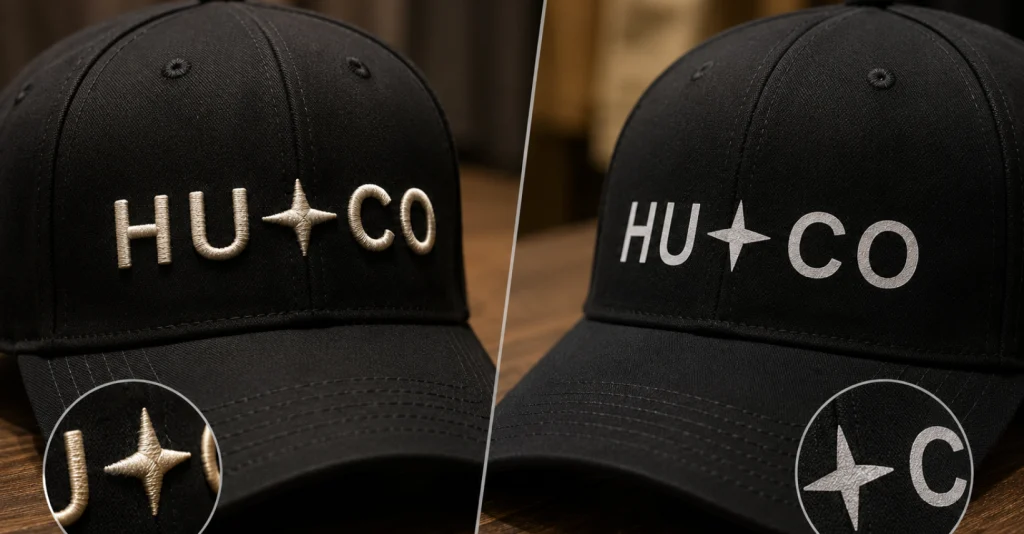
Embroidery uses thread to build a design directly onto a fabric surface, creating a textured and dimensional appearance. Screen printing, on the other hand, applies ink through a mesh screen to produce a smooth, flat design. Neither method is automatically better than the other. The right choice depends on your artwork, garment, quantity, budget, durability requirements, and the appearance you want to achieve.
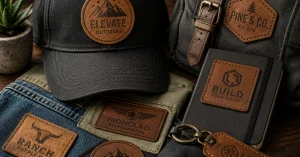
For businesses looking for high-quality custom branding, the decision can be particularly important. A company uniform may benefit from a professional embroidered logo, while a streetwear collection may need the bold colours and larger graphics that screen printing provides. For patch-focused branding, embroidered patches can also provide another way to achieve the detailed, tactile appearance customers associate with quality merchandise.
At Custom Patch Makers, understanding the difference between decoration methods can help you choose a solution that complements your brand rather than simply selecting the cheapest option.
In this guide, we will explain the difference between embroidery and screen printing, how each process works, their advantages and limitations, the types of garments they suit, cost considerations, durability, design capabilities, and how to decide which option is right for your project.
What Is Embroidery?
Embroidery is a decoration technique that creates artwork using thread. Instead of applying ink to the surface of a garment, a specialised embroidery machine stitches coloured threads into the fabric according to a digitally prepared design.
The result is a raised, textured design that can be seen and felt. This physical texture is one of the main reasons embroidery is associated with premium branding.
Embroidery is particularly popular for:
- Company uniforms
- Polo shirts
- Jackets
- Workwear
- Caps and hats
- Beanies
- Bags
- Sportswear
- Corporate merchandise
- Custom embroidered patches
Before production, artwork normally needs to be converted into a digital embroidery file. This process, known as digitising, determines how the machine will reproduce the design using stitches.
The digitiser has to consider factors such as stitch direction, stitch density, thread colours, design size, lettering, fabric type, and the order in which different elements are stitched.
A good embroidery design is therefore not simply a picture placed into a machine. It has to be carefully prepared so that the final stitched version remains clear, balanced, and durable.
How Does Embroidery Work?
The embroidery process involves several important stages.
1. Artwork Preparation
The process starts with your logo, artwork, text, or graphic. The original design is assessed to determine whether it is suitable for embroidery.
Small details, extremely thin lines, gradients, and tiny text may need to be adjusted because thread behaves differently from ink.
2. Digitising
The artwork is converted into an embroidery file containing instructions for the embroidery machine.
The file tells the machine where to place stitches, what direction they should follow, which thread colour to use, and when to move between different sections of the design.
3. Fabric Preparation
The garment or material is positioned and secured. Depending on the product and embroidery location, backing material may be used to support the fabric and reduce distortion.
4. Stitching
The embroidery machine follows the digital instructions, placing thousands of individual stitches where required.
Different stitch types can be used for outlines, lettering, fills, borders, and decorative elements.
5. Finishing
After stitching is complete, excess backing and loose threads are trimmed. The finished design is inspected to make sure the embroidery is clean and properly positioned.
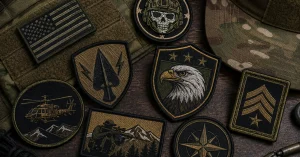
For custom embroidered patches, the embroidery is usually created on a separate patch material before the patch receives its chosen border and backing. This makes patches particularly versatile for uniforms, jackets, bags, caps, clubs, teams, organisations, and promotional products.
What Is Screen Printing?
Screen printing is another popular method of decorating clothing and merchandise. Instead of stitching thread into the fabric, screen printing transfers ink onto the material through a specially prepared mesh screen.
A stencil is created for each colour used in the design. Ink is then pushed through the open areas of the screen onto the garment. Once the ink has been applied, it is cured so that the design becomes securely attached to the fabric.
The finished result is generally smooth and flat compared with embroidery.
Screen printing is commonly used for:
- T-shirts
- Hoodies
- Sweatshirts
- Event merchandise
- Promotional clothing
- Sports team apparel
- Streetwear
- Large front designs
- Large back graphics
- Creative fashion artwork
Screen printing is especially useful when the artwork covers a large area or contains colours, gradients, illustrations, or visual elements that would be difficult to reproduce with thread.
How Does Screen Printing Work?
Although the process can vary depending on the equipment and ink system used, traditional screen printing generally involves several stages.
1. Artwork Preparation
The design is prepared for printing. The number of colours and the complexity of the artwork are considered before production.
2. Screen Preparation
A mesh screen is prepared with a stencil representing one part of the design. Separate screens are generally required for different colours.
3. Ink Application
Ink is placed on the screen and pulled across it using a squeegee. The pressure pushes the ink through the open parts of the stencil and onto the garment.
4. Multiple Colours
If the artwork contains several colours, each colour is applied separately and carefully aligned with the others.
5. Curing
The printed garment is heated or otherwise cured according to the ink system being used. Proper curing is essential for achieving good durability.
6. Quality Inspection
The finished garment is checked for colour accuracy, positioning, coverage, registration, and overall print quality.
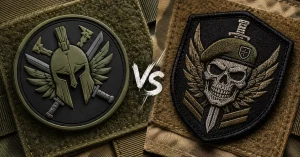
Embroidery vs Screen Printing: The Main Difference
The simplest way to understand the difference is this:
Embroidery creates designs with thread, while screen printing creates designs with ink.
However, that basic distinction leads to several other differences.
Embroidery creates a raised and tactile finish. Screen printing produces a flat visual design.
Embroidery is generally associated with logos, uniforms, caps, jackets, workwear, and premium merchandise. Screen printing is commonly associated with T-shirts, hoodies, promotional garments, and large graphic designs.
Embroidery is affected by stitch count and the physical limitations of thread. Screen printing is affected by factors such as colour separation, screen preparation, ink coverage, and print area.
The choice should therefore be based on the complete project rather than simply asking which technique is better.
Embroidery vs Screen Printing at a Glance
| Feature | Embroidery | Screen Printing |
|---|---|---|
| Finish | Raised and textured | Smooth and flat |
| Main material | Thread | Ink |
| Best for | Logos, uniforms, caps, patches | T-shirts, hoodies, large graphics |
| Visual style | Premium and professional | Bold and graphic |
| Large artwork | Less practical | Excellent |
| Small logos | Excellent when properly designed | Good |
| Gradients | Limited | More suitable |
| Photographic artwork | Not ideal | More suitable |
| Texture | Three-dimensional | Flat |
| Colour blending | Limited | More flexible |
| Cost structure | Often influenced by stitch count | Often influenced by colours and quantity |
| Caps | Excellent | Less suitable for many applications |
| Custom patches | Excellent | Not the traditional choice |
| Bulk graphic merchandise | Can become expensive | Often highly economical |
Embroidery Creates a Premium Look
One of the biggest advantages of embroidery is its appearance.
Thread gives a logo physical depth. When someone sees an embroidered company logo on a polo shirt, jacket, cap, or patch, they can also feel the raised stitching.
This creates a premium and professional impression.
For businesses, this can be particularly valuable because branded clothing is not only functional. It also communicates something about the organisation.
A carefully embroidered logo can make uniforms look established, professional, and well considered.
This is one reason embroidery remains popular for:
- Corporate uniforms
- Hospitality clothing
- Construction workwear
- Security uniforms
- Sports clubs
- Golf apparel
- Caps
- Jackets
- Promotional merchandise
- Branded workwear
Screen Printing Offers Greater Graphic Freedom
Screen printing has a major advantage when your design is large, colourful, or highly graphic.
A large illustration across the front of a T-shirt can be produced efficiently with screen printing. Trying to reproduce the same artwork using embroidery could require an extremely high stitch count, potentially making the garment heavier and the production more expensive.
Screen printing also works well for designs where the visual impact comes from large areas of colour.
This makes it popular with fashion brands, event organisers, musicians, sports teams, universities, clubs, and businesses producing promotional merchandise.
If your artwork is intended to look like a large graphic rather than a traditional logo, printing may be the more practical solution.
Which Method Is More Durable?
Durability is another important consideration when comparing embroidery and screen printing.
Quality embroidery can be extremely durable because the design is made from stitched thread rather than a layer of ink sitting on the fabric. With proper production and care, embroidered designs can remain attractive for a very long time.
The garment itself may eventually wear out before the embroidery does.
Screen printing can also be highly durable when quality materials are used and the ink is properly cured. However, printed designs can gradually show signs of wear through repeated washing and use.
This does not mean that screen printing is fragile. A professionally produced screen print can last through many washes. However, embroidery generally has an advantage when the primary objective is long-term logo decoration.
For garments that are washed frequently, such as uniforms and workwear, embroidery can therefore be an excellent choice.
Which Is Better for Caps and Hats?
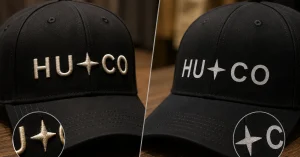
For caps and hats, embroidery is usually the more natural choice.
Caps have curved surfaces, seams, structured panels, and limited decoration areas. Embroidery can be applied directly to many cap styles and produces a distinctive professional appearance.
This is particularly useful for:
- Baseball caps
- Trucker caps
- Snapback caps
- Dad hats
- Work caps
- Golf caps
- Promotional hats
- Custom branded headwear
Screen printing can be used on some headwear products, but it is not as naturally suited to curved surfaces as embroidery.
For brands wanting a logo that stands out on the front of a cap, embroidery remains one of the strongest options.
Embroidery for Custom Patches
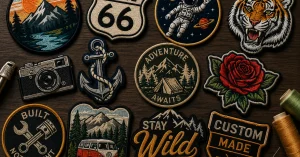
For a business specialising in patches, embroidery offers another important advantage: the artwork does not always have to be stitched directly onto the final garment.
Instead, the design can become a custom embroidered patch.
This gives brands greater flexibility.
An embroidered patch can be attached to:
- Jackets
- Uniforms
- Bags
- Caps
- Backpacks
- Workwear
- Vests
- Club clothing
- Sportswear
- Promotional products
Patches can also be produced with different backing options depending on the intended use.
For example, sew-on patches can provide a permanent attachment, while iron-on or hook-and-loop backing can provide different installation options.
This makes embroidered patches an excellent branding solution when customers want designs that can be moved between garments or products.
Which Method Is Better for Small Logos?
Small logos often work particularly well with embroidery, provided the artwork has been prepared correctly.
A company logo on the left chest of a polo shirt, for example, can look extremely clean when embroidered.
However, there is an important consideration: embroidery has physical limits.
Very small lettering and extremely thin lines can become difficult to reproduce clearly because thread has a physical thickness. The smaller the design becomes, the more important professional digitising and artwork adjustment become.
If your logo includes tiny text, fine outlines, or intricate details, the design may need to be simplified before production.
A professional custom patch and embroidery provider should identify these issues before production rather than allowing an unsuitable design to produce a poor result.
Which Method Is Better for Large Designs?
Large designs generally favour screen printing.
Imagine a business wants a huge graphic covering most of the front of a T-shirt. Screen printing can apply the artwork across a large surface without adding the enormous stitch count that embroidery would require.
The same applies to large back graphics.
Screen printing can therefore be an excellent choice for:
- Large illustrations
- Event graphics
- Band merchandise
- Fashion designs
- Promotional campaigns
- Large team graphics
- Full-front artwork
- Large back prints
Embroidery can still be used for larger designs, but the practical and financial considerations become more significant as the design area increases.
What About Complex Artwork?
Complex artwork needs careful consideration.
Screen printing can reproduce many types of detailed artwork, particularly when the design is prepared correctly. It can also accommodate colour combinations and visual effects that are difficult to reproduce through stitching.
Embroidery is better suited to artwork with:
- Clear shapes
- Strong outlines
- Bold lettering
- Solid colour areas
- Recognisable symbols
- Simple logos
This does not mean embroidered designs have to be basic. Skilled digitising can produce impressive detail. However, the artwork needs to be designed with the physical properties of thread in mind.
A design that looks perfect on a computer screen may need modification before it becomes an embroidered patch.
Embroidery vs Screen Printing for Different Fabrics
The material you are decorating should also influence your decision.
Embroidery works particularly well on materials with enough structure to support stitching. These can include jackets, heavier garments, polos, caps, canvas products, fleece, denim, and many workwear materials.
Very lightweight or highly stretchy fabrics may require additional consideration because dense stitching can affect the fabric.
Screen printing generally performs well on flat, stable fabrics, particularly T-shirts, sweatshirts, and hoodies.
Cotton garments are a popular choice for screen printing, although suitable ink and production techniques vary according to the specific fabric.
The key point is that there is no universal decoration method for every material.
Cost: Is Embroidery More Expensive Than Screen Printing?
Cost is one of the most common reasons customers compare embroidery and screen printing.
However, there is no universal answer because pricing depends on several factors.
For embroidery, the cost can be influenced by:
- Design size
- Stitch count
- Number of garments
- Number of locations
- Thread colours
- Digitising requirements
- Garment type
- Patch construction
- Backing type
For screen printing, cost can be influenced by:
- Number of colours
- Number of print locations
- Artwork complexity
- Print size
- Quantity
- Garment type
- Ink type
- Setup requirements
Screen printing often becomes particularly cost-effective when producing larger quantities of the same design. Setup costs can be spread across more garments, reducing the effective cost per item.
Embroidery can be attractive for smaller quantities, premium products, logos, and designs where a tactile finish is important.
The best approach is therefore to compare the total project cost rather than assuming one technique is always cheaper.
Why Order Quantity Matters
Quantity can significantly influence which decoration method makes the most financial sense.
Suppose you need a small number of branded jackets for a business team. Embroidery may provide the premium logo finish you need without requiring a large production run.
Now imagine you are launching an event and need hundreds of graphic T-shirts. Screen printing may become much more attractive because the setup costs are distributed across a larger number of garments.
This is why professional suppliers often ask about quantity before recommending a decoration method.
The right answer depends on the complete project.
Which Method Looks More Professional?
This ultimately depends on your brand identity.
Embroidery tends to communicate:
- Quality
- Professionalism
- Permanence
- Tradition
- Premium branding
- Attention to detail
Screen printing can communicate:
- Creativity
- Energy
- Fashion
- Youthfulness
- Boldness
- Artistic expression
Neither image is inherently better.
A luxury golf brand may prefer embroidered caps and polos. A streetwear brand may choose screen-printed T-shirts. A business might use embroidered workwear alongside screen-printed promotional shirts.
The decoration method should support the personality of the brand.
Can You Combine Embroidery and Screen Printing?
Absolutely.
In some projects, combining techniques can produce the best overall result.
For example, a hoodie could feature a small embroidered company logo on the chest and a large screen-printed graphic on the back.
A clothing brand could use embroidered patches on jackets while using screen printing for its T-shirt collection.
This approach allows each method to do what it does best.
Instead of asking whether embroidery or screen printing is better for your entire brand, consider whether each technique is better for specific products within your range.
Embroidery vs Screen Printing for Branding
For businesses, branded clothing is a marketing tool.
A well-designed logo on a uniform can create a consistent appearance among employees. Customers can recognise staff more easily, while the brand receives additional visibility whenever employees are working in public.
Embroidery is particularly effective for this purpose because it provides a polished logo finish.
Custom embroidered patches offer another branding opportunity. Rather than permanently stitching a logo directly into a garment, a business can create a branded patch that can be attached to different products.
This can be especially useful for organisations with changing uniforms, clubs, teams, events, or promotional campaigns.
Embroidery vs Screen Printing for Fashion Brands
Fashion brands often use both methods.
Screen printing is ideal for graphic-heavy collections, statement designs, oversized artwork, and creative illustrations.
Embroidery is useful for smaller logos, premium details, jackets, caps, sweatshirts, and accessories.
Some brands intentionally combine the two to create contrast.
For example, a T-shirt might feature a large printed back graphic with a small embroidered chest logo. A jacket might feature an embroidered badge on the front and printed artwork on the back.
Using both methods can make a collection feel more varied and intentional.
Common Embroidery Mistakes to Avoid
If you choose embroidery, there are several issues worth considering before production.
Using Too Much Tiny Text
Small text can become difficult to read when stitched. Simplifying the wording or increasing the text size can often produce a much better result.
Making the Design Too Detailed
Not every element of a digital graphic can translate perfectly into thread. A professional digitiser may need to simplify certain elements.
Choosing an Unsuitable Fabric
Lightweight fabrics may require special attention to prevent puckering or distortion.
Ignoring Design Size
A logo designed for a large jacket back may not work at the same size on a small cap.
Skipping a Proof
A digital proof or production preview can help identify potential issues before the design is produced.
At Custom Patch Makers, the goal should always be to create artwork that works in the real world, not merely artwork that looks good on a computer screen.
Common Screen Printing Mistakes to Avoid
Screen printing has its own potential problems.
Using Too Many Colours Without Considering Cost
Every additional colour can affect setup and production requirements.
Choosing the Wrong Garment
The same print may look different on different fabrics and garment colours.
Poor Artwork Preparation
Low-resolution or poorly separated artwork can compromise the final print.
Choosing the Wrong Print Size
A design that is too small may lose impact, while one that is too large may not suit the garment.
Poor Washing Practices
Even high-quality printed garments benefit from proper washing and care.
Following the supplier’s care instructions can help maintain the print for longer.
How to Choose Between Embroidery and Screen Printing
If you are still unsure, start with five questions.
1. What Are You Decorating?
If you are decorating a cap, jacket, polo, uniform, or patch, embroidery is often worth considering.
If you are decorating a T-shirt or hoodie with a large graphic, screen printing may be more appropriate.
2. How Large Is the Design?
Small logos generally suit embroidery well.
Large graphics generally favour screen printing.
3. How Complex Is the Artwork?
Simple logos and bold lettering can work beautifully with embroidery.
Gradients, illustrations, photographs, and highly detailed graphics may be more suitable for printing.
4. How Many Items Do You Need?
Small orders and premium branding may favour embroidery.
Large quantities can make screen printing increasingly cost-effective.
5. What Feeling Should the Product Create?
If you want a premium, tactile and professional appearance, embroidery is a strong choice.
If you want a bold, colourful and graphic appearance, screen printing may be the better solution.
A Simple Decision Guide
Choose embroidery when:
- You need a professional logo
- You are decorating caps or hats
- You are producing uniforms
- You want a textured finish
- Long-term durability is important
- You are creating embroidered patches
- Your design uses clean shapes and lettering
- You want a premium appearance
Choose screen printing when:
- You need a large graphic
- You are producing T-shirts
- You are printing hoodies
- Your artwork contains gradients
- You need highly graphic artwork
- You are producing a large quantity
- You want a smooth finish
- You are working with a fashion or promotional collection
Consider using both when:
- Your product range contains different garment types
- You want premium details and bold graphics
- Your brand uses both logos and illustrations
- You need different decoration methods for different products
Why Quality Matters More Than the Technique Alone
Choosing embroidery or screen printing is only the first step.
The quality of the final product also depends on artwork preparation, materials, equipment, production settings, finishing, and quality control.
Two embroidered logos can look completely different even though they use the same basic technique.
Likewise, two screen prints can have very different results depending on the artwork, ink, garment, curing process, and production quality.
This is why choosing an experienced customisation provider is important.
For embroidered patches, the quality of digitising, thread selection, stitching density, border finishing, backing, and final inspection can all influence the finished product.
A professional approach ensures that the design is considered from the beginning rather than trying to fix problems after production.
Why Custom Embroidered Patches Are Different
One of the biggest advantages of patches is flexibility.
A custom embroidered patch can take a logo, emblem, name, symbol, or artwork and turn it into a physical branding element that can be attached to different products.
Instead of ordering a new garment every time you want to change the branding, patches can provide a practical alternative for certain applications.
They are particularly popular among:
- Clubs
- Sports teams
- Businesses
- Workwear companies
- Outdoor groups
- Organisations
- Fashion brands
- Events
- Collectors
- Personal projects
At Custom Patch Makers, embroidered patches can be designed around the intended application, artwork, size, shape, and backing requirements.
Final Thoughts: Embroidery or Screen Printing?
There is no single winner in the embroidery versus screen printing debate.
Both methods have earned their place in the custom apparel industry because they solve different problems.
Embroidery is the natural choice when you want a raised, textured, durable, and professional finish. It is especially effective for logos, uniforms, caps, jackets, workwear, and custom embroidered patches.
Screen printing is a strong choice when you need large, colourful, graphic artwork on T-shirts, hoodies, promotional garments, and other products. It provides a smooth finish and can be highly efficient for larger production runs.
The most important thing is to match the decoration method to the product.
If your project involves a clean logo on a cap, embroidered branding may be exactly what you need. If you are launching a T-shirt collection with large colourful graphics, screen printing may make more sense. If you want both premium branding and bold artwork, combining the two techniques could be the ideal solution.
For brands that specifically want the character and texture of stitched designs, custom embroidered patches offer another versatile option. They can transform artwork into durable, reusable branding that works across clothing and accessories.
At Custom Patch Makers, the focus should not simply be on producing a decoration method. It should be on helping you create a finished product that looks right, feels right, and represents your brand professionally.
Frequently Asked Questions
Is embroidery better than screen printing?
Not necessarily. Embroidery is generally better for logos, uniforms, caps, jackets, and premium branding, while screen printing is often better for large graphics, T-shirts, hoodies, and colourful artwork. The right option depends on your project.
Which lasts longer, embroidery or screen printing?
Quality embroidery is generally considered more resistant to long-term visual wear because the design is made from thread. High-quality screen printing can also be very durable when correctly produced and cared for.
Is embroidery more expensive than screen printing?
It depends on the design, quantity, garment, size, and production requirements. Embroidery costs are commonly influenced by stitch count, while screen printing costs are affected by factors such as colour count, setup, print locations, and quantity.
Can I embroider a complicated logo?
Many complicated logos can be embroidered, but they may need to be simplified. Tiny text, very fine lines, gradients, and extremely detailed artwork can be difficult to reproduce accurately with thread.
Is screen printing good for caps?
Screen printing can be used for some headwear applications, but embroidery is generally better suited to curved cap surfaces and is widely used for professional cap branding.
Are embroidered patches durable?
High-quality embroidered patches can be highly durable. Their longevity depends on the materials, stitching, backing, attachment method, and how the finished product is used and maintained.
Can I use embroidery and screen printing on the same garment?
Yes. Combining the two methods can create an attractive result. For example, you could use a small embroidered logo on the chest and a large screen-printed design on the back.
Which method is best for business uniforms?
Embroidery is often an excellent option for business uniforms because it creates a professional appearance and is well suited to repeated use. Polo shirts, jackets, work shirts, and caps can all benefit from embroidered branding.
Which method is best for T-shirts?
For large graphics and colourful artwork, screen printing is often the better choice. For a small premium logo, embroidery may also work depending on the fabric and garment construction.
Can Custom Patch Makers help with my design?
Yes. If your artwork is not yet optimised for embroidery, it is important to have it reviewed before production. A professional assessment can identify details that may need to be simplified, resized, or adjusted for the best final result.
Build Your Brand with the Right Customisation
Your logo is more than an image. It is part of how customers recognise and remember your brand.
Whether you need an embroidered patch, branded workwear, custom headwear, or another form of personalised merchandise, choosing the correct decoration method can make a noticeable difference to the finished product.
If you want a premium stitched appearance that adds texture and personality to your branding, custom embroidered patches are an excellent option to explore.
With the right artwork, materials, stitching, backing, and finishing, a well-made patch can become a distinctive part of your brand identity.
Choose the method that fits your artwork, garment, quantity, budget, and branding goals and make sure quality remains the priority from design through to the finished product.
Custom Patch Makers can help turn your artwork into professional custom patches designed around the way you intend to use them.