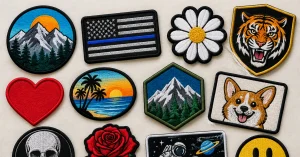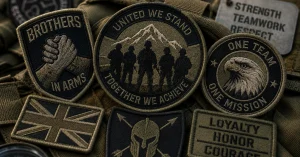

Embroidered patches have been around for generations, but they are having a major moment again. From fashion labels and streetwear brands to sports teams, businesses, clubs, events, and everyday cap lovers, more people are choosing stitched patches to add personality and character to what they wear.
What makes embroidered patches so appealing is their ability to do more than simply display a logo. They add texture, depth, individuality, and a crafted appearance that can transform an ordinary garment or accessory into something memorable. They can make a simple cap look like premium merchandise, turn a plain jacket into a statement piece, or help a business create branded headwear that people actually want to wear.
This renewed interest is especially noticeable in fashion and personalised apparel. Current industry discussions point to nostalgia, DIY culture, tactile design, limited-edition merchandise, and the desire for individuality as important reasons embroidered patches are enjoying renewed popularity.
For businesses working with custom headwear, embroidered patches also offer an interesting alternative to putting a logo directly onto a cap. A separate patch creates a badge-like appearance and can give branding more visual presence.
So, why exactly are embroidered patches all the rage these days?
Here are nine reasons.
1. Embroidered Patches Give Ordinary Clothing a Premium Look
One of the biggest reasons embroidered patches continue to attract attention is their appearance.
A printed graphic can look flat. A standard embroidered logo can look clean and professional. But an embroidered patch adds another visual layer because the design is stitched onto a separate fabric base.
The combination of thread, texture, borders, colours, and raised stitching creates a tactile finish that immediately catches the eye.
Imagine a plain baseball cap.
Without any decoration, it is simply a cap. Add a small embroidered patch featuring a carefully designed logo, emblem, mascot, initials, or symbol, and the entire product can feel completely different.
That is particularly useful for brands.
Instead of making promotional merchandise that looks like an advertisement, businesses can create headwear that people genuinely enjoy wearing. When branding becomes part of the design rather than simply being placed on a product, customers are more likely to see the item as merchandise rather than promotional material.
The same principle applies to jackets, hoodies, backpacks, workwear, denim, and other garments.
High-quality embroidered patches are associated with craftsmanship, texture, and durability, which can contribute to a more premium perception.
For custom caps, this makes patches especially valuable.
A well-designed patch can become the focal point of the cap without overwhelming the overall design.
2. They Let People Express Their Personality
Modern fashion is increasingly about individuality.
People do not always want to wear exactly the same products as everyone else. They want clothing and accessories that communicate something about who they are, what they enjoy, what communities they belong to, or what brands they support.
Embroidered patches make this incredibly easy.
A person can choose a patch representing:
- A favourite hobby
- A sports team
- A club
- A travel destination
- A profession
- A personal motto
- A favourite animal
- A music interest
- A fictional character
- A business
- A personal logo
- A particular aesthetic
That flexibility is one reason patches work so well across different fashion styles.
A vintage-inspired patch can complement a retro trucker cap. A minimalist embroidered badge can work beautifully on a low-profile cap. A bold mascot can become the centrepiece of a sports team’s headwear.
There is no single “patch style.”
That freedom gives customers and brands room to experiment.
For custom headwear businesses such as Custom Caps Maker, this is particularly important because the patch and the cap can be designed together. The shape, size, colours, fabric, placement, and cap style can all work as part of one visual identity.
3. Embroidered Patches Have a Timeless Appeal
Fashion trends come and go.
What is popular today may disappear next season. Yet embroidered patches have repeatedly returned to fashion because they are not tied to one particular era.
They can feel vintage, modern, sporty, rugged, playful, premium, or streetwear-inspired depending on the design.
That versatility gives them remarkable staying power.
Patches have historical associations with uniforms, teams, clubs, outdoor clothing, workwear, and military-inspired apparel. Over time, those practical applications became part of fashion culture.
Today, the same visual language can be interpreted in completely different ways.
For example, a traditional-looking badge can be placed on a modern five-panel cap. A retro embroidered logo can be used on a contemporary trucker cap. A vintage-style emblem can become part of a new streetwear collection.
This mixture of old and new is one of the reasons embroidered patches fit so naturally into current fashion.
They offer nostalgia without requiring a garment to look outdated.
In other words, embroidered patches can make a new product feel like it has a story.
4. They Make Brand Logos More Noticeable
For businesses, one of the most valuable advantages of an embroidered patch is visibility.
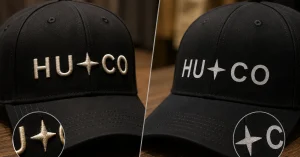
A logo embroidered directly into a cap can look excellent, but a patch gives the logo a defined boundary. The border separates the branding from the surrounding fabric and gives it its own visual space.
That can make the design easier to notice.
For example, imagine a brand logo consisting of a simple symbol and company name.
On a plain cap, the logo might blend into the fabric.
Put that same logo inside a custom-shaped embroidered patch, and suddenly the branding becomes a distinct badge.
This can be particularly effective for:
- Clothing brands
- Restaurants
- Cafés
- Gyms
- Sports clubs
- Outdoor businesses
- Construction companies
- Trades
- Events
- Hospitality businesses
- Automotive brands
- Creative businesses
- Start-ups
A branded cap can travel wherever the wearer goes.
That means the product can continue displaying the brand after the original customer has left the shop, event, workplace, or promotional campaign.
The important thing, however, is to avoid making the design too complicated.
For caps, smaller designs need to remain readable. Strong shapes, clear lettering, appropriate spacing, and good contrast generally produce better results than trying to squeeze too much information into a small patch.
5. They Add Texture and Dimension
This is where embroidered patches have a significant advantage over many flat decoration methods.
Embroidery is physical.
You can see the stitches. You can feel the thread. Light interacts with the surface of the embroidery, creating subtle highlights and shadows.
That texture gives a patch dimension.
A well-produced embroidered patch can include different thread colours, stitch directions, borders, and levels of detail. Depending on the artwork and production method, special effects can also be incorporated.
This makes embroidered patches particularly attractive for designs such as:
- Logos
- Badges
- Crests
- Initials
- Mascots
- Numbers
- Symbols
- Typography
- Icons
- Illustrations
Texture also affects perceived quality.
When someone picks up a cap with a properly finished embroidered patch, they can immediately feel that the decoration is not simply printed onto the fabric.
It feels like an actual component of the product.
That tactile quality is increasingly valuable in a digital-first world where so much branding is experienced through screens.
A physical patch gives customers something they can see and touch.
6. Embroidered Patches Are Extremely Versatile
Another reason patches remain popular is that they are not limited to one type of clothing.
A single patch concept can potentially be adapted for multiple products.
Think beyond the traditional jacket.
Embroidered patches can be used on:
Caps
This is one of the most natural applications.
Baseball caps, trucker caps, snapbacks, five-panel caps, low-profile caps, and other headwear can all provide excellent surfaces for patch decoration when the patch size and placement are chosen correctly.
Jackets
Denim jackets, bomber jackets, work jackets, and casual outerwear can all be enhanced with embroidered patches.
Bags
Backpacks, canvas bags, tote bags, and travel accessories can become more distinctive with custom patches.
Hoodies and Sweatshirts
A small patch can add branding without covering a large section of the garment.
Uniforms and Workwear
Patches can communicate company identity, departments, roles, or team membership.
Sportswear
Teams can use embroidered badges, mascots, names, numbers, or achievement patches.
This versatility makes patches particularly useful for businesses that want a consistent identity across multiple products.
A brand could use one visual concept across caps, jackets, bags, and other merchandise while maintaining a cohesive appearance.
7. They Are Ideal for Custom Merchandise and Limited Editions
Custom merchandise has become increasingly important for businesses and creators.
But there is a challenge.
People do not necessarily want another product covered in a giant company logo.
They want merchandise that looks good.
This is where embroidered patches can make a major difference.
A business can create a stylish patch featuring its logo or a special design and place it on a high-quality cap.
Instead of feeling like basic promotional merchandise, the cap can become a genuine fashion accessory.
Patches can also be used for limited-edition collections.
For example, a clothing brand could release:
Drop 01 — Original Logo Patch
Then later:
Drop 02 — Heritage Patch
Then:
Drop 03 — Anniversary Patch
The underlying cap style could remain consistent while the patch changes.
This creates a modular approach to merchandise.
Current fashion commentary highlights limited-edition patch drops, tactile designs, nostalgia, and collectible qualities as reasons patches are particularly attractive to independent and streetwear brands.
For smaller brands, this can be a practical way to experiment with new designs without completely reinventing an entire garment collection.
8. They Work for Businesses as Well as Fashion Brands
It is easy to think of embroidered patches as purely fashion-focused.
They are not.
Businesses in many industries can benefit from them.
Consider a local landscaping company.
Instead of simply printing its logo on every employee’s shirt, the company could create a professional embroidered badge and apply it to caps and workwear.
A gym could create a custom patch featuring its logo.
A café could create a heritage-style patch that reflects its personality.
A sports club could use patches to represent teams, seasons, championships, or membership.
An outdoor company could create a rugged embroidered badge that complements its brand aesthetic.
The possibilities are broad.
The key is to design the patch around the identity of the organisation.
A corporate company might prefer clean typography and a simple emblem.
An outdoor brand may want earthy colours and a rugged badge shape.
A streetwear brand could experiment with oversized artwork, unusual shapes, distressed effects, or bold typography.
The patch should look like it belongs to the brand.
That is what transforms it from decoration into branding.
9. They Turn Caps Into Products People Want to Wear
Perhaps the biggest reason embroidered patches are enjoying renewed popularity is simple:
They can make a cap more interesting.
A good custom cap is not just a marketing tool.
It is something a customer might choose to wear because they like the design.
That distinction matters.
If someone wears your cap only because it was given to them at an event, the branding opportunity is limited.
If they choose to wear the cap to work, shopping, travelling, attending a game, meeting friends, or going outdoors, your brand becomes part of their everyday environment.
That is the power of wearable branding.
A carefully designed embroidered patch can help achieve this because it can make the cap feel like a genuine fashion product rather than a promotional giveaway.
And once customers start choosing branded products because they genuinely like them, the relationship between the brand and the customer becomes much stronger.
Why Embroidered Patches Are Perfect for Custom Caps
Although embroidered patches can be used almost anywhere, caps are one of their strongest applications.
The front panel of a cap provides a natural canvas for a compact logo or badge.
The trick is getting the proportions right.
A patch that is too large can overwhelm the crown. One that is too small may lose important details.
The design also needs to work with the shape of the cap.
A structured cap can create a different visual effect from an unstructured cap. A five-panel cap has different proportions from a traditional six-panel baseball cap. A trucker cap has a different personality from a low-profile cap.
This means the patch should never be designed in isolation.
At Custom Caps Maker, the goal should be to create headwear where the cap style and decoration work together.
For customers, that means considering:
- Cap style
- Patch dimensions
- Patch shape
- Thread colours
- Border style
- Artwork complexity
- Placement
- Intended use
- Overall brand aesthetic
A simple design executed correctly will often look better than a highly complicated design squeezed into an unsuitable space.
Embroidered Patches vs Direct Embroidery on Caps
One common question is whether businesses should choose an embroidered patch or have their logo embroidered directly onto the cap.
Both options have advantages.
Direct Embroidery
Direct embroidery places the design directly into the cap fabric.
It is a classic option and works particularly well for:
- Simple logos
- Text
- Monograms
- Traditional branding
- Minimal designs
Embroidered Patches
A patch is produced separately and then attached to the cap.
This creates a more badge-like appearance and provides a clear boundary around the design.
Patches can be especially useful when:
- You want a defined logo area
- You want a vintage or heritage appearance
- You want more visual separation from the cap fabric
- You want interchangeable patch concepts
- You want your merchandise to feel more distinctive
Neither method is automatically better.
The right choice depends on the design and the look you want.
For brands looking for a bold, tactile, badge-inspired identity, embroidered patches can be an excellent choice.
How to Design an Embroidered Patch That Looks Professional
Creating a patch is not simply a matter of taking a logo and shrinking it.
Embroidery has physical limitations.
Very small text can become difficult to read. Thin lines may lose clarity. Excessive detail can make the finished patch look crowded.
A good patch design starts with simplicity.
Keep Important Elements Clear
Your main logo or symbol should be immediately recognisable.
If someone needs to stand several inches away to understand the design, it may need simplifying.
Choose Colours Carefully
Strong contrast generally improves readability.
For example, dark lettering on a light base can create clear separation, while complementary or contrasting thread colours can help important elements stand out.
Think About Size
A patch intended for a cap usually needs to be designed differently from a large jacket patch.
The smaller the patch, the more important simplicity becomes.
Use Borders Strategically
A border helps visually separate the patch from the cap.
It can also reinforce the shape and make the patch appear more finished.
Consider the Cap Colour
The patch should complement the cap.
A dark patch on a dark cap may lose definition. A high-contrast patch can create a much stronger visual impact.
Why Quality Matters
Not all embroidered patches look the same.
The final result depends on several factors, including artwork preparation, thread quality, stitch density, backing, border finishing, patch dimensions, and production accuracy.
Poorly prepared artwork can result in:
- Blurry small details
- Crowded lettering
- Uneven stitching
- Weak borders
- Incorrect proportions
- Colours that do not work together
A professionally prepared design considers how the artwork will translate from a digital screen into physical thread.
That is why experienced custom cap manufacturers are valuable.
They can help identify potential problems before production begins.
Choosing the Right Backing
Depending on how the patch will be used, different attachment methods may be appropriate.
Common options include:
Sew-On Backing
Sew-on patches provide a traditional and secure attachment method.
They are particularly suitable for garments that will be used frequently.
Iron-On Backing
Iron-on patches can be convenient for customers who want a relatively simple application process.
However, the suitability depends on the fabric and application conditions.
Hook-and-Loop Backing
Hook-and-loop patches are useful when the patch needs to be removed or changed regularly.
They are especially practical for certain uniforms, equipment, and modular apparel.
The best backing depends on the product, fabric, intended use, and how often the patch will be removed.
Are Embroidered Patches Only a Trend?
No.
The current popularity of embroidered patches may be influenced by fashion trends, but the underlying benefits are much more durable.
Patches combine:
- Personalisation
- Branding
- Craftsmanship
- Texture
- Durability
- Versatility
- Collectability
Those qualities do not depend entirely on fashion.
The current resurgence simply gives brands and consumers new ways to use an established decoration method.
In 2026, patches are appearing across streetwear, independent fashion, accessories, workwear, sports merchandise, and branded headwear.
That makes them more than a temporary trend.
They are a flexible branding and design tool.
Why Brands Should Consider Custom Embroidered Patch Caps
If you are building branded merchandise, custom patch caps deserve serious consideration.
They can provide a balance between marketing and fashion.
Instead of asking customers to wear a product that looks like an advertisement, you can create something that feels like a genuine piece of branded apparel.
A good patch cap can:
- Strengthen brand recognition
- Add a premium appearance
- Create a memorable visual identity
- Encourage customers to wear your merchandise
- Support limited-edition collections
- Give teams a unified appearance
- Work across multiple industries
- Add texture and depth to simple headwear
And importantly, the cap itself becomes part of your brand experience.
Final Thoughts
So, why are embroidered patches all the rage these days?
Because they offer something that many modern branding methods struggle to provide: personality you can see and feel.
They can transform a basic cap into a distinctive accessory. They can turn a logo into a badge. They can make merchandise feel more collectible. They can give businesses a professional identity while still allowing customers to express their own style.
From vintage-inspired fashion to modern streetwear, from sports teams to corporate uniforms, embroidered patches have proven that they can move between different worlds without losing their appeal.
And for brands investing in custom headwear, that versatility is incredibly valuable.
At Custom Caps Maker, custom caps can be developed around your brand’s visual identity, whether you are looking for classic embroidered branding, custom patch caps, promotional headwear, team merchandise, or a distinctive fashion collection.
If your logo deserves more than a flat print, an embroidered patch could be the detail that makes your next cap stand out.
Ready to turn your logo into a cap people actually want to wear? Explore custom cap options from Custom Caps Maker and create headwear designed around your brand.
Frequently Asked Questions
Are embroidered patches still popular in 2026?
Yes. Embroidered patches continue to appear across streetwear, independent fashion, accessories, workwear, sports merchandise, and personalised apparel. Current fashion discussions particularly highlight tactile designs, nostalgia, individuality, and limited-edition patch collections.
Are embroidered patches good for caps?
Absolutely. Caps provide a compact, highly visible area for embroidered patches. The main consideration is choosing a patch size and design that fits the cap’s front panel without becoming overcrowded.
Are embroidered patches better than printed logos?
It depends on the desired appearance. Embroidered patches provide texture, dimension, and a badge-like finish, while printing can be more suitable for highly detailed artwork, gradients, or photographic designs.
Can I put a custom embroidered patch on a baseball cap?
Yes. Custom embroidered patches can be designed specifically for baseball caps and other headwear. The patch dimensions should be selected according to the available front-panel space.
Can embroidered patches be used for business branding?
Yes. Businesses can use embroidered patches on caps, uniforms, jackets, bags, and promotional merchandise. They can help create a consistent and professional visual identity.
What makes a good embroidered patch design?
A strong patch design is usually clear, appropriately sized, visually balanced, and easy to recognise. Bold shapes, readable lettering, suitable contrast, and an appropriate border can help produce a stronger finished result.
Can embroidered patches be removed from caps?
It depends on the attachment method. Sew-on patches can generally be removed with care, while hook-and-loop patches are specifically designed for repeated removal. Iron-on patches can be more difficult to remove cleanly.
Why are embroidered patches popular with streetwear brands?
They combine nostalgia, craftsmanship, texture, individuality, and customisation. These qualities fit naturally with streetwear and independent fashion, where distinctive details can help a product stand apart from mass-produced apparel.
Can one patch design be used on different products?
Often, yes. The same branding concept can potentially be adapted for caps, jackets, bags, hoodies, and other apparel. However, the artwork may need adjustments depending on the size and surface of each product.
How do I get started with a custom patch cap?
Start with your logo or artwork, choose the type of cap you want, decide on an approximate patch size and placement, and discuss the design with your custom cap manufacturer. A professional production team can help determine whether your artwork needs adjustments before manufacturing.