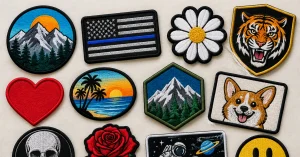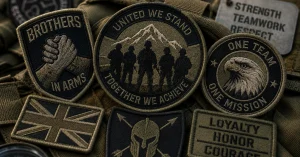
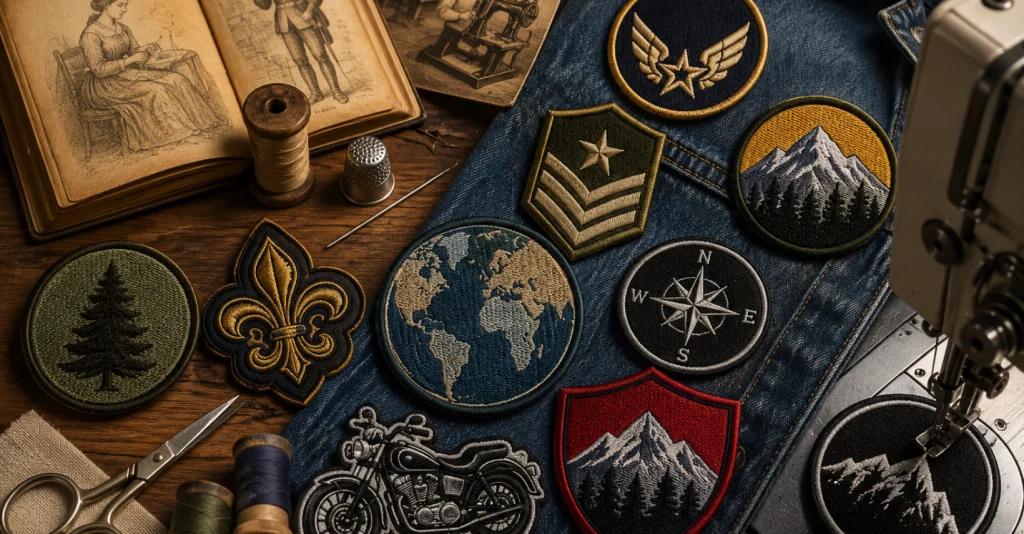
Sew-on patches may look like small pieces of embroidered fabric, but their history is far more interesting than their size suggests. For centuries, people have used decorative textiles, embroidered emblems, badges, and fabric symbols to communicate identity, represent communities, celebrate achievements, and add personality to clothing. What began as a detailed craft created by skilled hands has evolved into a modern industry where advanced embroidery technology makes it possible to produce highly detailed custom sew-on patches in almost any shape, size, and design.
Today, sew-on patches can be found everywhere. They decorate jackets, uniforms, backpacks, workwear, denim, caps, bags, motorcycle clothing, club apparel, and much more. Businesses use them to display logos. Sports teams use them to create a sense of belonging. Clubs and organisations use them to identify their members. Fashion lovers use them to personalise everyday clothing, while collectors turn patches into memorable souvenirs from places, events, and experiences.
But how did sew-on patches become so popular?
The story begins with the long history of embroidery itself.
From hand-stitched decorations created by skilled artisans to digitally designed embroidered badges produced with precision machinery, the evolution of patches reflects centuries of creativity and technological progress. Even though modern patch production is much faster and more consistent than traditional embroidery, the basic idea remains remarkably similar: using thread and fabric to create a visual message that can be attached to clothing and other materials.
In this guide, we will explore the fascinating history of sew-on patches, how embroidered patches evolved, how modern patches are manufactured, and how you can sew your own patch onto a garment. We will also compare sew-on and iron-on patches and explain why sewn patches remain one of the most dependable choices for long-term use.
If you are thinking about creating your own custom embroidered patches, this guide will help you understand everything you need to know before getting started.
What Are Sew-On Patches?
A sew-on patch is a decorative or functional piece of material designed to be attached to another surface by stitching. The patch may feature embroidery, woven details, printed artwork, chenille textures, or other materials, depending on the desired appearance and purpose.
Unlike iron-on patches, sew-on patches do not depend on heat-activated adhesive to remain attached. Instead, they are secured directly to the garment or item with thread. This makes them particularly useful for clothing and accessories that experience regular movement, washing, or outdoor use.
A traditional embroidered sew-on patch usually consists of a fabric base covered with stitched thread. The design may include text, symbols, logos, illustrations, numbers, or decorative patterns. A stitched border is often added around the edge to give the patch a clean finish and help protect the design.
One of the biggest advantages of a sew-on patch is its versatility. Because it is attached with stitching, it can be applied to many different fabrics and materials. Denim jackets, leather garments, uniforms, canvas bags, backpacks, workwear, and heavy cotton clothing are just a few examples.
At Custom Patch Makers UK, custom patches can be designed around your specific requirements, allowing you to turn an idea, logo, symbol, or piece of artwork into a wearable emblem that represents your brand, group, organisation, or personal style.
A Brief History of Embroidery and Fabric Patches
To understand the history of sew-on patches, we first need to look at embroidery.
Embroidery is one of the oldest forms of decorative textile art. Long before modern embroidery machines existed, skilled artisans used needles and thread to decorate fabric by hand. Different cultures developed their own embroidery techniques, patterns, symbols, and stitching traditions.
Historically, embroidery was often associated with craftsmanship, status, and wealth. Creating intricate designs by hand required considerable time and skill. Decorative textiles could therefore become valuable possessions, particularly when they involved expensive materials or highly detailed workmanship.
Embroidered decorations were used on clothing, ceremonial garments, household textiles, uniforms, and accessories. Designs could represent cultural traditions, family heritage, social status, religious beliefs, or membership of a particular community.
Over time, the concept of attaching a decorative embroidered piece to clothing became increasingly practical. Instead of embroidering an entire design directly onto a garment, an embroidered emblem could be produced separately and then attached wherever it was needed.
This approach offered several advantages.
A patch could be created independently from the garment. It could be replaced, moved, collected, or transferred. It could also be produced as a standard emblem and then distributed to members of a group or organisation.
This helped establish the basic concept behind the modern patch.
The Evolution of Patches Through Military and Uniform Culture
One of the most recognisable uses of patches has been in military and uniformed organisations.
Throughout history, uniforms have needed to communicate information quickly. A badge or emblem can identify a person’s role, rank, unit, organisation, or affiliation without requiring a lengthy explanation.
Embroidered and fabric insignia became an effective way to add these visual identifiers to uniforms. Patches could be placed on sleeves, shoulders, chest areas, hats, and other parts of clothing.
The appeal of embroidered insignia extended beyond practical identification. A patch could also represent pride, achievement, loyalty, and shared identity.
Members of the same group wearing the same emblem could instantly recognise their connection with one another. This sense of belonging is one reason patches remain popular today.
The concept has expanded far beyond military applications. Modern custom patches are now used by:
- Sports teams
- Schools and universities
- Motorcycle clubs
- Scout groups
- Outdoor organisations
- Security companies
- Workwear brands
- Restaurants and hospitality businesses
- Fashion labels
- Music groups
- Event organisers
- Small businesses
- Charities and community groups
The patch has become more than an identifier. It is now a creative way to communicate personality and identity.
The Industrial Revolution Changed Patch Production
For centuries, embroidery was largely dependent on manual labour. Creating an intricate design could take a considerable amount of time, and the final result depended heavily on the skill and experience of the person producing it.
The Industrial Revolution changed textile manufacturing dramatically.
As machinery became more advanced, textile production became faster and more scalable. New technologies gradually transformed the way fabric and embroidery were produced.
The development of embroidery machinery opened new possibilities. Designs that once required hours or days of hand stitching could increasingly be reproduced with greater speed and consistency.
This was a major turning point for embroidered patches.
Instead of producing every emblem entirely by hand, manufacturers could use machines to replicate designs more efficiently. This made embroidered patches more accessible to businesses, organisations, clubs, and individuals.
The introduction of modern computer-controlled embroidery technology took this development even further.
The Digital Revolution and the Rise of Custom Embroidered Patches
Modern embroidery is a combination of traditional craftsmanship and digital technology.
Today, a patch design can begin as artwork created on a computer. The design is then prepared for embroidery through a process commonly known as digitising. This converts the artwork into a stitch-based format that an embroidery machine can understand.
The digitised design tells the machine how to create the patch, including details such as:
- Stitch direction
- Stitch density
- Thread placement
- Colour changes
- Design sequencing
- Border stitching
- Overall dimensions
This technology has made it possible to create highly consistent embroidered patches while maintaining a level of detail that would be difficult and time-consuming to reproduce manually.
The digital revolution has also expanded creative possibilities.
Today, customers can order patches in a wide variety of shapes and sizes. Designs can feature company logos, artwork, slogans, initials, symbols, mascots, illustrations, and more.
Modern custom sew-on patches are available in different shapes, including:
- Round patches
- Square patches
- Rectangular patches
- Shield-shaped patches
- Custom-shaped patches
- Die-cut patches
- Character-shaped patches
- Logo-shaped patches
This flexibility is one of the main reasons custom patches have become so popular.
Why Are Sew-On Patches Still So Popular?
With modern adhesive technologies and other application methods available, you may wonder why sew-on patches continue to be widely used.
The answer is simple: stitching is reliable, versatile, and visually appealing.
A well-sewn patch becomes part of the garment rather than simply sitting on its surface. The stitching helps keep the patch securely attached, making it suitable for items that may experience frequent use.
Sew-on patches are particularly useful when durability is important.
For example, consider a work jacket that is worn regularly. It may be exposed to movement, friction, outdoor conditions, and repeated washing. A properly stitched patch can provide a dependable attachment method.
Sewing also gives you greater flexibility when working with certain materials.
Some fabrics may not be suitable for heat application, particularly materials that can be damaged by high temperatures. In these situations, sewing can provide a practical alternative.
Another benefit is the appearance.
A carefully stitched patch can have a classic, professional look. The thread used to secure the patch can blend into the border, creating a clean finish that complements the embroidered design.
For many people, the process of sewing a patch onto a jacket or bag is also part of the experience. Each patch can represent a memory, achievement, journey, organisation, or personal interest.
How to Sew On a Patch: Everything You Need
If you have purchased a sew-on patch and want to attach it yourself, the process is relatively straightforward.
Before you begin, gather the necessary tools.
1. Your Patch
Choose the patch you want to attach and make sure it is clean and free from loose threads.
2. Needle
Select a strong needle suitable for the material you are working with. Lightweight fabrics can generally be stitched with a standard sewing needle, while thicker materials may require a stronger needle.
3. Thread
Choose a thread colour that either matches the patch border or blends into the fabric.
If you want the stitching to become part of the design, select a matching colour. If you prefer the stitching to be less noticeable, choose a thread that closely matches the edge of the patch.
4. Sewing Pins
Pins help hold the patch in place while you prepare to sew.
5. Scissors
Use sharp scissors to cut the thread neatly.
6. Thimble
A thimble can protect your finger when pushing a needle through thick materials such as denim or heavy canvas.
7. Measuring Tape
A measuring tape can help you position the patch accurately, especially when working with uniforms, logos, or symmetrical designs.
Step-by-Step Guide to Sewing a Patch
Now that you have your tools ready, it is time to attach your patch.
Step 1: Prepare the Garment
Start with a clean, dry garment.
If possible, iron the area where you plan to place the patch. The fabric should be smooth and free from unnecessary wrinkles.
However, always check the care instructions for your garment before applying heat.
Step 2: Decide Where the Patch Should Go
Placement is extremely important.
Before you start sewing, carefully consider where you want your patch to sit.
If you are adding a patch to the centre of a jacket, measure the distance from surrounding seams or edges. If you are adding multiple patches, consider how they will look together.
For a professional appearance, take your time with positioning.
Step 3: Secure the Patch
Once you have chosen the correct position, use sewing pins to hold the patch in place.
Place the pins carefully so that the patch remains flat against the fabric.
If the patch is being applied to a jacket, shirt, vest, or bag, consider how the item looks when it is actually being worn or used. Fabric can change shape when a garment is moved, so a patch that looks perfectly positioned while lying flat may appear slightly different when worn.
Step 4: Cut Your Thread
Cut a manageable length of thread.
Around 20 to 25 inches is generally a practical starting point. Avoid using an extremely long piece because it can become tangled while you work.
Step 5: Thread the Needle
Thread your needle with either a single or doubled strand, depending on the thickness of the fabric and the strength you require.
Tie a secure knot at the end of the thread.
Step 6: Start From the Back
Whenever possible, begin from the underside of the fabric.
Push the needle upward through the garment and into the edge of the patch.
Starting from the back helps keep the knot hidden and gives the finished patch a cleaner appearance.
Step 7: Make Your First Stitch
Bring the needle through the patch close to the embroidered border.
Pull the thread carefully until the knot rests securely against the back of the fabric.
Then push the needle back down through the patch and garment.
Your first stitch should hold the patch firmly without pulling the fabric too tightly.
Step 8: Continue Around the Border
Repeat the process around the entire edge of the patch.
Try to keep your stitches consistent in length and spacing.
For the cleanest appearance, stitch through or very close to the border of the patch. This helps secure the edge while making the thread less noticeable.
Step 9: Check the Patch
As you sew, periodically check the front of the garment.
Make sure the patch remains flat and has not shifted position.
If you notice that the patch is beginning to move, stop and reposition it before continuing.
Step 10: Secure the Thread
Once you have stitched completely around the patch, turn the garment over and secure the thread on the underside.
Tie a firm knot and trim away any excess thread.
If your thread runs out before you reach the end, secure the existing thread at the back and begin again with a fresh piece.
And that’s it.
You have successfully attached your sew-on patch.
What Is the Best Stitch for Sew-On Patches?
There are several ways to stitch a patch, but the most important goal is to create a secure attachment without damaging the garment.
A simple whip stitch is commonly used around patch edges. The stitches pass over the edge of the patch and into the fabric, helping hold the border securely.
A blanket stitch can also create an attractive decorative finish, particularly when you want the stitching to become part of the overall appearance.
For a discreet finish, you may choose stitching that closely follows the existing border.
The best technique depends on the patch, the fabric, and the appearance you want to achieve.
For heavy-duty applications, focus on creating secure, evenly spaced stitches around the entire perimeter. Avoid leaving large gaps between stitches, particularly in areas that will experience frequent movement or friction.
Sew-On vs Iron-On Patches: What’s the Difference?
One of the most common questions people ask when ordering custom patches is whether they should choose sew-on or iron-on patches.
The answer depends on your intended use.
Sew-On Patches
Sew-on patches are attached using thread.
They are a popular option when durability and long-term attachment are important. They are also suitable for many materials where heat application may not be ideal.
The main advantage is that the patch is physically secured to the garment through stitching.
The main disadvantage is that application takes longer than simply using an iron.
Iron-On Patches
Iron-on patches feature a heat-activated adhesive backing.
When exposed to the appropriate heat and pressure, the adhesive bonds with the fabric.
This makes iron-on patches convenient and relatively quick to apply.
However, the quality of the attachment can depend on several factors, including:
- The type of fabric
- The application temperature
- The amount of pressure
- The duration of heating
- The quality of the adhesive
For some applications, additional stitching may be used to provide extra security.
Which Is Better: Sew-On or Iron-On?
There is no universal answer.
The right choice depends on your garment, material, intended use, and personal preference.
Choose sew-on patches when:
- You want a secure long-term attachment.
- The garment will be used frequently.
- You are working with thicker materials.
- You want a traditional embroidered appearance.
- You are applying the patch to a material that may not be suitable for heat.
- You want the flexibility to replace or reposition the patch later.
Choose iron-on patches when:
- You want a quick application method.
- The fabric is suitable for heat application.
- You prefer a simple attachment process.
- The patch is being used for decorative purposes.
In some situations, combining both methods can be an option. A patch may initially be attached with heat-activated adhesive and then reinforced with stitching around the border.
However, always check the patch and garment specifications before choosing an application method.
Can All Types of Patches Be Sewn On?
Many different types of patches can be sewn onto clothing and accessories.
The application method may depend on the patch construction and the material to which it is being attached.
Common patch types include:
Embroidered Patches
Embroidered patches are among the most traditional and recognisable patch styles.
They use stitched thread to create designs with texture and depth. They are particularly popular for logos, uniforms, clubs, fashion, and promotional apparel.
Woven Patches
Woven patches use thinner threads woven closely together. This allows them to reproduce smaller details and fine lettering more clearly than traditional embroidery in some designs.
Printed Patches
Printed patches use printed artwork rather than relying entirely on stitched thread.
They can be useful for highly detailed images, gradients, photographs, and artwork containing complex colour transitions.
Chenille Patches
Chenille patches have a distinctive raised, textured appearance.
They are especially popular for sportswear, varsity jackets, school apparel, and fashion garments.
PVC Patches
PVC patches are made from a flexible plastic material and are known for their durability and distinctive three-dimensional appearance.
They are often used for outdoor clothing, tactical-style apparel, bags, and accessories.
The right patch type depends on the design you want and the result you are trying to achieve.
How Custom Sew-On Patches Are Made Today
The production process for modern embroidered patches combines creative design with advanced manufacturing.
The process often begins with artwork.
This could be a company logo, hand-drawn illustration, digital graphic, text-based design, or custom concept.
The artwork is then reviewed to determine how it can be translated into embroidery.
This is where digitisation becomes important.
A professional digitiser converts the artwork into an embroidery-ready file. They decide how different elements of the design should be stitched, how colours should be layered, and how the stitching should flow.
The design is then prepared for production.
The patch is created using a suitable fabric base and thread colours. The embroidery machine follows the digital instructions, placing stitches accurately to reproduce the design.
Once the embroidery is complete, the patch is finished and inspected.
Depending on the chosen style, the edges may be cut into a specific shape and finished with a stitched border.
Quality control is an important part of this process.
A good patch should have:
- Clean embroidery
- Consistent stitching
- Accurate colours
- A secure border
- A professional shape
- Clear lettering
- No unnecessary loose threads
This attention to detail is what turns a basic piece of fabric into a professional custom patch.
Why Custom Patches Are More Than Decoration
A patch can communicate a message without saying a single word.
A company logo can turn a plain uniform into branded workwear.
A club emblem can create a sense of community.
A sports patch can celebrate team identity.
A commemorative patch can preserve a memory.
A personalised fashion patch can express individuality.
This is why patches have remained popular across generations.
They combine visual communication with physical craftsmanship.
A small emblem can tell people where you belong, what you support, what you have achieved, or simply what you like.
Custom Sew-On Patches for Businesses
Businesses can use custom patches as a practical branding tool.
Instead of printing a logo directly onto clothing, a company can create a dedicated embroidered patch that can be attached to different garments.
This can be particularly useful for:
- Staff uniforms
- Work jackets
- Security clothing
- Hospitality uniforms
- Construction workwear
- Outdoor clothing
- Promotional apparel
- Corporate merchandise
A well-designed patch can give workwear a professional and consistent appearance.
It can also be easier to update uniforms over time. If a company changes its branding, new patches can be produced for new garments.
For smaller businesses, custom patches can also create a distinctive visual identity without requiring a completely new uniform design.
Custom Patches for Clubs and Organisations
Patches have always been strongly connected with group identity.
Today, clubs and organisations can use custom patches to create a visual symbol that members can proudly display.
This can include:
- Motorcycle clubs
- Cycling groups
- Hiking organisations
- Scout groups
- Sports clubs
- Music communities
- Social organisations
- Charity groups
A patch can become a symbol that members recognise and value.
For clubs, custom sew-on patches can also be used to celebrate milestones, events, achievements, or membership.
Patches in Fashion
The fashion world has embraced patches for decades.
Denim jackets covered with embroidered patches have become a recognisable style. Backpacks, jeans, caps, bags, and coats can all be personalised using fabric patches.
Part of the appeal comes from individuality.
In a world where mass-produced clothing can sometimes look identical, patches provide an opportunity to create something unique.
A plain jacket can be transformed with a carefully selected collection of embroidered designs.
You can use patches to represent:
- Favourite hobbies
- Travel memories
- Music interests
- Personal beliefs
- Humour
- Pop culture
- Artistic preferences
- Personal achievements
The result is clothing that feels more personal and meaningful.
How to Choose the Right Patch Design
Creating a successful patch starts with a strong design.
Before ordering your custom patch, think carefully about what you want it to communicate.
If you are creating a business patch, your logo should remain clear and recognisable.
If you are creating a club patch, consider which symbols represent your community.
If you are designing a fashion patch, focus on the visual style and colours that match the garment.
Keep in mind that extremely small details may not always translate perfectly into embroidery.
Simple, bold shapes are often easier to reproduce clearly.
Text also requires careful consideration.
Small lettering can become difficult to read, so choosing an appropriate font size is important.
The shape of the patch should also complement the design.
A circular patch may work well for badges and emblems, while a custom-shaped patch can follow the outline of a logo or character.
Choosing Colours for Your Custom Patch
Colour is one of the first things people notice.
When selecting colours, consider both the patch design and the garment it will be attached to.
A dark patch on a dark jacket may have less visual impact, while contrasting colours can make the design stand out.
For business patches, consider using your existing brand colours.
For fashion patches, choose colours that complement your clothing.
For club or team patches, consistent colours can help strengthen group identity.
The right combination of colours can make a simple design instantly recognisable.
How to Make Your Sew-On Patch Last Longer
Once you have invested time and money into a custom patch, you naturally want it to remain in excellent condition.
Proper application is the first step.
Make sure the patch is securely stitched around the entire perimeter.
Avoid leaving loose sections that could catch on objects.
When washing patched garments, follow the care instructions for the garment and patch.
Whenever possible, washing clothing according to its recommended care instructions can help preserve both the fabric and the embroidery.
Avoid pulling at loose threads.
If you notice a small loose stitch, repair it promptly rather than allowing the problem to grow.
With proper care, a quality patch can remain an attractive part of your garment for a long time.
The Future of Custom Sew-On Patches
The history of patches shows how a traditional craft can evolve alongside technology.
What began with hand embroidery has developed into a sophisticated industry that combines design software, computerised machinery, advanced materials, and skilled craftsmanship.
Yet the purpose remains largely unchanged.
People still use patches to express identity.
They still use them to represent groups.
They still wear them to celebrate achievements.
They still collect them as memories.
And they still appreciate the craftsmanship behind a beautifully produced embroidered design.
As customisation continues to influence fashion, branding, and personal expression, custom patches are likely to remain relevant.
Modern production methods may continue to improve, but the fundamental appeal of a patch will always be its ability to turn a simple piece of fabric into something meaningful.
Frequently Asked Questions About Sew-On Patches
What exactly is a sew-on patch?
A sew-on patch is a decorative or functional piece of material designed to be attached to another surface using stitching. It can feature embroidery, woven details, printed artwork, chenille, or other materials.
Are sew-on patches durable?
Sew-on patches can be highly durable when they are made with quality materials and properly stitched onto the garment. The durability also depends on the fabric, thread, patch construction, and how the garment is used and cared for.
Are sew-on patches better than iron-on patches?
Neither method is automatically better for every situation. Sew-on patches are often preferred for long-term attachment and heavier-use garments, while iron-on patches can provide a quicker application method when the fabric is suitable for heat.
Can I sew an iron-on patch?
In many cases, yes. Some people choose to sew around an iron-on patch to reinforce its attachment. However, always consider the construction of the patch and the material of the garment before stitching.
Can patches be sewn onto denim?
Yes. Denim is one of the most popular materials for sew-on patches. Because denim can be relatively thick, you may need a strong needle and suitable thread.
Can patches be sewn onto leather?
Patches can be attached to leather, but the process requires more care because leather does not behave like woven fabric. A suitable needle and stitching approach should be used to avoid unnecessary damage.
What is the best thread for sewing patches?
A strong polyester thread is often a practical choice for attaching patches because it offers good strength and resistance to everyday wear. Choose a colour that matches the patch border or the garment, depending on the appearance you want.
How long does it take to sew on a patch?
The time depends on the patch size, fabric thickness, stitching method, and your experience. A small patch may be attached relatively quickly, while larger patches or thick materials can require more time.
Can I remove a sew-on patch?
Yes, sew-on patches can generally be removed by carefully cutting the stitches that hold them in place. Take care not to cut the garment itself.
What is the best location for a patch?
The best location depends on the garment and purpose of the patch. Common areas include jacket sleeves, chest panels, backs of jackets, backpacks, bags, and uniforms. Always consider how the garment looks when worn before finalising the position.
Are custom patches suitable for businesses?
Absolutely. Custom patches can be used for company uniforms, workwear, promotional clothing, staff apparel, and branded merchandise. They provide a professional way to display a logo or brand identity.
Can I create a patch in a custom shape?
Yes. Modern patch production allows for many different shapes. Custom-shaped patches can be designed around logos, characters, symbols, or other artwork.
Create Your Own Custom Sew-On Patches With Custom Patch Makers UK
The history of sew-on patches is a story of creativity, craftsmanship, identity, and innovation.
From traditional hand embroidery to modern computerised production, patches have evolved significantly over time. Yet their purpose remains as relevant as ever.
A small embroidered emblem can represent a business, celebrate an achievement, bring members of a community together, or transform an ordinary piece of clothing into something personal.
Whether you are designing patches for a company, sports team, club, organisation, fashion project, or personal collection, the right design can make a lasting impression.
At Custom Patch Makers UK, custom patch creation gives you the opportunity to turn your ideas into professionally made patches designed around your requirements. From embroidered logos and branded badges to creative custom designs, the possibilities are almost endless.
If you already have artwork ready, you can use it as the foundation for your patch design. If you are still developing your concept, consider the message you want your patch to communicate, the colours that represent your idea, and the type of clothing or accessory where you plan to use it.
The best patches are not simply decorative pieces.
They tell a story.
They represent identity.
They create a sense of belonging.
And sometimes, they preserve a memory that can be carried for years.
That is why sew-on patches continue to have a special place in fashion, branding, uniforms, clubs, and personal expression.
The technology behind patch production may have changed dramatically since the days of traditional hand embroidery, but the artistry remains.
One needle, one thread, and one creative idea can still become something that people proudly wear, share, and remember.
So, whether you are looking to create a professional logo patch for your business, a distinctive emblem for your organisation, or a completely unique embroidered design, now is the perfect time to bring your idea to life with custom sew-on patches from Custom Patch Makers UK.