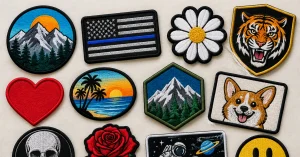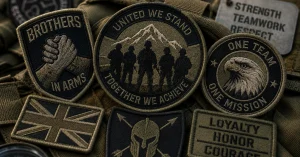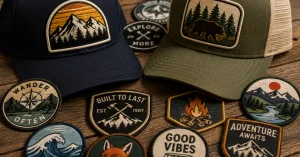
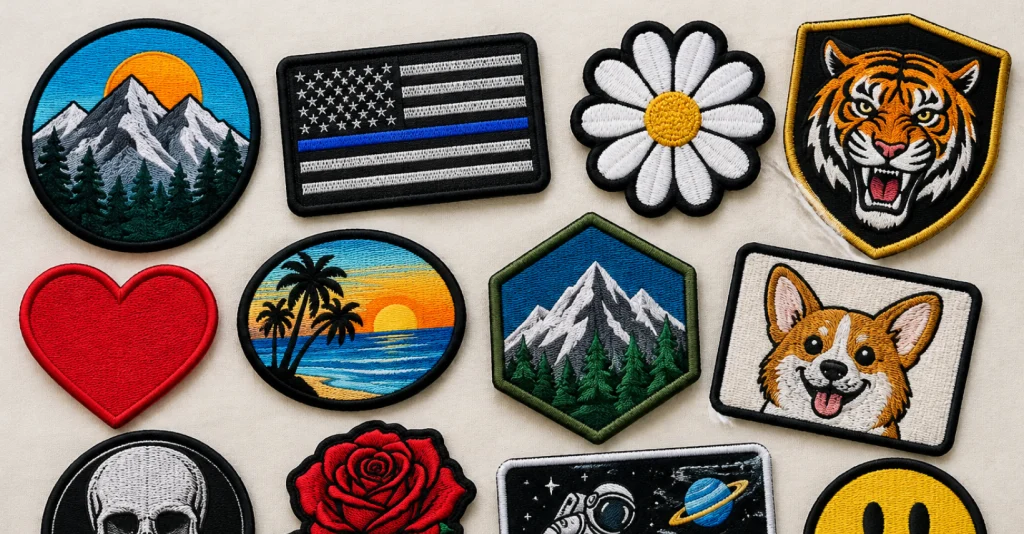
Custom patches are one of the easiest ways to give clothing, uniforms, bags, hats, jackets and accessories a distinctive identity. Whether you are creating patches for a business, sports club, motorcycle group, military-inspired clothing line, outdoor brand or simply want something personal, the type of patch you choose can make a significant difference to the final result.
Today, custom made patches are available in far more styles than traditional embroidery. You can choose from embroidered patches, woven patches, PVC patches, chenille patches, leather patches, printed patches and more. Each option has its own appearance, texture, durability and ideal applications.
At Custom Patch Makers UK, we understand that choosing between different patch types can sometimes feel confusing. Two designs may look similar on a computer screen but can have completely different finishes when manufactured. The best option depends on your artwork, the amount of detail you need, where the patch will be used and the style you want to achieve.
In this guide, we explore the most popular types of custom patches and explain what makes each one different. By the end, you should have a much clearer idea of which custom patch style is right for your project.
What Are Custom Made Patches?
Custom made patches are personalised badges produced according to your own artwork, logo, lettering, shape, colours and size. Rather than choosing a standard design, you can create a patch specifically for your brand, organisation, team, clothing range or personal project.
Depending on the manufacturing method, your design can be stitched, woven, moulded, printed, embossed or created using specialist materials.
Custom patches can be attached to a wide variety of products, including:
- Jackets
- Workwear
- Uniforms
- Caps and hats
- Backpacks
- Sportswear
- T-shirts
- Hoodies
- Motorcycle clothing
- Outdoor equipment
- Bags
- Club clothing
- Promotional merchandise
The right patch can do more than decorate a garment. It can represent membership, communicate a brand message, identify a team or organisation, or turn an ordinary piece of clothing into something unique.
This is why choosing the correct patch construction is important before placing an order.
The Most Popular Types of Custom Patches
There is no single patch type that is perfect for every project. Different materials and manufacturing methods are designed to produce different results.
The most popular options include:
- Custom embroidered patches
- Woven patches
- PVC patches
- Chenille patches
- Leather patches
- Printed patches
- 3D and puff embroidered patches
- Morale patches
- Hook and loop patches
- Iron-on patches
Let’s take a closer look at each option.
1. Custom Embroidered Patches
Custom embroidered patches remain one of the most popular choices for personalised clothing. They provide the traditional patch appearance that most people immediately associate with badges and embroidered emblems.
An embroidered patch is created by stitching coloured threads onto a fabric backing to reproduce your artwork. The stitching creates a textured surface, giving the patch depth and a distinctive tactile appearance.
This makes embroidered patches particularly suitable for logos, names, crests, club badges and bold artwork.
Why Choose Embroidered Patches?
One of the biggest advantages of embroidery is its classic appearance. The raised thread gives your design a premium, traditional finish that works particularly well on jackets, uniforms, caps and workwear.
Embroidered patches are also highly versatile. They can be produced in many different shapes and sizes and can be finished with different borders and backing options.
They are particularly effective when your artwork contains:
- Bold lettering
- Strong outlines
- Simple illustrations
- Company logos
- Team symbols
- Club crests
- Mascots
- Traditional badges
Best Uses for Embroidered Patches
Embroidered patches are a strong choice for businesses wanting branded workwear, sports teams looking for team badges, clubs creating membership patches and individuals personalising jackets or bags.
They are also popular for motorcycle clothing, outdoor clothing, uniforms and fashion garments.
Are Embroidered Patches Durable?
A well-produced embroidered patch can withstand regular use and washing when properly attached to the garment. The stitched construction provides a robust finish that works well for everyday clothing and accessories.
However, extremely small lettering and highly intricate artwork can be difficult to reproduce using thick embroidery thread. If your design contains lots of tiny details, another patch type may provide better clarity.
That is where woven patches can be particularly useful.
2. Woven Patches
Woven patches are an excellent alternative to embroidery when your design contains small lettering, fine lines or intricate details.
Instead of stitching thicker embroidery threads onto a fabric base, woven patches are produced by weaving fine threads together to create the design. This produces a flatter and smoother finish.
The result is a patch that looks clean, precise and detailed.
Why Choose Woven Patches?
The main advantage of woven patches is their ability to reproduce fine details.
If you have a logo containing small text, a detailed illustration or narrow lines that may not work well with traditional embroidery, woven construction can be a better choice.
Woven patches are also relatively thin and lightweight, making them suitable for applications where you do not want a heavily raised patch.
Woven Patches Are Ideal For:
- Detailed logos
- Small lettering
- Intricate artwork
- Brand labels
- Clothing labels
- Small badges
- Detailed crests
- Fashion garments
- Lightweight clothing
A woven patch provides a smooth appearance while still giving your garment the personalised character associated with custom patches.
Embroidered vs Woven Patches
The easiest way to understand the difference is to think about texture.
Embroidered patches: raised, textured and traditional.
Woven patches: flat, smooth and highly detailed.
Neither is automatically better. Your choice should depend on the artwork and the appearance you want.
If your priority is a traditional, tactile badge, embroidery is usually the better option.
If your priority is fine detail and small lettering, woven patches may be more suitable.
3. Custom PVC Patches
PVC patches have become increasingly popular for outdoor clothing, tactical equipment, backpacks, workwear and modern fashion.
Unlike embroidered and woven patches, PVC patches are not made from fabric or thread. They are produced from flexible PVC material and moulded into the desired shape and design.
This creates a smooth, rubber-like patch with a modern appearance.
What Makes PVC Patches Different?
PVC is particularly useful when durability and resistance to moisture are important.
The material does not absorb water like a fabric patch, making PVC a popular choice for outdoor applications.
PVC patches can also feature raised sections, recessed details and multiple layers, allowing you to create a dimensional appearance.
PVC Patches Are Great For:
- Outdoor clothing
- Backpacks
- Tactical-style equipment
- Workwear
- Adventure clothing
- Sports equipment
- Motorcycle gear
- Outdoor brands
- Morale patches
- Waterproof applications
PVC is also an excellent choice if you want a contemporary alternative to traditional embroidery.
2D vs 3D PVC Patches
PVC patches can generally be designed with either a flatter 2D appearance or additional raised levels for a more dimensional 3D effect.
A 2D design is suitable for clean logos, lettering and straightforward artwork.
A 3D design can add depth to selected parts of your artwork, helping particular elements stand out.
If you want your patch to have a modern, technical appearance, PVC is definitely worth considering.
4. Chenille Patches
Chenille patches are recognised by their soft, raised and slightly fuzzy surface. They are particularly associated with varsity jackets, school clothing, sports teams and retro-inspired fashion.
Instead of the smooth thread surface found on conventional embroidery, chenille uses a thicker yarn to create a plush texture.
The result is bold, eye-catching and tactile.
Why Choose Chenille?
Chenille is ideal when texture is an important part of the design.
Large letters, numbers, mascots and simple symbols can look particularly impressive when produced using chenille.
They work especially well on:
- Varsity jackets
- Letterman jackets
- Sports clothing
- School apparel
- College-style fashion
- Streetwear
- Retro garments
Chenille is generally better suited to bold designs rather than extremely detailed artwork. The thicker yarn naturally creates a different visual effect from woven or fine embroidery.
If you want a patch with a strong vintage or sporting aesthetic, chenille could be the perfect choice.
5. Custom Leather Patches
Leather patches offer a completely different appearance from fabric-based patches.
They provide a premium, rugged and understated finish that works particularly well with fashion brands, denim, caps, bags and outdoor products.
Leather patches can be produced using techniques such as embossing, debossing or engraving to create your logo or artwork.
Why Are Leather Patches Popular?
Leather has a natural texture that gives each patch a distinctive appearance. It can also complement garments and products made from denim, canvas, cotton and other durable materials.
Leather patches are especially popular for:
- Caps
- Beanies
- Denim jackets
- Jeans
- Bags
- Outdoor products
- Clothing brands
- Handmade products
- Premium merchandise
For example, a simple brand logo embossed onto a leather patch can give a plain cap a sophisticated, premium appearance without relying on bright colours or complicated artwork.
Leather vs Embroidery
Leather patches provide a clean and minimalist finish, while embroidered patches are more colourful and textured.
Choose leather if you want your branding to feel understated, premium and rugged.
Choose embroidery if you want brighter colours, more visual texture and a traditional badge appearance.
6. Printed Patches
Printed patches are another useful option, especially when your artwork contains gradients, photographs or a large number of colours.
Instead of recreating the artwork using individual threads, the design is printed onto the patch material.
This means printed patches can reproduce artwork with very detailed colour transitions.
When Should You Choose Printed Patches?
Printed patches can be useful for:
- Detailed illustrations
- Photographic designs
- Colour gradients
- Complex artwork
- Full-colour graphics
- Promotional designs
- Artwork that is difficult to reproduce with thread
Traditional embroidery works particularly well with bold, simplified designs. Printed patches can be more suitable when the artwork relies heavily on smooth gradients or highly detailed imagery.
7. 3D Puff Embroidered Patches
If you want the familiar appearance of embroidery but with additional depth, 3D puff embroidery is another option.
Instead of creating a completely flat embroidered surface, foam is placed beneath selected areas of the design. The embroidery stitches over the foam, creating a raised effect.
This can make lettering, logos and symbols appear more prominent.
Where Are 3D Puff Patches Used?
3D puff embroidery is particularly popular for:
- Streetwear
- Sportswear
- Caps
- Fashion brands
- Team merchandise
- Bold logos
- Promotional clothing
It works best with larger, uncomplicated elements. Very small details are generally not suitable for a raised puff effect because the foam needs enough space to create the intended shape.
If your goal is to make a logo visually stand out, 3D puff embroidery can provide a striking result.
8. Custom Morale Patches
Morale patches are often designed to communicate personality, humour, identity or affiliation.
They are commonly used on jackets, bags, tactical-style clothing, outdoor equipment and backpacks.
A morale patch can contain anything from a simple symbol or phrase to a detailed custom illustration.
Why Are Morale Patches So Popular?
Unlike conventional corporate badges, morale patches give designers much more freedom to create something expressive.
They can be:
- Funny
- Bold
- Minimalist
- Motivational
- Personal
- Themed
- Brand-focused
PVC is especially popular for morale patches because of its modern appearance and durability, although embroidered and woven versions can also work extremely well.
9. Hook and Loop Patches
Hook and loop patches are designed to be removed and reattached easily.
Instead of permanently sewing the patch onto the garment, the patch is attached using a hook-and-loop fastening system.
This is particularly useful for uniforms, tactical-style clothing, workwear and equipment where the patch may need to be changed.
Benefits of Hook and Loop Patches
They allow you to:
- Remove the patch when washing clothing
- Change different badges
- Update names or roles
- Swap logos
- Reuse patches on compatible surfaces
- Create interchangeable designs
For organisations where identification information changes regularly, hook and loop patches can be particularly practical.
It is worth remembering that hook and loop refers to the attachment method, rather than the material used to create the actual patch. An embroidered, woven or PVC patch can potentially be produced with a hook-and-loop backing depending on the application.
10. Iron-On Patches
Iron-on backing is another popular attachment option.
Rather than sewing the patch directly onto the garment, a heat-activated adhesive layer is applied to the back. Heat is then used to bond the patch to suitable fabric.
Iron-on patches are convenient because they can be applied relatively quickly without requiring sewing equipment.
They are often used for:
- T-shirts
- Jackets
- Bags
- Children’s clothing
- Fashion garments
- Personal projects
- DIY customisation
However, the suitability of an iron-on backing depends on the fabric and how the garment will be used. For heavily used workwear or items exposed to significant pulling and abrasion, sewing can provide additional security.
How Do You Choose the Right Custom Patch?
With so many options available, how do you know which type is right for your design?
The best approach is to consider five important factors:
- Your artwork
- Where the patch will be used
- The level of detail required
- The appearance you want
- How the patch will be attached
Let’s explore each one.
1. Think About Your Artwork
Start by looking carefully at your design.
Is it a simple logo with bold lettering?
Or does it contain tiny text, thin lines and intricate illustrations?
A bold logo can work extremely well as an embroidered patch.
A highly detailed logo may be better suited to woven or printed construction.
A simple geometric design can work brilliantly as PVC.
Your artwork should determine the manufacturing method rather than trying to force every design into the same type of patch.
2. Consider Where the Patch Will Be Used
Think about the environment.
Will the patch be attached to a jacket that is worn occasionally?
Will it be used on outdoor equipment?
Will it be washed regularly?
Will it be exposed to rain?
Will it be attached to a cap?
Will it be used on a sports uniform?
These questions can help narrow down your choices.
For example, traditional embroidered patches can be excellent for uniforms and everyday clothing, while PVC can be particularly useful for products that regularly encounter moisture and outdoor conditions.
3. Consider the Amount of Detail
Detail is one of the most important factors when choosing between embroidery, woven and other patch types.
If your design has:
- Tiny text
- Fine lines
- Small symbols
- Detailed illustrations
- Intricate patterns
you should consider whether embroidery can reproduce those elements clearly at the required size.
Woven or printed construction may be more appropriate for highly detailed artwork.
A professional patch manufacturer can also review your artwork before production and recommend adjustments if certain elements are too small.
4. Decide on the Style You Want
Sometimes the decision simply comes down to appearance.
Ask yourself what you want the finished patch to feel like.
Do you want:
Traditional and textured?
Choose embroidered.
Flat and detailed?
Consider woven.
Modern and waterproof?
Consider PVC.
Soft and retro?
Consider chenille.
Premium and minimalist?
Consider leather.
Full-colour and highly detailed?
Consider printed.
There is no universal winner because each material creates a different visual identity.
5. Choose the Correct Backing
The patch material is only one part of the decision.
You also need to think about how the patch will be attached.
Common backing options include:
Sew-On Backing
Sew-on patches are permanently attached by stitching them onto the garment or item.
This is a reliable option for clothing that will experience regular wear.
Iron-On Backing
Iron-on patches use heat-activated adhesive for convenient application.
They are particularly useful for personal projects and suitable garments.
Hook and Loop Backing
Hook and loop allows the patch to be removed and replaced.
This is especially useful for interchangeable badges and identification patches.
Adhesive Backing
Adhesive backing can be useful for temporary applications, promotional purposes or surfaces where sewing is not practical.
The ideal backing depends on what you are attaching the patch to and how frequently it will be used.
Custom Patch Shapes and Borders
Your patch does not have to be a simple circle, square or rectangle.
Custom patches can be produced in a wide range of shapes to complement your artwork.
Popular options include:
- Round patches
- Shield patches
- Rectangle patches
- Oval patches
- Hexagonal patches
- Custom-shaped patches
- Character-shaped patches
- Logo-shaped patches
The border also affects the final appearance.
A traditional stitched border can create a classic badge finish, while a clean cut edge can work well for modern and intricate shapes.
The shape should support your artwork rather than simply being selected because it is a standard option.
Custom Patches for Businesses
Custom patches are a practical branding tool for businesses of all sizes.
A company logo can be transformed into a professional patch and added to uniforms, jackets, caps or workwear.
This creates consistent branding across your team without requiring the logo to be directly embroidered onto every garment.
Patches can also be useful for businesses that issue different uniforms or clothing styles.
For example, one company might use the same logo patch across:
- Work jackets
- Polo shirts
- Caps
- Bags
- Fleeces
- Outdoor clothing
This creates a consistent visual identity while giving employees flexibility in what they wear.
Custom Patches for Sports Teams
Sports clubs can use custom patches to create a strong sense of identity.
Team badges, player names, numbers and championship designs can all be transformed into personalised patches.
They can be used on:
- Team jackets
- Bags
- Training clothing
- Caps
- Club merchandise
- Presentation clothing
Chenille and embroidered patches can be particularly effective for traditional sports and varsity-style clothing, while woven patches can be useful when a team crest contains detailed artwork.
Custom Patches for Clubs and Organisations
Patches have always been associated with belonging and membership.
Clubs, societies and organisations can use custom patches to create a physical representation of their community.
A patch can commemorate:
- Membership
- Events
- Achievements
- Anniversaries
- Special occasions
- Trips
- Fundraising campaigns
- Milestones
This can make a patch much more meaningful than a simple decorative accessory.
Custom Patches for Fashion Brands
Fashion brands have increasingly embraced patches as a way to add personality to garments.
A patch can become a recognisable feature of a clothing collection.
Instead of simply printing a logo onto a T-shirt or jacket, a brand can create a tactile badge that gives the garment more dimension.
Different patch materials can also support different brand aesthetics.
For example:
- Embroidery can create a heritage feel.
- Woven patches can provide a refined appearance.
- PVC can create a modern streetwear aesthetic.
- Leather can create a premium finish.
- Chenille can provide a retro varsity style.
This flexibility makes custom patches useful for both established clothing companies and smaller independent brands.
Why Custom Made Patches Are Worth Considering
Custom patches provide several advantages over standard printed branding.
They Are Versatile
A single patch design can potentially be used across different garments and products.
They Are Highly Personalised
You control the design, size, shape, colours and attachment method.
They Can Strengthen Branding
A professionally designed patch can make uniforms and merchandise look more consistent.
They Add Texture
Unlike a basic print, many patch types provide a physical, tactile element.
They Can Be Used as Merchandise
Businesses, clubs and organisations can sell patches as standalone products.
They Work Across Different Products
Patches can be applied to clothing, bags, caps and many other compatible surfaces.
Embroidered vs Woven vs PVC: Which Should You Choose?
If you are mainly deciding between these three popular patch styles, the following simple comparison can help.
| Feature | Embroidered | Woven | PVC |
|---|---|---|---|
| Appearance | Textured and traditional | Smooth and detailed | Modern and rubber-like |
| Texture | Raised | Flat | Smooth/raised moulded |
| Fine detail | Good | Excellent | Good for bold designs |
| Small text | Limited by stitch size | Very suitable | Depends on design |
| Water resistance | Limited | Limited | Excellent |
| Outdoor use | Good depending on application | Good depending on application | Excellent |
| Traditional appearance | Excellent | Moderate | Low |
| Modern appearance | Moderate | High | Excellent |
| Best for | Logos, uniforms, clubs | Detailed designs and labels | Outdoor and modern applications |
The right choice ultimately depends on your artwork and intended use.
How Custom Patch Makers UK Can Help
Choosing the right patch type should not be a guessing game.
At Custom Patch Makers UK, we can help you understand which construction is most appropriate for your artwork and intended application.
If you already have your design, you can provide your artwork along with details such as:
- Required patch size
- Quantity
- Preferred patch type
- Backing preference
- Intended application
- Deadline
If you are unsure which material to choose, that is completely fine. Your artwork and intended use can help determine the most suitable option.
Our goal is to make the process straightforward from initial design through to finished custom patches.
Whether you need traditional embroidered patches, detailed woven patches, durable PVC patches or another personalised option, selecting the right construction is the first step towards achieving a professional result.
Final Thoughts
Custom made patches have evolved far beyond the traditional embroidered badge. Today, you can choose from a wide range of materials and manufacturing techniques, each offering its own combination of appearance, texture, detail and durability.
Embroidered patches remain an excellent choice for classic, textured designs and bold logos.
Woven patches are ideal when fine details and small lettering are important.
PVC patches provide a modern, durable and moisture-resistant solution for outdoor and demanding applications.
Chenille patches offer a soft, retro appearance that works particularly well for varsity and sports clothing.
Leather patches provide a premium, minimalist finish for caps, denim, bags and fashion products.
Printed patches can reproduce highly detailed artwork, gradients and full-colour designs.
The most important thing is to choose the patch type based on your specific project rather than simply choosing the most popular option.
Think about your artwork, where the patch will be used, how much detail it contains and the appearance you want to achieve. Once these factors are clear, selecting the right custom patch becomes much easier.
At Custom Patch Makers UK, we can help turn your artwork into a custom patch designed around your requirements. Whether you are creating patches for a business, sports team, club, clothing brand, uniform or personal project, the right patch can transform an ordinary garment or accessory into something recognisable and unique.
Ready to create your own custom patches? Share your artwork and requirements with Custom Patch Makers UK and start creating a patch that is made specifically for your project.